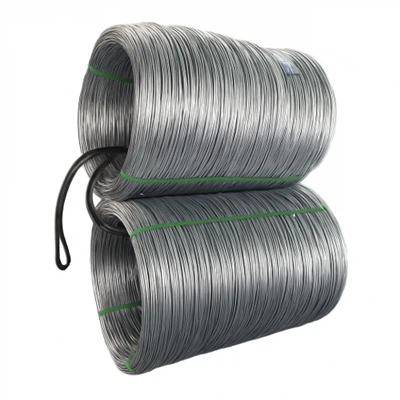
Hey there! As a supplier of stainless flat wire, I often get asked about the shear strength of this product. So, I thought I'd take some time to explain what it is, why it matters, and how it can impact your projects.
First off, let's talk about what shear strength actually means. In simple terms, shear strength is the ability of a material to resist forces that cause it to slide or deform in a parallel direction. When it comes to stainless flat wire, shear strength refers to how well the wire can withstand forces that try to cut or break it along its cross - section.
There are several factors that can affect the shear strength of stainless flat wire. One of the most important is the type of stainless steel used. Different grades of stainless steel have different chemical compositions, which can significantly impact their mechanical properties, including shear strength.
For example, 304L Annealed Stainless Steel Wire is a popular choice. 304L is a low - carbon version of the 304 grade, and the annealing process makes it more ductile. It has good corrosion resistance and a decent shear strength, which makes it suitable for a wide range of applications, from general manufacturing to decorative uses.
Another grade is Stainless Steel 1.4529, Alloy 926, UNS N08926. This is a high - alloy stainless steel that offers excellent corrosion resistance, especially in harsh environments. Due to its high alloy content, it generally has a higher shear strength compared to some other grades. It's often used in chemical processing, marine, and oil and gas industries where both corrosion resistance and high strength are required.
316L Stainless Steel Wire is also a well - known grade. 316L contains molybdenum, which enhances its corrosion resistance, especially against chloride - containing environments. It has a good balance of strength and corrosion resistance, and its shear strength is sufficient for many industrial and commercial applications, such as in food processing equipment and architectural structures.
The manufacturing process of the stainless flat wire also plays a crucial role in determining its shear strength. Cold - drawing, for instance, can increase the strength of the wire by aligning the grain structure of the metal. During cold - drawing, the wire is pulled through a series of dies to reduce its cross - section. This process work - hardens the metal, making it stronger and more resistant to shear forces.
Heat treatment is another important factor. Annealing, as mentioned earlier, can soften the wire and improve its ductility, but it may also reduce the shear strength slightly. On the other hand, processes like quenching and tempering can increase the hardness and shear strength of the wire, but they need to be carefully controlled to avoid making the wire too brittle.
The shape and size of the stainless flat wire also matter. A wider and thicker flat wire will generally have a higher shear strength than a narrower and thinner one. This is because there is more material to resist the shear forces. However, in some applications, you may not need a very high shear strength, and a thinner wire can be a more cost - effective and lightweight solution.
So, why does shear strength matter in your projects? Well, if you're using stainless flat wire in a situation where it will be subjected to cutting, bending, or other forces that could cause it to shear, you need to make sure it has enough strength to withstand those forces. For example, if you're using the wire in a wire mesh for a fence, it needs to be able to resist being cut by intruders or damaged by environmental factors.
In a manufacturing process, if the shear strength of the wire is too low, it may break during processing, leading to production delays and increased costs. On the other hand, using a wire with a much higher shear strength than necessary can also be wasteful, as it may cost more and be more difficult to work with.
When choosing the right stainless flat wire for your project, it's important to consider the specific requirements of your application. You need to think about the level of shear strength needed, as well as other factors like corrosion resistance, ductility, and cost.
If you're still not sure which grade or type of stainless flat wire is best for your project, don't hesitate to reach out. As a supplier, I have a lot of experience in this field, and I can help you make an informed decision. Whether you need a wire with high shear strength for a heavy - duty application or a more flexible wire for a decorative project, I can provide you with the right product.
We offer a wide range of stainless flat wires in different grades, sizes, and finishes. Our team is always ready to assist you with any questions you may have about shear strength, installation, or any other aspect of our products.
So, if you're in the market for stainless flat wire, contact us today to start the procurement process. We can discuss your specific needs, provide you with samples, and give you a competitive quote. Let's work together to find the perfect stainless flat wire solution for your project.


References:
- Metals Handbook: Properties and Selection: Stainless Steels, Tool Materials, and Special - Purpose Metals. American Society for Metals.
- Corrosion Resistance of Stainless Steels. L. L. Shreir, R. A. Jarman, and G. T. Burstein.