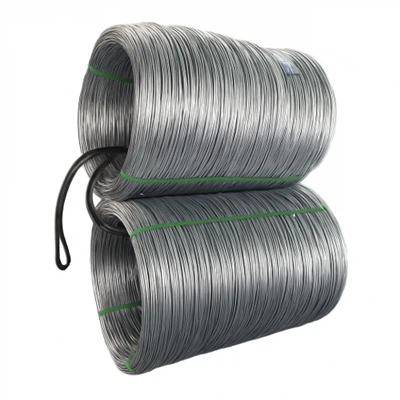
Hey there! As a supplier of 410 stainless steel wire, I often get asked about various technical aspects of this product. One question that pops up quite a bit is, "What is the residual strain in 410 stainless steel wire?" Well, let's dive right into it.
First off, let's understand what 410 stainless steel wire is. 410 stainless steel is a martensitic stainless steel. It's known for its good corrosion resistance, high strength, and excellent mechanical properties. It's used in a wide range of applications, from automotive parts to kitchen utensils. And when it comes to wire form, it can be used for things like springs, fasteners, and even in some electrical applications.
Now, onto residual strain. Residual strain is basically the strain that remains in a material after the external forces that caused the deformation have been removed. Think of it like this: when you bend a paperclip, it doesn't go back to its original shape completely. There's some "memory" in the paperclip of the bend, and that's a form of residual strain. In the case of 410 stainless steel wire, residual strain can occur during the manufacturing process.
During the production of 410 stainless steel wire, it goes through several steps like hot rolling, cold drawing, and heat treatment. Each of these steps can introduce residual strain. For example, when the wire is cold drawn, it's pulled through a series of dies to reduce its diameter. This process puts a lot of stress on the wire, and some of that stress gets locked in as residual strain.
Heat treatment is another factor. If the wire isn't heat-treated properly, it can lead to uneven cooling, which in turn can cause residual strain. When the wire cools too quickly in some areas and too slowly in others, different parts of the wire contract at different rates. This creates internal stresses that result in residual strain.
So, why does residual strain matter? Well, it can have a big impact on the performance of the 410 stainless steel wire. For one, it can affect the wire's dimensional stability. If there's a lot of residual strain, the wire might change shape over time, which can be a big problem in applications where precise dimensions are crucial.
Residual strain can also affect the wire's mechanical properties. It can reduce the wire's fatigue life, which means it'll break down sooner under repeated stress. In applications like springs, where the wire is constantly being flexed, a shorter fatigue life can lead to premature failure.
Another issue is corrosion resistance. Residual strain can create areas of high stress within the wire, and these areas are more prone to corrosion. So, if you're using the wire in a corrosive environment, residual strain can make it rust or corrode faster.
Now, as a supplier, we take steps to minimize residual strain in our 410 stainless steel wire. We use advanced manufacturing techniques and strict quality control measures. For example, we carefully control the cold drawing process to make sure the wire is deformed evenly. And during heat treatment, we use precise temperature and cooling rate controls to ensure uniform cooling.
But it's not just about minimizing residual strain. We also offer different grades of 410 stainless steel wire to meet different customer needs. If you need a wire with very low residual strain for a high-precision application, we can provide that. On the other hand, if you're looking for a more cost-effective option where a little bit of residual strain is acceptable, we have that too.
If you're in the market for 410 stainless steel wire, you might also be interested in some of our other products. We also supply 304L Stainless Steel Welding Wire, which is great for welding applications. It has excellent corrosion resistance and weldability. And if you need wire mesh, our 310s Stainless Steel Wire Mesh is a top choice. It's strong, durable, and can withstand high temperatures. We also have 316 Stainless Steel Wire, which is known for its superior corrosion resistance, especially in marine environments.
So, if you're interested in our 410 stainless steel wire or any of our other products, don't hesitate to reach out. Whether you have questions about residual strain, need help choosing the right grade of wire, or want to discuss a specific application, we're here to help. We're committed to providing high-quality products and excellent customer service.


In conclusion, residual strain in 410 stainless steel wire is an important factor to consider. It can affect the wire's performance, dimensional stability, and corrosion resistance. But with the right manufacturing processes and quality control, we can minimize its impact. And as a supplier, we're dedicated to meeting your needs and providing the best possible products. So, if you're in the market for stainless steel wire, give us a shout, and let's start a conversation.
References
- ASM Handbook, Volume 1: Properties and Selection: Irons, Steels, and High-Performance Alloys
- Metals Handbook Desk Edition, Third Edition