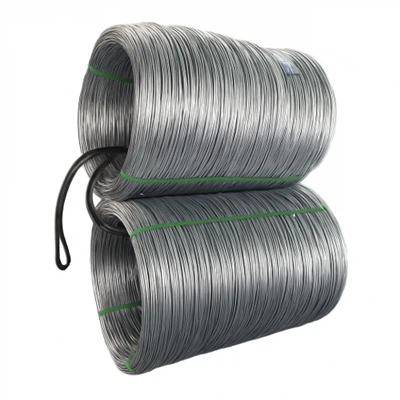
Conductivity is a fundamental property of materials that plays a crucial role in various industries, especially those related to electrical and thermal applications. As a leading supplier of 316 Stainless Steel Wire, I often encounter questions regarding the conductivity of this particular type of stainless steel wire. In this blog post, I will delve into the concept of conductivity, explore the factors affecting the conductivity of 316 stainless steel wire, and discuss its implications in different applications.


Understanding Conductivity
Conductivity refers to a material's ability to conduct electric current or heat. In the context of electrical conductivity, it is defined as the reciprocal of resistivity, which is a measure of how strongly a material opposes the flow of electric current. The SI unit of electrical conductivity is siemens per meter (S/m). For thermal conductivity, it is the property that describes a material's ability to conduct heat. The SI unit of thermal conductivity is watts per meter-kelvin (W/(m·K)).
Conductivity of 316 Stainless Steel Wire
316 stainless steel is an austenitic stainless steel alloy that contains chromium, nickel, and molybdenum. The addition of molybdenum enhances its corrosion resistance, making it suitable for use in harsh environments, such as marine applications. When it comes to conductivity, 316 stainless steel wire has relatively low electrical and thermal conductivity compared to other metals, such as copper and aluminum.
The electrical conductivity of 316 stainless steel wire at room temperature (20°C) is approximately 1.3 × 10⁶ S/m. This value is significantly lower than that of copper, which has an electrical conductivity of about 5.96 × 10⁷ S/m. The lower electrical conductivity of 316 stainless steel wire can be attributed to its alloying elements and the crystal structure of the material. The presence of alloying elements, such as chromium, nickel, and molybdenum, disrupts the regular arrangement of atoms in the metal lattice, increasing the scattering of electrons and reducing the overall conductivity.
In terms of thermal conductivity, 316 stainless steel wire has a thermal conductivity of around 16.3 W/(m·K) at room temperature. Again, this value is much lower than that of copper, which has a thermal conductivity of approximately 401 W/(m·K). Similar to electrical conductivity, the thermal conductivity of 316 stainless steel wire is affected by its alloying elements and the crystal structure. The alloying elements impede the transfer of heat through the material by scattering phonons, which are the primary carriers of heat in solids.
Factors Affecting the Conductivity of 316 Stainless Steel Wire
Several factors can influence the conductivity of 316 stainless steel wire. These factors include:
- Alloy Composition: The exact composition of the 316 stainless steel alloy can vary depending on the manufacturing process and the specific requirements of the application. The presence of additional alloying elements or impurities can affect the conductivity of the wire. For example, increasing the amount of molybdenum in the alloy can further improve its corrosion resistance but may also slightly reduce its conductivity.
- Temperature: The conductivity of 316 stainless steel wire is temperature-dependent. Generally, the electrical and thermal conductivity of metals decreases with increasing temperature. This is because as the temperature rises, the atoms in the metal lattice vibrate more vigorously, increasing the scattering of electrons and phonons and reducing the conductivity.
- Cold Working: Cold working, such as drawing or rolling, can affect the conductivity of 316 stainless steel wire. Cold working introduces dislocations and other defects in the metal lattice, which can increase the scattering of electrons and phonons and reduce the conductivity. However, the effect of cold working on conductivity is relatively small compared to the effect of alloy composition and temperature.
Applications of 316 Stainless Steel Wire Based on Conductivity
Despite its relatively low conductivity, 316 stainless steel wire has a wide range of applications due to its excellent corrosion resistance, strength, and durability. Some of the applications where the conductivity of 316 stainless steel wire is considered include:
- Electrical Grounding: In electrical systems, 316 stainless steel wire can be used for grounding purposes. Although its electrical conductivity is lower than that of copper, it is still sufficient for providing a safe path for electrical current in case of a fault. The corrosion resistance of 316 stainless steel wire makes it suitable for use in outdoor and marine environments where copper may corrode.
- Heating Elements: In some heating applications, 316 stainless steel wire can be used as a heating element. The relatively low thermal conductivity of the wire allows it to retain heat more effectively, making it suitable for applications where a slow and controlled release of heat is required.
- Thermocouples: Thermocouples are devices used for measuring temperature. 316 stainless steel wire can be used as one of the materials in a thermocouple due to its stability and corrosion resistance. The difference in electrical conductivity between 316 stainless steel and another metal can be used to generate a voltage that is proportional to the temperature difference between the two materials.
Comparison with Other Stainless Steel Wires
When comparing the conductivity of 316 stainless steel wire with other stainless steel wires, such as 304LN Stainless Steel Wire and 304L Annealed Stainless Steel Wire, the differences are relatively small. 304LN and 304L stainless steel are also austenitic stainless steel alloys, and their conductivity values are similar to those of 316 stainless steel wire. However, the exact conductivity values can vary depending on the specific composition and manufacturing process of each wire.
Conclusion
In conclusion, the conductivity of 316 stainless steel wire is relatively low compared to other metals, such as copper and aluminum. The electrical conductivity of 316 stainless steel wire at room temperature is approximately 1.3 × 10⁶ S/m, and its thermal conductivity is around 16.3 W/(m·K). The conductivity of 316 stainless steel wire is affected by factors such as alloy composition, temperature, and cold working. Despite its low conductivity, 316 stainless steel wire has a wide range of applications due to its excellent corrosion resistance, strength, and durability.
If you are interested in purchasing high-quality 316 stainless steel wire for your specific application, please feel free to contact us. Our team of experts can provide you with detailed information about the properties and specifications of our products and help you choose the right wire for your needs. We look forward to discussing your requirements and partnering with you in your projects.
References
- ASM Handbook, Volume 1: Properties and Selection: Irons, Steels, and High-Performance Alloys. ASM International, 1990.
- Metals Handbook Desk Edition, 2nd Edition. ASM International, 1998.
- Stainless Steel: A Practical Guide. ASM International, 2001.