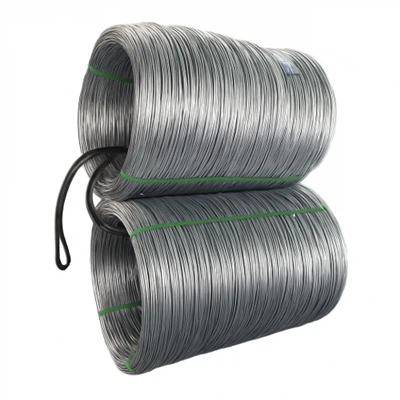
As a supplier of 410 stainless steel wire, I've encountered numerous inquiries regarding the control of surface roughness during machining. Surface roughness is a critical factor that can significantly impact the performance and appearance of 410 stainless steel wire products. In this blog, I'll share some insights and strategies on how to control the surface roughness of 410 stainless steel wire during machining.
Understanding 410 Stainless Steel Wire
410 stainless steel is a martensitic stainless steel that contains approximately 11.5 - 13.5% chromium. It offers good corrosion resistance, high strength, and hardness, making it suitable for a wide range of applications, including springs, fasteners, and medical instruments. However, machining 410 stainless steel wire can be challenging due to its high hardness and tendency to work - harden.
Factors Affecting Surface Roughness
1. Cutting Tool Selection
The choice of cutting tool is crucial in determining the surface roughness of 410 stainless steel wire. Carbide cutting tools are commonly used due to their high hardness and wear resistance. For example, coated carbide tools can provide better performance in terms of reducing friction and heat generation during machining. The geometry of the cutting tool, such as the rake angle, clearance angle, and cutting edge radius, also plays a significant role. A sharp cutting edge with an appropriate rake angle can help to reduce the cutting force and improve the surface finish.
2. Machining Parameters
- Cutting Speed: The cutting speed has a direct impact on the surface roughness. A higher cutting speed can reduce the built - up edge formation, which is a major cause of poor surface finish. However, if the cutting speed is too high, it can lead to excessive heat generation and tool wear. For 410 stainless steel wire, an optimal cutting speed range needs to be determined based on the specific machining operation and tool material.
- Feed Rate: The feed rate is another important parameter. A lower feed rate generally results in a smoother surface finish. However, a very low feed rate can reduce the machining efficiency. Therefore, a balance needs to be struck between the feed rate and the desired surface roughness.
- Depth of Cut: The depth of cut affects the cutting force and the amount of material removed per pass. A larger depth of cut can increase the cutting force and may lead to a rougher surface finish. It is advisable to use a smaller depth of cut and make multiple passes to achieve the desired surface quality.
3. Coolant and Lubrication
Coolant and lubrication play a vital role in controlling the surface roughness of 410 stainless steel wire during machining. A proper coolant can reduce the heat generated during cutting, prevent the formation of built - up edge, and improve the chip evacuation. Water - based coolants are commonly used for 410 stainless steel machining. They can provide effective cooling and lubrication, and also help to flush away the chips from the cutting zone.


4. Workpiece Material Properties
The properties of the 410 stainless steel wire itself, such as its hardness, microstructure, and chemical composition, can affect the surface roughness. For example, if the wire has a non - uniform microstructure or contains impurities, it may lead to uneven cutting and a rougher surface finish. Heat treatment can be used to improve the machinability of 410 stainless steel wire by adjusting its hardness and microstructure.
Strategies for Controlling Surface Roughness
1. Optimize Cutting Tool Geometry
- Select a cutting tool with a sharp cutting edge and an appropriate rake angle. For 410 stainless steel wire, a positive rake angle can help to reduce the cutting force and improve the surface finish.
- Use a cutting tool with a small cutting edge radius. A smaller cutting edge radius can provide a smoother cutting action and reduce the surface roughness.
2. Adjust Machining Parameters
- Determine the optimal cutting speed, feed rate, and depth of cut based on the specific machining operation and tool material. Conducting machining tests can help to find the best combination of parameters for achieving the desired surface roughness.
- Monitor the cutting force and temperature during machining. If the cutting force or temperature is too high, it may indicate that the machining parameters need to be adjusted.
3. Use Appropriate Coolant and Lubrication
- Select a coolant that is suitable for 410 stainless steel machining. Water - based coolants are a good choice as they provide effective cooling and lubrication.
- Ensure that the coolant is applied properly to the cutting zone. The coolant should be able to reach the cutting edge and flush away the chips.
4. Improve Workpiece Material Quality
- Ensure that the 410 stainless steel wire has a uniform microstructure and is free from impurities. Heat treatment can be used to improve the machinability of the wire.
- Store the wire in a proper environment to prevent corrosion and damage, which can affect the surface quality during machining.
Related Products
In addition to 410 stainless steel wire, we also offer other high - quality stainless steel products. For example, you can check out our 310s Stainless Steel Wire Mesh, which is widely used in filtration, screening, and architectural applications. We also provide Stainless Steel 1.4529, Alloy 926, UNS N08926, which offers excellent corrosion resistance in harsh environments. And our 317L Stainless Steel Wire is known for its high strength and good weldability.
Conclusion
Controlling the surface roughness of 410 stainless steel wire during machining is a complex process that requires careful consideration of various factors, including cutting tool selection, machining parameters, coolant and lubrication, and workpiece material properties. By optimizing these factors, we can achieve a smooth surface finish and improve the quality of the 410 stainless steel wire products.
If you are interested in our 410 stainless steel wire or other stainless steel products, please feel free to contact us for more information and to discuss your specific requirements. We are committed to providing high - quality products and excellent customer service.
References
- Kalpakjian, S., & Schmid, S. R. (2010). Manufacturing Engineering and Technology. Pearson Prentice Hall.
- Trent, E. M., & Wright, P. K. (2000). Metal Cutting. Butterworth - Heinemann.