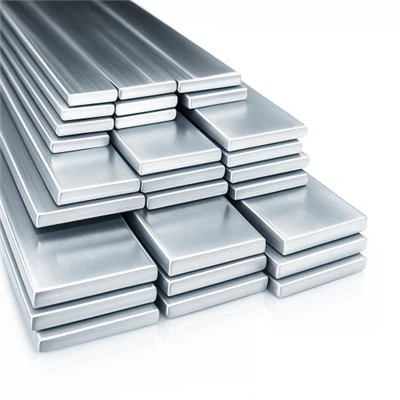
Hey there! As a supplier of stainless flat wire, I've had my fair share of experiences dealing with different types of customers and projects. One question that often comes up is, "How does the hardness of stainless flat wire affect its use?" Well, let's dive right in and explore this topic.
First off, what exactly is hardness in the context of stainless flat wire? Hardness refers to the wire's resistance to deformation, scratching, and indentation. It's a crucial property that can significantly impact how the wire performs in various applications. There are several ways to measure hardness, but the most common ones are the Rockwell, Brinell, and Vickers scales.
Now, let's talk about how different levels of hardness can affect the use of stainless flat wire.
Soft Stainless Flat Wire
Soft stainless flat wire, typically with a lower hardness rating, is more flexible and ductile. This means it can be easily bent, formed, and shaped without breaking. It's like the橡皮泥 of the wire world!
One of the main advantages of soft stainless flat wire is its ease of fabrication. If you're working on a project that requires intricate bending or shaping, such as jewelry making or decorative wirework, soft wire is your best bet. You can create beautiful curves, loops, and spirals without worrying about the wire cracking or snapping.
Another area where soft wire shines is in applications where flexibility is key. For example, in electrical wiring or cable shielding, the wire needs to be able to bend and conform to different shapes without losing its conductivity or structural integrity. Soft stainless flat wire can easily adapt to these requirements, making it a popular choice in the electronics industry.
Some common types of soft stainless flat wire include 304L Annealed Stainless Steel Wire. The annealing process involves heating the wire to a specific temperature and then slowly cooling it, which reduces its hardness and increases its ductility.
Medium-Hard Stainless Flat Wire
Medium-hard stainless flat wire strikes a balance between flexibility and strength. It's not as soft as the fully annealed wire, but it's still malleable enough to be bent and formed to a certain extent.
This type of wire is often used in applications where some degree of rigidity is required, but you still need the wire to be workable. For instance, in the manufacturing of springs, medium-hard wire can provide the necessary elasticity and resilience while maintaining its shape under stress. Springs made from medium-hard stainless flat wire can be found in a wide range of products, from automotive suspensions to household appliances.
Medium-hard wire is also suitable for applications where the wire needs to hold its shape after being formed. In the construction of wire mesh or fencing, for example, the wire needs to be strong enough to withstand external forces and maintain its integrity over time. Medium-hard stainless flat wire can meet these requirements, providing a durable and long-lasting solution.
Hard Stainless Flat Wire
Hard stainless flat wire, with a high hardness rating, is extremely strong and resistant to deformation. It's like the superhero of the wire world!
The main advantage of hard wire is its excellent wear resistance. In applications where the wire is subjected to high levels of friction or abrasion, such as in conveyor belts or industrial machinery, hard stainless flat wire can withstand the wear and tear much better than softer wires. It can also resist corrosion and oxidation, making it suitable for use in harsh environments.
Hard wire is also used in applications where high strength and stiffness are required. In the aerospace and defense industries, for example, hard stainless flat wire is used in the manufacturing of components such as aircraft landing gear and missile guidance systems. These applications demand the highest level of performance and reliability, and hard wire can deliver.
One example of hard stainless flat wire is 304N Stainless Steel Wire. The addition of nitrogen to the steel alloy increases its strength and hardness, making it ideal for high-stress applications.
Super-Hard Stainless Flat Wire
At the extreme end of the hardness spectrum is super-hard stainless flat wire. This type of wire is treated with special processes to achieve an incredibly high level of hardness, often approaching that of some metals.
Super-hard wire is mainly used in specialized applications where extreme strength and wear resistance are required. In the cutting tool industry, for example, super-hard stainless flat wire is used to make blades and saws that can cut through tough materials such as metals and ceramics. It's also used in the production of high-performance bearings and gears, where the wire needs to withstand high loads and speeds without wearing out.
However, super-hard wire comes with a trade-off. It's much more difficult to work with compared to softer wires. Bending or shaping super-hard wire requires specialized equipment and techniques, and it's often more expensive to produce.
Factors Affecting Hardness
The hardness of stainless flat wire can be influenced by several factors, including the chemical composition of the steel, the manufacturing process, and any heat treatment or cold working that the wire undergoes.
The chemical composition of the steel plays a significant role in determining its hardness. Different alloying elements, such as chromium, nickel, and molybdenum, can affect the hardness and other properties of the wire. For example, 316 Stainless Steel Wire contains molybdenum, which enhances its corrosion resistance and also increases its hardness compared to 304 stainless steel.
The manufacturing process can also have a big impact on the hardness of the wire. Cold drawing, for example, involves pulling the wire through a series of dies to reduce its diameter and increase its length. This process can work-harden the wire, making it harder and stronger. Heat treatment, on the other hand, can be used to either soften or harden the wire, depending on the specific requirements of the application.
Choosing the Right Hardness
So, how do you choose the right hardness of stainless flat wire for your project? Well, it all depends on the specific requirements of your application.
First, consider the level of flexibility and workability you need. If you're going to be bending and shaping the wire extensively, a softer wire may be more suitable. On the other hand, if you need the wire to be strong and rigid, a harder wire would be a better choice.
Next, think about the environment in which the wire will be used. If the wire will be exposed to high levels of friction, abrasion, or corrosion, a harder and more wear-resistant wire may be necessary.
Finally, consider your budget and the availability of the wire. Harder wires are often more expensive and may be more difficult to source, so you need to weigh the cost and performance benefits before making a decision.
Conclusion
In conclusion, the hardness of stainless flat wire plays a crucial role in determining its suitability for different applications. Whether you need a soft and flexible wire for intricate jewelry making or a hard and wear-resistant wire for industrial machinery, there's a stainless flat wire out there that's perfect for your needs.
As a supplier of stainless flat wire, I'm here to help you find the right wire for your project. If you have any questions or need more information about the different types of stainless flat wire and their hardness levels, don't hesitate to reach out. We can work together to find the best solution for your specific requirements.
If you're interested in purchasing stainless flat wire for your project, I'd love to have a chat with you. Just drop me a line, and we can start discussing your needs and options. Let's work together to make your project a success!


References
- ASM Handbook Volume 1: Properties and Selection: Irons, Steels, and High-Performance Alloys
- Metals Handbook Desk Edition, Third Edition