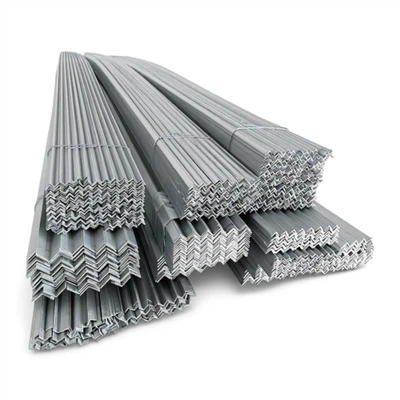
Can bright steel rod be welded? Well, that's a question I get asked a lot as a bright steel rod supplier. Let's dig into this topic and find out the ins and outs.
First off, what exactly is a bright steel rod? Bright steel rods are essentially steel rods that have been finished to a high - quality, smooth surface. They're often used in various industries like automotive, construction, and machinery manufacturing because of their good mechanical properties and attractive appearance.
Now, to answer the big question: yes, bright steel rod can be welded. But, like with anything in the welding world, there are a few things you need to keep in mind.
Factors Affecting Weldability
The weldability of bright steel rod depends on several factors. One of the most important ones is the chemical composition of the steel. Different types of bright steel rods have different alloying elements, and these can have a significant impact on how well the rod can be welded.
For example, if the bright steel rod has a high carbon content, it can be a bit tricky to weld. High - carbon steels tend to form hard and brittle zones around the weld area, which can lead to cracking. On the other hand, low - carbon bright steel rods are generally more weld - friendly. They're less likely to form those hard zones and are easier to work with.
Another factor is the presence of other alloying elements. Some elements, like chromium and nickel, can improve the corrosion resistance of the steel but may also affect the welding process. For instance, stainless steel bright rods, which contain chromium and nickel, require special welding techniques compared to plain carbon steel rods.
Welding Methods for Bright Steel Rod
There are several welding methods that can be used for bright steel rod. Let's take a look at some of the most common ones.
Shielded Metal Arc Welding (SMAW)
This is one of the oldest and most widely used welding methods. It's also known as stick welding. In SMAW, an electrode coated with flux is used to create an arc between the electrode and the workpiece (the bright steel rod in this case). The flux melts and forms a protective shield around the weld, preventing oxidation and other contaminants from getting into the weld.
SMAW is a great option for welding bright steel rods, especially in outdoor or field conditions. It's relatively simple to learn and can be used on a variety of steel thicknesses. However, it does require some skill to get a good, clean weld, and the welding speed is a bit slower compared to some other methods.
Gas Metal Arc Welding (GMAW)
Also known as MIG (Metal Inert Gas) welding, GMAW uses a continuous wire electrode that is fed through a welding gun. A shielding gas, usually a mixture of argon and carbon dioxide, is used to protect the weld from oxidation.
GMAW is a popular choice for welding bright steel rods because it offers high welding speeds and produces a clean, smooth weld. It's also relatively easy to learn, making it a great option for beginners. However, it does require a more expensive setup compared to SMAW, and it's not as suitable for outdoor use in windy conditions.
Gas Tungsten Arc Welding (GTAW)
GTAW, or TIG (Tungsten Inert Gas) welding, uses a non - consumable tungsten electrode to create the arc. A separate filler metal can be added to the weld if needed. A shielding gas, usually pure argon, is used to protect the weld.
TIG welding is known for producing high - quality, precise welds. It's often used for welding thin bright steel rods or when a very clean and aesthetically pleasing weld is required. However, it's a more difficult method to master and is relatively slow compared to SMAW and GMAW.
Pre - Welding and Post - Welding Considerations
Before you start welding a bright steel rod, there are a few things you need to do. First, make sure the surface of the rod is clean. Any dirt, oil, or rust on the surface can affect the quality of the weld. You can use a wire brush or a grinder to clean the surface.
Pre - heating the bright steel rod is also a good idea, especially if it has a high carbon content or is thick. Pre - heating helps to reduce the cooling rate of the weld, which can prevent cracking. The pre - heating temperature depends on the type of steel and the thickness of the rod.
After welding, post - weld heat treatment may be necessary, especially for high - strength or high - carbon bright steel rods. Post - weld heat treatment can help to relieve the residual stresses in the weld and improve the mechanical properties of the welded joint.


Different Types of Bright Steel Rods and Their Weldability
Let's take a closer look at some specific types of bright steel rods and how they can be welded.
304 Stainless Steel Round Bar
The 304 Stainless Steel Round Bar is a popular choice in many industries because of its good corrosion resistance and mechanical properties. When welding 304 stainless steel bright rods, it's important to use a filler metal that is compatible with the base metal. A 308 or 309 stainless steel filler metal is often used.
GTAW and GMAW are the most commonly used welding methods for 304 stainless steel. These methods can produce high - quality welds with good corrosion resistance. However, it's important to control the heat input during welding to prevent sensitization, which can reduce the corrosion resistance of the weld.
430 Stainless Steel Round Bar
The 430 Stainless Steel Round Bar is a ferritic stainless steel. It has lower nickel content compared to 304 stainless steel, which makes it more economical. When welding 430 stainless steel bright rods, pre - heating is often required to prevent cracking.
SMAW and GTAW are suitable welding methods for 430 stainless steel. A 430 or 430L filler metal is usually used. After welding, post - weld heat treatment may be necessary to improve the ductility of the weld.
Inconel 625 Bar Stock
The Inconel 625 Bar Stock is a nickel - based alloy with excellent corrosion and oxidation resistance. Welding Inconel 625 bright rods requires special techniques and filler metals.
GTAW is the preferred welding method for Inconel 625. A matching Inconel 625 filler metal should be used. Pre - heating and post - weld heat treatment are often required to ensure a high - quality weld.
Conclusion
So, as you can see, bright steel rod can definitely be welded. But it's important to understand the factors that affect weldability, choose the right welding method, and follow the proper pre - and post - welding procedures.
If you're in the market for high - quality bright steel rods and need advice on welding them, I'm here to help. Whether you're a small - scale DIYer or a large - scale industrial manufacturer, I can provide you with the right bright steel rods for your project. Don't hesitate to reach out if you have any questions or if you're ready to start a procurement discussion.
References
- "Welding Metallurgy" by John C. Lippold and David L. Kotecki
- "The Welding Handbook" published by the American Welding Society