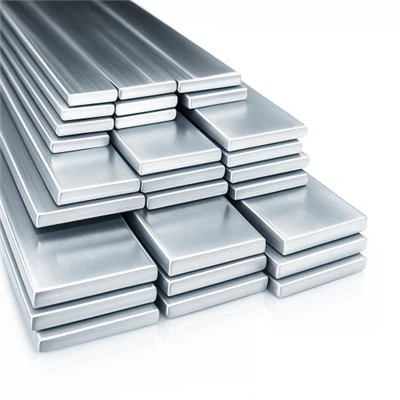
Is stainless flat wire magnetic? This is a question that often pops up in the minds of many customers and industry enthusiasts. As a supplier of stainless flat wire, I've encountered this query numerous times, and today, I'd like to delve into this topic in detail.
First, let's understand what stainless flat wire is. Stainless flat wire is a type of wire with a flat cross - section, made from stainless steel. Stainless steel is an alloy primarily composed of iron, chromium, nickel, and other elements. The unique combination of these elements gives stainless steel its excellent corrosion resistance, strength, and aesthetic appeal. Stainless flat wire is widely used in various industries, including automotive, electronics, construction, and jewelry making, due to its versatility and durability.
Now, let's address the main question: Is stainless flat wire magnetic? The answer is not a simple yes or no. It depends on the specific type of stainless steel used to make the flat wire.
There are several types of stainless steel, but the most common ones in the production of flat wire are austenitic, ferritic, and martensitic stainless steels.
Austenitic stainless steels are the most widely used type for flat wire production. They typically contain high levels of chromium and nickel, and they have a face - centered cubic (FCC) crystal structure. Austenitic stainless steels, such as the 304 and 316 grades, are generally non - magnetic in their annealed state. For example, 304L Annealed Stainless Steel Wire and 304 Stainless Steel Wire are made from austenitic stainless steel. In their annealed condition, these wires will not be attracted to a magnet. However, during cold working, such as drawing or rolling the wire to achieve the desired flat shape, some of the austenite can transform into martensite, which is magnetic. So, a cold - worked 304 stainless flat wire may exhibit some magnetic properties.
Ferritic stainless steels have a body - centered cubic (BCC) crystal structure. They contain chromium but have lower nickel content compared to austenitic stainless steels. Ferritic stainless steels are magnetic. Flat wires made from ferritic stainless steels will be attracted to a magnet. These steels are often used in applications where magnetic properties are acceptable or even desired, such as in some electrical components.
Martensitic stainless steels are also magnetic. They have a body - centered tetragonal (BCT) crystal structure. Martensitic stainless steels can be hardened by heat treatment, and they are commonly used in applications where high strength and wear resistance are required. For instance, 304 Stainless Steel Spring Wire may sometimes be made from martensitic stainless steel, and it will show magnetic characteristics.
The magnetic properties of stainless flat wire can have significant implications for its applications. In the electronics industry, non - magnetic stainless flat wire is preferred for components where magnetic interference can affect the performance of electronic devices. For example, in the production of connectors or shielding materials, a non - magnetic 304L annealed stainless steel wire would be a better choice.
On the other hand, in the automotive industry, magnetic stainless flat wire can be used in sensors and actuators. The magnetic properties of the wire can be utilized to detect changes in magnetic fields, which are then translated into electrical signals for various control functions.
As a supplier of stainless flat wire, I understand the importance of providing our customers with the right type of wire for their specific applications. We offer a wide range of stainless flat wires, including those made from different grades of austenitic, ferritic, and martensitic stainless steels. Our team of experts can assist you in selecting the most suitable wire based on your requirements, whether you need a non - magnetic wire for a sensitive electronic application or a magnetic wire for a mechanical or electrical device.
If you are unsure about the magnetic properties of the stainless flat wire you need, we can provide samples for you to test. Our samples will give you a clear idea of the wire's characteristics, including its magnetic behavior.
In addition to magnetic properties, we also pay close attention to other quality aspects of our stainless flat wire. We ensure that our wires have consistent dimensions, excellent surface finish, and high corrosion resistance. Our manufacturing processes are strictly controlled to meet the highest industry standards.
When it comes to sourcing stainless flat wire, you need a reliable supplier who can offer high - quality products and excellent customer service. We are committed to building long - term relationships with our customers by providing them with the best possible solutions. Whether you are a small - scale manufacturer or a large - scale industrial enterprise, we can meet your needs in terms of quantity and quality.
If you are interested in our stainless flat wire products, we encourage you to contact us for further discussion. We can provide you with detailed product information, pricing, and delivery options. Our goal is to make the procurement process as smooth and efficient as possible for you.
In conclusion, the magnetic properties of stainless flat wire depend on the type of stainless steel used and the manufacturing process. Austenitic stainless flat wires are generally non - magnetic in their annealed state but may become magnetic after cold working. Ferritic and martensitic stainless flat wires are magnetic. Understanding these properties is crucial for choosing the right wire for your specific application.
If you have any questions or would like to start a procurement discussion, feel free to reach out to us. We look forward to working with you to meet your stainless flat wire needs.
References


- ASM Handbook Volume 1: Properties and Selection: Irons, Steels, and High - Performance Alloys
- Stainless Steel: A Technical Guide by The Nickel Institute