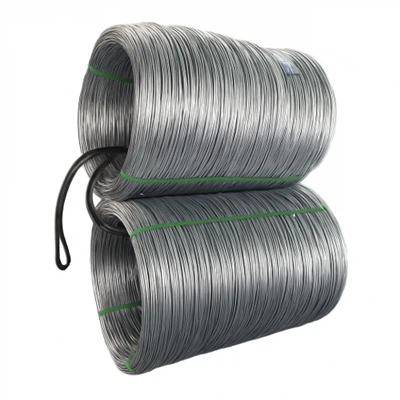
Hey there! As a supplier of 304 stainless steel wire, I often get asked if this type of wire can be used in filtration systems. Well, let's dive right into it and see if 304 stainless steel wire is a good fit for filtration.
What is 304 Stainless Steel Wire?
First off, 304 stainless steel is one of the most commonly used grades of stainless steel. It contains about 18% chromium and 8% nickel, which gives it excellent corrosion resistance. This means it can withstand exposure to various chemicals and environments without rusting or corroding easily.
The wire made from 304 stainless steel is strong, durable, and has good flexibility. It comes in different diameters and can be woven into different mesh sizes, which is crucial for filtration applications.
Why Use 304 Stainless Steel Wire in Filtration Systems?
Corrosion Resistance
One of the main reasons 304 stainless steel wire is great for filtration is its corrosion resistance. In many filtration systems, the wire comes into contact with liquids or gases that may be corrosive. For example, in water treatment plants, the wire needs to withstand the chemicals used in the purification process. 304 stainless steel wire can handle these harsh conditions without deteriorating, ensuring a long - lasting filtration solution.
Strength and Durability
Filtration systems often require a wire that can withstand mechanical stress. 304 stainless steel wire is strong enough to resist breakage even under high pressure. Whether it's in a high - flow industrial filtration system or a small - scale home filtration unit, the wire can hold up well.
Flexibility
The flexibility of 304 stainless steel wire allows it to be woven into different mesh patterns. This is important because different filtration applications require different mesh sizes. For instance, in a fine - particle filtration system, a smaller mesh size is needed to trap tiny particles. The wire can be easily woven into a tight mesh to achieve this.
Applications of 304 Stainless Steel Wire in Filtration
Water Filtration
In water filtration systems, 304 stainless steel wire is used in various components. It can be used to make filter screens that remove large debris from water. These screens are often placed at the intake of water treatment plants or in home water filters. The corrosion - resistant property of the wire ensures that it doesn't contaminate the water and can last for a long time.
Air Filtration
304 stainless steel wire can also be used in air filtration systems. In industrial settings, where there are a lot of dust and particulate matter in the air, wire mesh filters made from 304 stainless steel can be used to trap these particles. The wire's strength allows it to withstand the airflow and the weight of the trapped particles.
Chemical Filtration
In the chemical industry, filtration is crucial to separate different substances. 304 stainless steel wire can be used in filters that come into contact with various chemicals. Its corrosion resistance makes it suitable for handling different types of chemical solutions.
Comparing 304 Stainless Steel Wire with Other Stainless Steel Wires
While 304 stainless steel wire is a great choice for filtration, there are other types of stainless steel wires available in the market. Let's take a look at how it compares to some of them.
420 HC Stainless Steel Wire
420 HC Stainless Steel Wire is a martensitic stainless steel. It has higher hardness compared to 304 stainless steel. However, its corrosion resistance is not as good as 304. In filtration systems where corrosion is a major concern, 304 stainless steel wire would be a better choice. But if the application requires high hardness and wear resistance, 420 HC might be more suitable.
204Cu Stainless Steel Wire
204Cu Stainless Steel Wire is a low - cost alternative to 304 stainless steel. It has some corrosion resistance, but it's not as good as 304. In less demanding filtration applications where cost is a major factor, 204Cu might be considered. However, for long - term and high - performance filtration, 304 stainless steel wire is still the better option.
316 Stainless Steel Wire
316 Stainless Steel Wire is another popular choice for filtration. It contains molybdenum, which gives it even better corrosion resistance than 304, especially in chloride - rich environments. If the filtration system is going to be exposed to saltwater or other highly corrosive substances, 316 stainless steel wire might be a better choice. But 304 is still a great option for most general - purpose filtration applications.
Limitations of 304 Stainless Steel Wire in Filtration
Although 304 stainless steel wire has many advantages, it also has some limitations. In extremely corrosive environments, such as those with high concentrations of acids or alkalis, 304 may not be the best choice. In these cases, more specialized stainless steel grades or other materials might be needed.
Also, if the filtration system requires very high precision in particle size separation, the mesh size of 304 stainless steel wire may have some limitations. In such cases, more advanced filtration technologies might be required.


Conclusion
In conclusion, 304 stainless steel wire can definitely be used in filtration systems. Its corrosion resistance, strength, and flexibility make it a great choice for a wide range of filtration applications. Whether it's water, air, or chemical filtration, 304 stainless steel wire can provide a reliable and long - lasting solution.
If you're in the market for high - quality 304 stainless steel wire for your filtration system, don't hesitate to reach out. We're here to help you find the right wire for your specific needs. Whether you need a particular mesh size or a certain diameter, we can provide it. Let's start a conversation and see how we can work together to meet your filtration requirements.
References
- ASM Handbook Volume 13A: Corrosion: Fundamentals, Testing, and Protection
- Stainless Steel World magazine articles on stainless steel applications in filtration