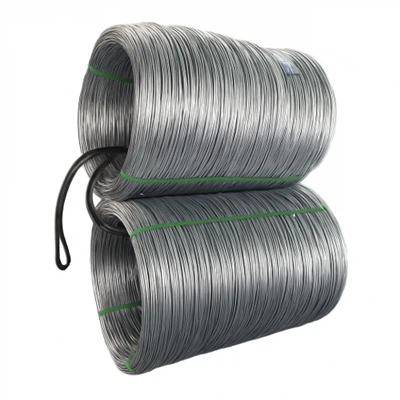
Hey there! As a supplier of 420 stainless steel wire, I've gotten a ton of questions about what affects its magnetic properties. So, I thought I'd break it down for you in this blog post.
First off, let's talk a bit about 420 stainless steel wire. It's a popular choice in many industries because of its good corrosion resistance and high strength. But its magnetic properties can vary, and that's what we're here to explore.
Chemical Composition
One of the most significant factors that affect the magnetic properties of 420 stainless steel wire is its chemical composition. 420 stainless steel is a martensitic stainless steel, which means it has a high carbon content compared to some other stainless steels like 304 Stainless Steel Wire.
Carbon plays a crucial role here. When the carbon content is higher, it can increase the hardness and strength of the steel. But it also has an impact on the magnetic properties. Higher carbon levels generally lead to a more magnetic material. This is because carbon can change the crystal structure of the steel, making it more likely to align with a magnetic field.
Chromium is another key element. It's what gives stainless steel its corrosion - resistant properties. In 420 stainless steel, chromium forms a thin oxide layer on the surface, protecting it from rust. But in terms of magnetism, chromium can have a complex relationship. At lower concentrations, it can enhance the magnetic properties, but as the chromium content gets too high, it can start to suppress magnetism.
Other elements like nickel and manganese can also influence the magnetic behavior. Nickel is known for its austenite - stabilizing properties. Austenite is a non - magnetic phase of steel. So, if there's a significant amount of nickel in the 420 stainless steel wire, it can reduce the magnetic properties. Manganese, on the other hand, can help to increase the solubility of carbon in the steel, which in turn can affect the magnetic characteristics.
Heat Treatment
Heat treatment is a game - changer when it comes to the magnetic properties of 420 stainless steel wire. There are different types of heat treatment processes, and each can have a unique impact.
Annealing is a common heat treatment method. During annealing, the steel is heated to a specific temperature and then slowly cooled. This process helps to relieve internal stresses in the wire and can also change its crystal structure. When 420 stainless steel wire is annealed, it can become softer, and its magnetic properties may change. If the annealing process is done at a high enough temperature and for a sufficient time, it can reduce the magnetic strength of the wire.
Quenching and tempering are another set of heat treatment processes. Quenching involves rapidly cooling the heated steel, which can result in a hard and brittle material. This process can increase the magnetic properties of the 420 stainless steel wire because it forms a martensitic structure, which is highly magnetic. Tempering is then done after quenching to reduce the brittleness. The tempering temperature and time can also fine - tune the magnetic properties. A lower tempering temperature may keep the high magnetic strength, while a higher tempering temperature can slightly reduce it.
Cold Working
Cold working is the process of deforming the steel at room temperature. This can include processes like drawing, rolling, or bending. When 420 stainless steel wire is cold - worked, it can have a significant impact on its magnetic properties.
As the wire is cold - worked, the crystal structure of the steel is deformed. This deformation can cause the magnetic domains in the steel to align more easily with an external magnetic field. So, generally, the more cold work is done on the 420 stainless steel wire, the higher its magnetic strength will be. However, there's a limit. If too much cold work is applied, it can lead to work hardening and even cracking of the wire, which may then affect its overall performance.
Surface Condition
The surface condition of the 420 stainless steel wire can also play a role in its magnetic properties. If the surface is contaminated with other materials, it can interfere with the magnetic field around the wire.
For example, if there's a layer of non - magnetic material like oil or dirt on the surface, it can create a barrier between the steel and the magnetic field. This can reduce the apparent magnetic strength of the wire. On the other hand, if the surface is smooth and clean, the magnetic field can interact more effectively with the steel, resulting in more consistent magnetic properties.
Microstructure
The microstructure of 420 stainless steel wire is closely related to its magnetic properties. The grain size of the steel is an important factor. Smaller grain sizes can generally lead to higher magnetic properties. This is because smaller grains have more grain boundaries. These boundaries can act as barriers to the movement of magnetic domains, making it easier for the domains to align with an external magnetic field.
The presence of different phases in the microstructure also matters. As mentioned earlier, martensite is a highly magnetic phase. If the 420 stainless steel wire has a higher proportion of martensite in its microstructure, it will be more magnetic. Austenite, on the other hand, is non - magnetic. So, any change in the proportion of these phases, whether due to heat treatment or chemical composition, can significantly affect the magnetic properties.
Application - Specific Considerations
In different applications, the desired magnetic properties of 420 stainless steel wire can vary. In some industries, like the manufacturing of magnetic sensors or actuators, a high and consistent magnetic strength is required. In these cases, the wire needs to be carefully processed to ensure the right combination of chemical composition, heat treatment, and cold working.
In other applications, such as in food processing equipment where non - magnetic properties might be preferred for compatibility with other components, steps need to be taken to reduce the magnetic properties. This could involve adjusting the heat treatment process or adding elements like nickel to the steel.


If you're in the market for 420 stainless steel wire and have specific requirements regarding its magnetic properties, don't hesitate to reach out. We've got the expertise and the ability to customize the wire according to your needs. Whether you need a highly magnetic wire for a specialized magnetic application or a less magnetic one for a non - magnetic environment, we can work with you to find the perfect solution. Just let us know your requirements, and we'll start the procurement and negotiation process to get you the best 420 stainless steel wire at a great price.
References
- ASM Handbook Volume 1: Properties and Selection: Irons, Steels, and High - Performance Alloys. ASM International.
- "Stainless Steels" by George E. Totten and David Scott MacKenzie.
- Journal articles on the magnetic properties of stainless steels from various metallurgical research journals.