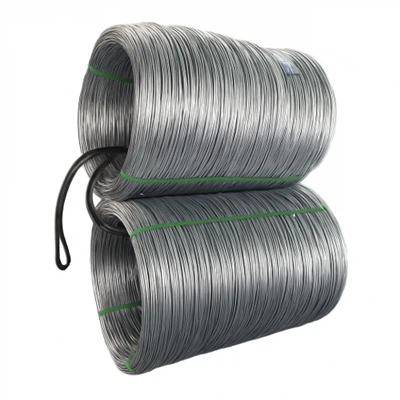
Hey there! As a supplier of 304 stainless steel wire, I get a lot of questions about the material's properties, and one that comes up quite often is, "What is the fatigue resistance of 304 stainless steel wire?" So, I thought I'd dive into this topic and share some insights.
First off, let's understand what fatigue resistance means. Fatigue is the weakening of a material caused by cyclic loading, which means applying and removing a load repeatedly. Over time, these cycles can cause cracks to form and grow, eventually leading to failure. Fatigue resistance, then, is a material's ability to withstand these cyclic loads without failing.
304 stainless steel is a widely used grade of stainless steel, known for its excellent corrosion resistance, good formability, and high strength. It's made up of about 18% chromium and 8% nickel, which gives it that shiny, rust - free appearance we're all familiar with. When it comes to fatigue resistance, 304 stainless steel wire has some pretty decent characteristics.
One of the factors that contribute to its fatigue resistance is its microstructure. The austenitic structure of 304 stainless steel provides good ductility, which allows the material to deform slightly under cyclic loads without immediately cracking. This ductility helps to distribute the stress more evenly throughout the wire, reducing the likelihood of stress concentrations that could lead to crack initiation.
Another important aspect is the surface finish of the wire. A smooth surface finish can significantly improve the fatigue resistance of 304 stainless steel wire. Rough surfaces can act as stress raisers, where stress concentrations occur, making it easier for cracks to start. Our company takes great care to ensure that our 304 stainless steel wire has a high - quality surface finish, which helps to enhance its fatigue performance.
The diameter of the wire also plays a role in its fatigue resistance. Generally, smaller diameter wires tend to have better fatigue resistance than larger ones. This is because smaller wires have less volume, which means there are fewer opportunities for internal defects or inclusions that could act as crack initiators. However, the application requirements will often determine the appropriate wire diameter.
In real - world applications, the fatigue resistance of 304 stainless steel wire is crucial. For example, in the automotive industry, it can be used in springs, suspension components, or engine parts. These parts are subjected to constant vibrations and cyclic loads during operation. If the wire doesn't have good fatigue resistance, it could fail prematurely, leading to costly repairs and safety risks.
In the aerospace industry, 304 stainless steel wire can be used in aircraft structures and control systems. Here, the reliability and durability of the wire are of utmost importance. The high fatigue resistance of 304 stainless steel ensures that the components can withstand the harsh conditions of flight, including rapid changes in temperature, pressure, and mechanical stress.
Now, let's compare 304 stainless steel wire with some other types of stainless steel wires. We have 420 HC Stainless Steel Wire, which is a martensitic stainless steel. While it offers high strength and hardness, its fatigue resistance might not be as good as 304 in some cases. The martensitic structure is more brittle compared to the austenitic structure of 304, which can make it more prone to cracking under cyclic loads.
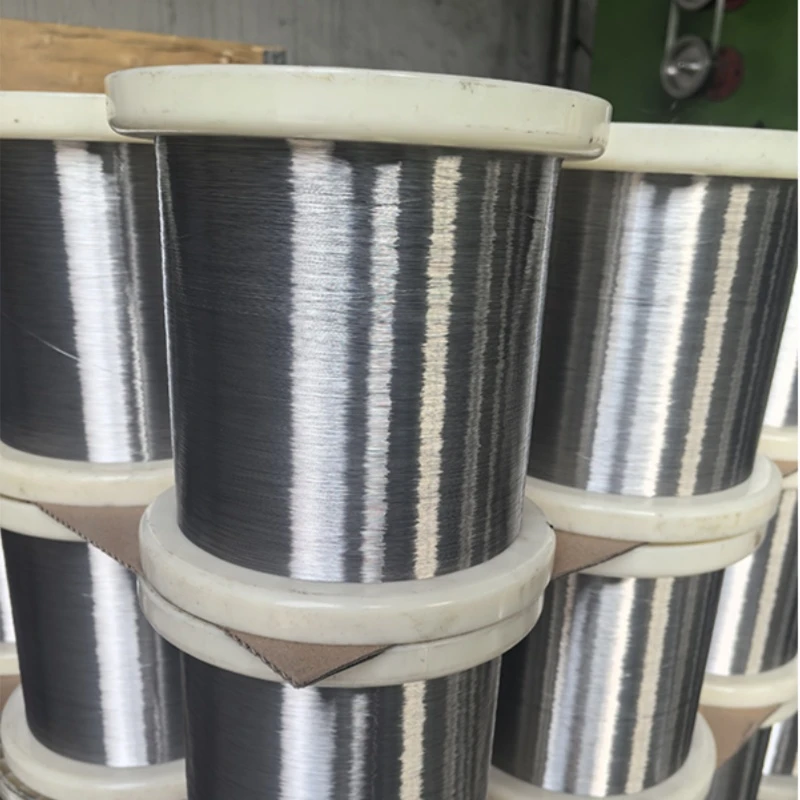

410 Stainless Steel Wire is also a martensitic stainless steel. It has good corrosion resistance and strength, but similar to 420 HC, its fatigue performance may be inferior to 304 due to its microstructure.
On the other hand, 204Cu Stainless Steel Wire is an austenitic stainless steel like 304. It has some similarities in terms of corrosion resistance and formability. However, the specific alloy composition of 304 gives it a bit of an edge in fatigue resistance, especially in applications where high - cycle fatigue is a concern.
When it comes to improving the fatigue resistance of 304 stainless steel wire, there are a few methods. One common approach is heat treatment. By carefully controlling the heating and cooling processes, we can modify the microstructure of the wire to enhance its mechanical properties, including fatigue resistance. Another method is shot peening. This process involves bombarding the surface of the wire with small shot particles, which creates a layer of compressive stress on the surface. Compressive stress helps to counteract the tensile stress caused by cyclic loading, reducing the likelihood of crack initiation.
As a supplier, I'm always looking for ways to ensure that our 304 stainless steel wire meets the highest standards of quality and performance. We conduct regular quality control checks, including fatigue testing, to make sure that our wire can withstand the demands of different applications.
If you're in need of stainless steel wire for your project, whether it's for a small - scale DIY job or a large - scale industrial application, I'd highly recommend considering 304 stainless steel wire for its excellent fatigue resistance. And if you have any questions or need more information, don't hesitate to reach out. We're here to help you find the right solution for your needs and have a successful cooperation in the future.
References
- ASM Handbook Volume 13A: Corrosion: Fundamentals, Testing, and Protection
- Metals Handbook Desk Edition, Second Edition