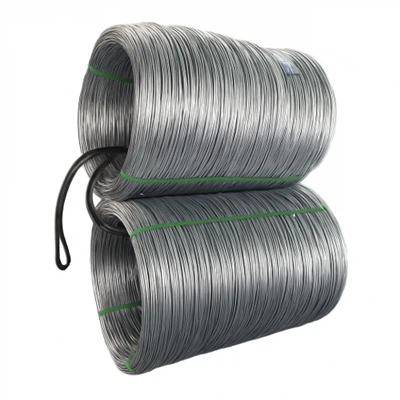
Surface roughness is a critical parameter that significantly influences the performance and applications of materials, especially in the case of stainless - steel wire. As a supplier of 410 Stainless Steel Wire, I am often asked about the surface roughness of 410 stainless steel wire. This blog aims to provide a comprehensive understanding of this topic.
Understanding Surface Roughness
Surface roughness refers to the irregularities on the surface of a material. These irregularities can occur at different scales and are typically characterized by parameters such as Ra (arithmetical mean deviation of the assessed profile), Rz (mean height of the profile irregularities), and Rq (root - mean - square deviation of the profile). In the context of 410 stainless steel wire, surface roughness can impact its corrosion resistance, friction coefficient, and the ability to bond with other materials.
Factors Affecting the Surface Roughness of 410 Stainless Steel Wire
Manufacturing Process
The manufacturing process of 410 stainless steel wire plays a crucial role in determining its surface roughness. For example, during hot rolling or cold drawing, the interaction between the wire and the processing equipment can leave marks on the wire surface. In hot rolling, the high - temperature environment can cause oxidation on the wire surface, which may increase the surface roughness. Cold drawing, on the other hand, can introduce small scratches or grooves if the dies are not properly maintained or if the drawing speed is not optimized.
Material Composition
The chemical composition of 410 stainless steel also has an impact on surface roughness. 410 stainless steel contains iron, chromium, and other elements. The presence of impurities or the non - uniform distribution of alloying elements can lead to differences in the hardness and corrosion resistance of the material at different points on the wire surface. This can cause uneven wear during processing and result in increased surface roughness.
Heat Treatment
Heat treatment is an important step in manufacturing 410 stainless steel wire. Improper heat treatment can cause changes in the microstructure of the wire, leading to variations in hardness and ductility. For instance, if the wire is over - annealed, it may become too soft, and the surface may be more prone to deformation during subsequent processing steps, increasing the surface roughness.
Importance of Surface Roughness in Different Applications
Corrosion Resistance
A smooth surface is generally more resistant to corrosion than a rough one. In 410 stainless steel wire, a rough surface provides more sites for the accumulation of corrosive substances such as moisture and oxygen. This can accelerate the corrosion process and reduce the service life of the wire. For example, in marine environments where corrosion is a major concern, 410 stainless steel wire with a low surface roughness is preferred.
Friction and Wear
The surface roughness of 410 stainless steel wire affects its friction coefficient. In applications where the wire is in contact with other moving parts, a high surface roughness can increase the friction, leading to more energy consumption and faster wear of the wire and the mating parts. For example, in wire - rope applications, a smooth wire surface can reduce friction and improve the overall performance and durability of the rope.
Coating and Bonding
When 410 stainless steel wire needs to be coated or bonded with other materials, surface roughness is a key factor. A certain degree of surface roughness can improve the adhesion of the coating or bonding agent. However, if the surface is too rough, it may cause problems such as poor coating coverage or weak bonding strength.
Measuring the Surface Roughness of 410 Stainless Steel Wire
There are several methods to measure the surface roughness of 410 stainless steel wire. The most common method is the use of a profilometer. A profilometer measures the surface profile by tracing a stylus across the surface of the wire. The data collected by the stylus can then be used to calculate parameters such as Ra, Rz, and Rq.
Another method is optical measurement. Optical profilometers use light to measure the surface topography of the wire. This method is non - contact, which is suitable for measuring delicate or soft wire surfaces. Additionally, atomic force microscopy (AFM) can provide high - resolution images of the wire surface, allowing for detailed analysis of the surface roughness at the nanoscale.
Controlling the Surface Roughness of 410 Stainless Steel Wire
As a supplier, we take several measures to control the surface roughness of 410 stainless steel wire. Firstly, we optimize the manufacturing process. This includes using high - quality processing equipment and maintaining the dies and rollers in good condition. We also control the processing parameters such as the rolling speed, drawing force, and annealing temperature to ensure a smooth wire surface.


Secondly, we conduct strict quality control during the production process. We regularly measure the surface roughness of the wire using advanced measuring instruments and adjust the production process if the roughness does not meet the specified standards.
Comparison with Other Stainless Steel Wires
When compared to 420 Stainless Steel Wire and 347H Stainless Wire, 410 stainless steel wire has its own characteristics in terms of surface roughness. 420 stainless steel wire generally has a higher carbon content, which can make its surface more prone to hardening during processing. This may result in a relatively rougher surface compared to 410 stainless steel wire under the same processing conditions.
347H stainless wire, on the other hand, contains niobium, which can improve its high - temperature stability. The addition of this element can also affect the surface roughness, and the manufacturing process for 347H stainless wire is often optimized to achieve a specific surface finish.
Conclusion
In conclusion, the surface roughness of 410 stainless steel wire is a complex parameter that is affected by multiple factors such as the manufacturing process, material composition, and heat treatment. It plays a vital role in various applications, including corrosion resistance, friction, and coating. As a supplier of 410 stainless steel wire, we are committed to providing high - quality products with controlled surface roughness.
If you are interested in our 410 Stainless Steel Wire and would like to discuss your specific requirements, please feel free to contact us for a detailed product consultation and procurement negotiation. We have extensive experience in serving customers from various industries and are confident in meeting your needs.
References
- Smith, J. (2018). "Surface Engineering of Metals". Elsevier.
- Jones, A. (2020). "Stainless Steel: Properties and Applications". CRC Press.
- Brown, C. (2019). "Measurement of Surface Roughness in Metal Wires". Journal of Materials Science.