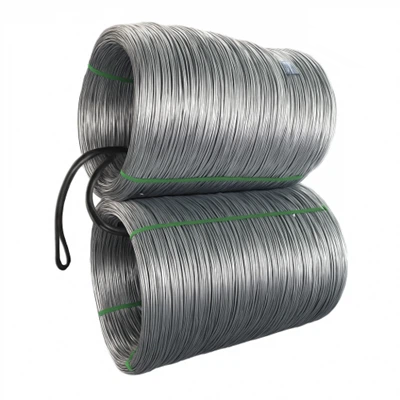
In the modern industrial field, stainless steel filaments are widely used in various industries for their excellent corrosion resistance, high strength and excellent processing performance. Understanding the design principles of stainless steel filaments will help us make better use of this material to meet the needs of different application scenarios.
The design principles of stainless steel filaments are first reflected in the selection and proportion of materials. Stainless steel is mainly composed of iron, chromium, nickel and other elements, among which chromium gives stainless steel excellent corrosion resistance. By precisely controlling the proportion of these elements, stainless steel filaments that meet different corrosion resistance requirements can be manufactured. For example, increasing the chromium content can improve corrosion resistance, while the addition of nickel can enhance the toughness and ductility of the material.
In the design process, the control of process parameters is also crucial. By adjusting the drawing speed, tension and mold accuracy of the wire drawing machine, the diameter and surface quality of the stainless steel filament can be precisely controlled. Modern process technology enables the diameter of stainless steel filaments to reach the micron level, meeting the needs of high-precision applications.
In addition, the heat treatment process is also an important part of the design of stainless steel filaments. Through proper heat treatment, the internal structure of stainless steel can be changed to optimize its mechanical properties. For example, annealing can eliminate internal stress and improve the softness of the wire; while quenching and tempering can enhance the strength and wear resistance of the wire.
The design of stainless steel filaments also fully considers the application needs. Different industries have different performance requirements for stainless steel filaments. For example, the medical field requires extremely high biocompatibility and corrosion resistance, while the electronics industry pays more attention to the conductivity and stability of the material. Therefore, at the beginning of the design, it is necessary to clarify the application scenario, and carry out targeted material selection and process optimization.
The design principle of stainless steel filaments integrates the essence of material science, process technology and application needs, and demonstrates the spirit of modern industry's pursuit of the ultimate material performance.