As a supplier of stainless steel flat bars, I often encounter inquiries about the yield strength of these versatile products. Yield strength is a critical mechanical property that determines the maximum stress a material can withstand before it begins to deform plastically. In this blog post, I'll delve into the concept of yield strength, explore how it applies to stainless steel flat bars, and discuss the factors that influence this important characteristic.
Understanding Yield Strength
Before we dive into the specifics of stainless steel flat bars, let's first understand what yield strength means. When a material is subjected to an external force, it experiences stress, which is the force per unit area. Initially, the material deforms elastically, meaning it returns to its original shape once the force is removed. However, as the stress increases, the material reaches a point where it begins to deform plastically, or permanently. This point is known as the yield point, and the corresponding stress is the yield strength.
Yield strength is typically measured in units of pressure, such as megapascals (MPa) or pounds per square inch (psi). It is an important parameter in engineering design because it helps determine the maximum load a structure or component can safely bear without undergoing permanent deformation.
Yield Strength of Stainless Steel Flat Bars
Stainless steel is a popular choice for flat bars due to its excellent corrosion resistance, strength, and versatility. The yield strength of stainless steel flat bars can vary depending on several factors, including the specific grade of stainless steel, the manufacturing process, and the heat treatment.
Stainless Steel Grades
There are numerous grades of stainless steel, each with its own unique chemical composition and mechanical properties. Some of the most common grades used for flat bars include 304, 316, and 410.
- 304 Stainless Steel: This is the most widely used grade of stainless steel. It contains approximately 18% chromium and 8% nickel, which gives it good corrosion resistance and formability. The yield strength of 304 stainless steel flat bars typically ranges from 205 to 250 MPa (30,000 to 36,000 psi).
- 316 Stainless Steel Flat Bar: This grade is similar to 304 but contains molybdenum, which enhances its corrosion resistance, especially in chloride-rich environments. The yield strength of 316 stainless steel flat bars is slightly higher than that of 304, typically ranging from 215 to 260 MPa (31,000 to 38,000 psi).
- 410 Stainless Steel Flat Bar: This is a martensitic stainless steel that contains approximately 12% chromium. It has good strength and hardness but lower corrosion resistance compared to austenitic grades like 304 and 316. The yield strength of 410 stainless steel flat bars can be significantly higher, ranging from 345 to 515 MPa (50,000 to 75,000 psi).
Manufacturing Process
The manufacturing process can also have a significant impact on the yield strength of stainless steel flat bars. Cold-rolled flat bars generally have higher yield strength than hot-rolled bars because the cold-rolling process work-hardens the material, increasing its strength and hardness.
Hot-rolled flat bars, on the other hand, are more ductile and have a smoother surface finish. However, their yield strength is typically lower than that of cold-rolled bars. The specific manufacturing process used will depend on the desired properties and applications of the flat bars.
Heat Treatment
Heat treatment is another important factor that can affect the yield strength of stainless steel flat bars. Annealing, for example, is a heat treatment process that involves heating the material to a specific temperature and then cooling it slowly. This process relieves internal stresses and improves the ductility of the material, but it can also reduce its yield strength.
Quenching and tempering, on the other hand, are heat treatment processes that can increase the yield strength and hardness of stainless steel. Quenching involves rapidly cooling the material from a high temperature, while tempering involves reheating the quenched material to a lower temperature to reduce its brittleness.
Factors Influencing Yield Strength
In addition to the grade of stainless steel, manufacturing process, and heat treatment, several other factors can influence the yield strength of stainless steel flat bars.
Temperature
The yield strength of stainless steel generally decreases with increasing temperature. At elevated temperatures, the material becomes more ductile and less resistant to deformation. This is an important consideration in applications where the flat bars will be exposed to high temperatures, such as in furnaces or exhaust systems.
Strain Rate
The strain rate, or the rate at which the material is deformed, can also affect its yield strength. At high strain rates, the material has less time to deform plastically, and its yield strength may increase. This is known as strain rate hardening.
Grain Size
The grain size of the stainless steel can also influence its yield strength. Smaller grain sizes generally result in higher yield strength because the grain boundaries impede the movement of dislocations, which are responsible for plastic deformation.
Importance of Yield Strength in Applications
The yield strength of stainless steel flat bars is a crucial factor in many applications. In structural applications, such as building frames and bridges, the yield strength determines the maximum load the flat bars can support without undergoing permanent deformation. In mechanical applications, such as shafts and gears, the yield strength affects the durability and performance of the components.
For example, in a construction project, if the yield strength of the stainless steel flat bars is too low, the structure may not be able to withstand the expected loads, leading to structural failure. On the other hand, if the yield strength is too high, the material may be more brittle and prone to cracking.
Conclusion
In conclusion, the yield strength of stainless steel flat bars is a complex property that depends on several factors, including the grade of stainless steel, the manufacturing process, heat treatment, temperature, strain rate, and grain size. As a supplier of stainless steel flat bars, it is important to understand these factors and provide our customers with accurate information about the yield strength of our products.
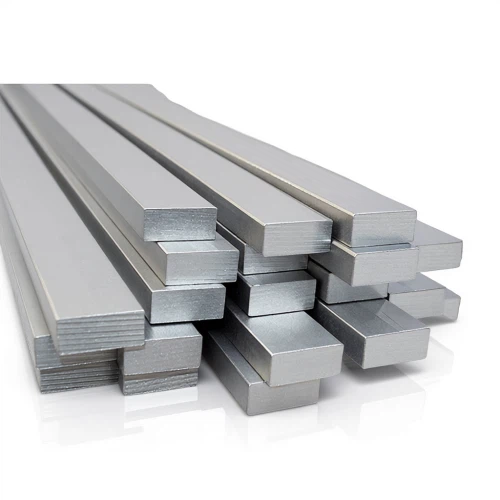

If you are in the market for Flat Bar Stock and need help selecting the right grade and specifications based on your application requirements, please don't hesitate to contact us. Our team of experts is here to assist you in making the best choice for your project. We can provide detailed technical information, samples, and competitive pricing. Let's start a conversation about your stainless steel flat bar needs and find the perfect solution together.
References
- ASM Handbook, Volume 1: Properties and Selection: Irons, Steels, and High-Performance Alloys. ASM International.
- ASTM International Standards for Stainless Steel Bars. ASTM International.
- Callister, W. D., & Rethwisch, D. G. (2018). Materials Science and Engineering: An Introduction. Wiley.