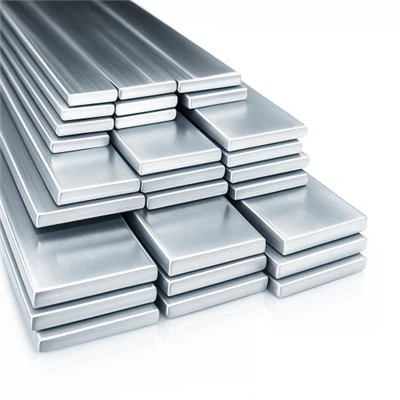
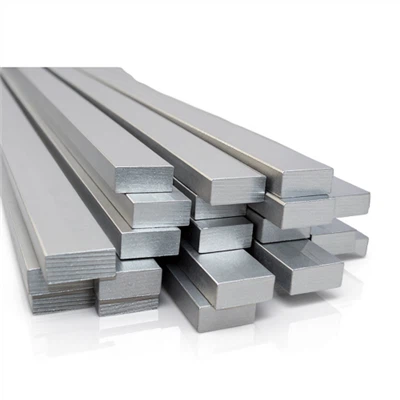
Flat steel is a kind of steel with rectangular or flat strip-like cross-section, its width usually ranges from 12-300mm and thickness from 4-60mm, and special specifications can be customised according to requirements. The materials cover ordinary carbon steel, high-quality carbon steel, stainless steel and alloy steel, etc., to meet the requirements of different scenarios for strength, corrosion resistance and abrasion resistance. The core advantage of flat steel lies in its 'flat' design, thin and wide cross-section is easy to embedded in the structure or combined with other components; through the reasonable thickness design, it can withstand a variety of mechanical loads such as tensile, bending; easy to cut, weld, drill holes, to meet the needs of complex processes.
Product Parameter (Specification)
Products description:
|
Product information |
Parameter |
Product intormation |
Parameter |
|
Product name |
Stainless steel flat bar |
Standard |
ASTM, JIS, DIN, EN |
|
Length |
Customised to customer requirements |
Certification |
ISO, SGS |
|
Grade-ASTM |
201, 202, 302, 304, 304L, 310, 310S, 316, 316L, 321, 410, 431, 430F, 904L & other |
Price term |
FOB,CIF |
|
Technique |
Cold rolled hot rolled |
Payment terms |
T/T L/C |
|
Packaging and delivery |
|||
|
Note : bundle, plastic bags, thin film, wooden pallet, standard seaworthy export packing or as customer demands |
|||
Product Feature and Application
Construction
In the construction field, flat steel is the 'invisible pillar' of the steel structure system.
Skeleton support: as the connecting plate or reinforcement of steel beams and columns, flat steel is fixed by welding or bolting to enhance the stability and shear resistance of the overall structure.
Pre-embedded components: Flat steel is pre-embedded before the concrete is poured, used to fix equipment bases and pipe supports, ensuring accurate and efficient installation at a later stage.
Decoration and safety: processed into stair treads, platform anti-slip strips or metal fences, combining functionality and industrial aesthetics.
01
Mechanical Manufacturing
Flat steel plays a central role in machining:
Basic structural components: as gear blanks, bearing housings, guide rails or frame beams, providing a stable load-bearing platform.
Connections and transmissions: cut into connecting plates, chain plates or drive belt supports to ensure precise coordination and power transmission between equipment components.
Moulds and tooling: High precision cold rolled flat steel can be used to manufacture stamping mould pads or fixtures to ensure the stability of mass production.
02
Transportation
Flat steel is widely used in vehicles, ships and rail transport:
Automotive industry: used for frame longitudinal beams, chassis reinforcement or cargo box floor, through the reasonable design of the thickness to achieve the unity of lightweight and high strength.
Shipbuilding: as bulkhead support plates or deck edge guards, the corrosion resistance of flat steel (especially stainless steel) can resist the erosion of the marine environment.
Rail transport: processed into rail fasteners or carriage skeleton connectors, adapting to high-frequency vibration and long-term fatigue loading.
03
Energy and Power
In power transmission and energy facilities, flat steel is the guarantee of safe operation:
Power transmission towers: as a reinforcement plate of angle steel or cross-stretching bracket, to enhance the tower's resistance to wind loads and deformation resistance.
Power equipment: transformer bases and distribution cabinet frames rely on flat steel for stable support, while its conductivity can be used for earthing systems.
New energy field: the keel of solar energy stent, the connectors of wind turbine, flat steel is indispensable in the green energy infrastructure.
04
Home and public facilities
Flat steel is moving from the industrial field to daily life:
Furniture design: customised metal table and chair frames, bookshelf laminates or decorative partitions, showing a simple and hard modern style.
Municipal engineering: Used for the base of street light poles, bus shelter roof supports or green belt guardrails, combining durability with low-cost maintenance.
Art installation: through bending, hollowing or surface treatment, flat steel can be transformed into sculpture, signage and other creative carriers.
05
Production Details
Product specifications and forms
|
Item |
Parameter range |
Description |
|
Material grade |
304 (06Cr19Ni10) |
Conformity standard: GB/T 1220-2007 (national standard), ASTM A240/A240M (American standard). |
|
Cross-section shape |
Rectangle |
Thickness and width of the combination of different specifications, edges can be right-angled or rounded processing |
|
Thickness (mm) |
3 ~ 20 |
Common thickness: 3, 5, 6, 8, 10, 12, 15, 20 (can be customised non-standard size) |
|
Width (mm) |
20 ~ 200 |
Common width: 20, 30, 40, 50, 60, 80, 100, 120, 150, 200 (on request) |
|
Length (m) |
1 ~ 6 |
Commonly specified size is 6 metres, support section cutting or special length customisation |
|
Surface condition |
2B, BA, No.4, brushed, sandblasted, etc. |
2B (cold rolled bright), BA (mirror), No.4 (brushed) is commonly used in industry, and the decorative scene can be polished or colour-plated treatment. |
FAQ
Packaging Display

Hot Tags: flat bar stock, China flat bar stock manufacturers, suppliers, factory