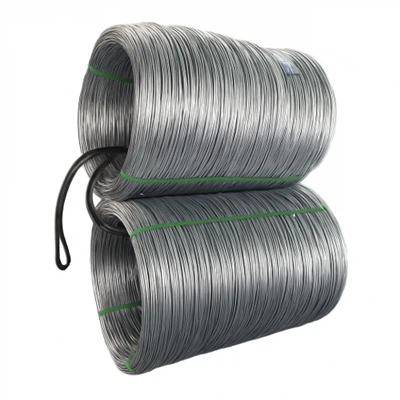
Hey there! As a supplier of stainless steel wire, I often get asked about the vanadium content in stainless steel wire. So, I thought I'd write up a blog post to share some insights on this topic.


First off, let's talk about what vanadium is and why it's used in stainless steel wire. Vanadium is a chemical element with the symbol V and atomic number 23. It's a hard, silvery - gray metal that's known for enhancing the properties of steel when added in small amounts. In stainless steel wire, vanadium serves several important functions.
One of the key benefits of adding vanadium is that it improves the strength and toughness of the wire. Vanadium forms very hard and stable carbides within the steel matrix. These carbides act as barriers to the movement of dislocations (defects in the crystal structure of the metal). As a result, the wire becomes more resistant to deformation, whether it's from stretching, bending, or external forces. This makes the stainless steel wire suitable for applications where high strength and durability are required, such as in springs or high - stress mechanical components.
Another advantage of vanadium in stainless steel wire is its ability to enhance the grain refinement. During the manufacturing process, when the steel is heated and cooled, the grain size of the metal can affect its properties. Vanadium helps to control the grain growth, resulting in a finer and more uniform grain structure. A finer grain structure generally leads to better mechanical properties, including improved ductility and fatigue resistance. This means that the wire can withstand repeated loading and unloading cycles without breaking or failing prematurely.
Now, let's get to the question of just how much vanadium is typically found in stainless steel wire. Well, it really depends on the specific grade of stainless steel. Different grades have different compositions, and the amount of vanadium added can vary accordingly.
For example, some high - performance stainless steel grades used in specialized applications may have a relatively high vanadium content, typically in the range of 0.1% to 0.5% by weight. These grades are often engineered for very specific purposes, like aerospace or high - end automotive components, where the enhanced properties provided by vanadium are crucial.
On the other hand, more common grades of stainless steel wire may have little to no vanadium at all. For instance, the 302 Stainless Steel Spring Wire is a popular choice for making springs. This grade is mainly composed of iron, chromium, and nickel, with only trace amounts of other elements. Vanadium is not a significant part of its composition, as the properties required for spring applications can be achieved through the combination of the main elements.
The 420 HC Stainless Steel Wire is another well - known grade. It's a martensitic stainless steel that's often used in applications where high hardness and corrosion resistance are needed, such as in cutlery and surgical instruments. While it does contain some alloying elements, the vanadium content is usually quite low, often less than 0.1%.
The 304L Stainless Steel Wire is one of the most widely used stainless steel grades. It's known for its excellent corrosion resistance and good formability. Similar to the 302 grade, the vanadium content in 304L is typically negligible, as the focus is on the balance of chromium, nickel, and other elements to achieve the desired properties.
When it comes to determining the exact vanadium content in a particular batch of stainless steel wire, it's important to rely on proper testing and analysis. We, as a stainless steel wire supplier, ensure that all our products meet the specified composition requirements. We use advanced analytical techniques, such as spectroscopy, to accurately measure the elemental composition of the wire. This way, we can guarantee the quality and performance of our products to our customers.
If you're in the market for stainless steel wire, understanding the vanadium content can help you make an informed decision. Depending on your application, you may need a wire with a specific vanadium content or one that's free of vanadium altogether. For example, if you're making a high - stress spring that needs to withstand a lot of force and repeated use, you might consider a grade with a higher vanadium content. On the other hand, if corrosion resistance and formability are your main concerns, a grade with little to no vanadium could be a better choice.
We're here to assist you with all your stainless steel wire needs. Whether you have questions about the vanadium content, the best grade for your application, or anything else related to our products, we're just a message away. Our team of experts is always ready to provide you with detailed information and guidance to help you select the right stainless steel wire for your project.
In conclusion, vanadium can play an important role in the properties of stainless steel wire, but its presence and amount vary depending on the grade. By understanding these differences, you can make a more educated choice when it comes to purchasing stainless steel wire. If you're interested in discussing your requirements further, don't hesitate to reach out. We're eager to help you find the perfect solution for your business.
References:
- Some general knowledge about stainless steel metallurgy from various industry textbooks and research papers.