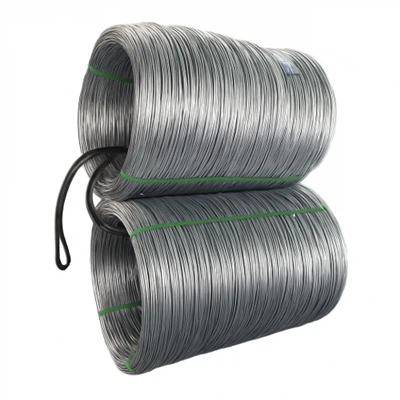
316 stainless steel wire is a popular choice in various industries due to its excellent corrosion resistance, high strength, and good formability. As a reliable 316 Stainless Steel Wire supplier, I understand the importance of ensuring that this wire maintains its corrosion - resistant properties, especially in harsh environments. In this blog, I'll share some effective ways to improve the corrosion resistance of 316 stainless steel wire.
Understanding the Corrosion Mechanism of 316 Stainless Steel Wire
Before we dive into the improvement methods, it's crucial to understand how corrosion occurs in 316 stainless steel wire. The corrosion of stainless steel is mainly caused by the breakdown of the passive film on its surface. This passive film, composed mainly of chromium oxide, acts as a protective barrier against corrosive agents. When the passive film is damaged or cannot form properly due to factors such as high - chloride environments, extreme pH levels, or mechanical damage, the underlying metal is exposed to corrosive substances, leading to corrosion.
Surface Treatment
Passivation
Passivation is a chemical treatment process that can significantly enhance the corrosion resistance of 316 stainless steel wire. It involves immersing the wire in a passivating solution, usually nitric acid or citric acid. The acid removes free iron and other contaminants from the surface of the wire, allowing a more uniform and stable passive film to form.
During passivation, the acid reacts with the chromium in the stainless steel to form a thin, continuous chromium oxide layer. This layer acts as a barrier, preventing oxygen and other corrosive agents from reaching the underlying metal. To ensure the effectiveness of passivation, it's essential to follow the correct process parameters, such as the concentration of the passivating solution, temperature, and immersion time.
Electroplating
Electroplating is another effective surface treatment method. By depositing a layer of corrosion - resistant metal on the surface of the 316 stainless steel wire, we can provide an additional protective barrier. For example, nickel electroplating can improve the wire's resistance to oxidation and certain chemical substances.
The electroplating process involves immersing the wire in an electrolyte solution containing metal ions and applying an electric current. The metal ions are then reduced and deposited on the surface of the wire. However, it's important to note that the electroplating layer should be uniform and free of defects to ensure its long - term effectiveness.
Alloying Elements
The addition of certain alloying elements can improve the corrosion resistance of 316 stainless steel wire. In addition to the standard chromium and nickel in 316 stainless steel, elements such as molybdenum play a crucial role. Molybdenum enhances the resistance of the wire to pitting and crevice corrosion, especially in chloride - containing environments.
Some advanced manufacturing processes allow for the precise control of alloying element content. By adjusting the proportion of these elements, we can customize the corrosion - resistant properties of the wire according to specific application requirements. For example, in applications where the wire is exposed to seawater or other high - chloride environments, increasing the molybdenum content can significantly improve its performance.
Heat Treatment
Heat treatment can also have a positive impact on the corrosion resistance of 316 stainless steel wire. Annealing is a common heat - treatment process that involves heating the wire to a specific temperature and then slowly cooling it. This process relieves internal stresses in the wire and can improve the uniformity of the microstructure.


A more uniform microstructure is beneficial for the formation and stability of the passive film. During annealing, the atoms in the metal have a chance to rearrange themselves, reducing the presence of defects and impurities. As a result, the wire becomes more resistant to corrosion. However, it's important to control the heat - treatment parameters carefully to avoid over - or under - heating, which can have a negative impact on the wire's properties.
Environmental Control
Avoiding High - Chloride Environments
Chloride ions are one of the most common causes of corrosion in stainless steel. High - chloride environments, such as seawater, deicing salts, and some industrial chemicals, can break down the passive film on the surface of 316 stainless steel wire. If possible, it's best to avoid exposing the wire to these environments.
In cases where exposure is unavoidable, additional protective measures should be taken. For example, using protective coatings or enclosures can reduce the direct contact between the wire and the corrosive environment.
Controlling pH Levels
The pH level of the environment also affects the corrosion resistance of 316 stainless steel wire. In general, 316 stainless steel performs well in a pH range of approximately 4 - 10. Outside this range, the passive film may become unstable, increasing the risk of corrosion.
If the wire is used in an environment with extreme pH levels, appropriate measures should be taken to adjust the pH or protect the wire. For example, in acidic environments, using corrosion - resistant linings or adding pH - adjusting agents can help maintain the integrity of the passive film.
Maintenance and Inspection
Regular maintenance and inspection are essential for ensuring the long - term corrosion resistance of 316 stainless steel wire. Inspecting the wire periodically for signs of corrosion, such as rust spots or pitting, allows for early detection and timely treatment.
If corrosion is detected, appropriate measures should be taken immediately. This may include cleaning the wire to remove corrosive substances, reapplying a protective coating, or performing passivation again. Regular cleaning can also prevent the accumulation of dirt and debris, which can trap moisture and accelerate corrosion.
Conclusion
Improving the corrosion resistance of 316 stainless steel wire requires a comprehensive approach that includes surface treatment, alloying element control, heat treatment, environmental control, and regular maintenance. As a 316 Stainless Steel Wire supplier, I am committed to providing high - quality products and sharing professional knowledge to help our customers get the most out of our products.
If you are interested in our 316 stainless steel wire or other related products such as 403 Stainless Steel Spring Wire, 420 HC Stainless Steel Wire, and 317L Stainless Steel Welding Wire, please feel free to contact us for more information and to discuss your specific requirements. We look forward to establishing a long - term and mutually beneficial partnership with you.
References
- ASM Handbook Committee. ASM Handbook Volume 13A: Corrosion: Fundamentals, Testing, and Protection. ASM International, 2003.
- Uhlig, H. H., & Revie, R. W. Corrosion and Corrosion Control: An Introduction to Corrosion Science and Engineering. John Wiley & Sons, 2019.
- Stainless Steel World Americas. "Corrosion Resistance of Stainless Steels." Stainless Steel World Americas, various issues.