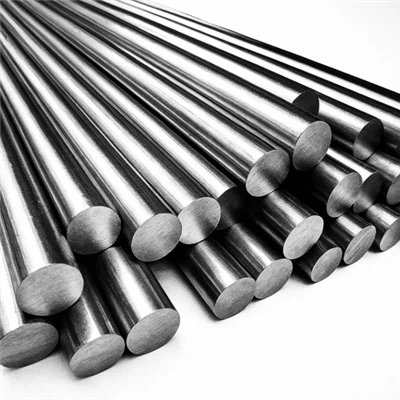
Hey there! As a supplier of bright steel rods, I get lots of questions about different aspects of these products. One topic that often comes up is the stress - strain curve of bright steel rods. So, I thought I'd take some time to break it down for you.
What's a Stress - Strain Curve Anyway?
First off, let's understand what a stress - strain curve is. In simple terms, it's a graph that shows the relationship between the stress applied to a material and the resulting strain. Stress is basically the force applied per unit area of the material, and strain is the amount of deformation that occurs in the material due to that stress.
When it comes to bright steel rods, this curve is super important. It helps engineers and manufacturers understand how the rod will behave under different loads. Whether you're using the rod in construction, automotive parts, or some other application, knowing its stress - strain characteristics can prevent failures and ensure the safety and efficiency of your projects.
The Basics of the Bright Steel Rod Stress - Strain Curve
The stress - strain curve for bright steel rods typically has a few distinct regions.
Elastic Region
The first part of the curve is the elastic region. In this area, when you apply stress to the bright steel rod, it deforms. But here's the cool part: once you remove the stress, the rod goes back to its original shape. It's like a rubber band that stretches when you pull it but then returns to its normal size when you let go.
The slope of the line in the elastic region is known as the modulus of elasticity, or Young's modulus. For bright steel rods, this value is relatively high, which means the rod can withstand a fair amount of stress without significant permanent deformation. This property makes bright steel rods great for applications where you need the material to return to its original shape, like in springs or some types of fasteners.
Yield Point
As you keep increasing the stress on the bright steel rod, you'll reach a point called the yield point. This is where the material starts to undergo permanent deformation. Once you pass the yield point and then remove the stress, the rod won't go back to its exact original shape. It's like stretching the rubber band too far so that it doesn't fully contract anymore.
There are actually two types of yield points: the upper yield point and the lower yield point. The upper yield point is the peak stress where the material first starts to yield, and then the stress drops a bit to the lower yield point, where the material continues to deform plastically at a relatively constant stress level.
Plastic Region
After the yield point, the rod enters the plastic region. In this area, the rod can be deformed a significant amount without breaking. The stress keeps increasing with the strain, but not as steeply as in the elastic region. This plastic deformation property is useful in many manufacturing processes. For example, when you're forging or bending bright steel rods into different shapes, you're relying on the plastic region of the stress - strain curve.
Ultimate Tensile Strength
As you keep applying stress, the rod will reach its ultimate tensile strength. This is the maximum stress the rod can withstand before it starts to neck down and eventually break. Necking is when the cross - sectional area of the rod starts to decrease in a localized area, like when you're trying to pull a piece of taffy apart and it gets thinner in the middle.
Fracture Point
Finally, the rod reaches the fracture point. This is when the rod breaks under the applied stress. The shape of the stress - strain curve near the fracture point can tell you a lot about the ductility of the material. A ductile material will have a long and drawn - out curve before fracture, indicating that it can undergo a large amount of plastic deformation. Bright steel rods are usually quite ductile, which is another reason they're so widely used.
Different Grades of Bright Steel Rods and Their Stress - Strain Curves
There are different grades of bright steel rods, and each grade can have a slightly different stress - strain curve. For example, 304 Stainless Steel Round Bar is known for its good corrosion resistance and moderate strength. Its stress - strain curve will show a relatively high yield strength and ultimate tensile strength, along with decent ductility.
303 Stainless Steel Round Bar, on the other hand, is more easily machinable. It might have a slightly lower yield strength compared to 304, but it still offers good performance in the right applications. The stress - strain curve will reflect its properties, with a shape that shows how it responds to stress and strain during machining and use.
420 Stainless Steel Round Bar is a martensitic stainless steel. It has high strength and hardness, which will be evident in its stress - strain curve. The curve will show a high yield point and ultimate tensile strength, but it might have less ductility compared to some other grades.
Why Understanding the Stress - Strain Curve Matters for You
If you're in the market for bright steel rods, understanding the stress - strain curve can help you make the right choice for your project. You need to know the maximum load the rod will need to bear, and then you can select a grade of bright steel rod that has the appropriate stress - strain characteristics.
For example, if you're building a structure that will experience high static loads, you'll want a rod with a high yield strength and ultimate tensile strength. On the other hand, if you're doing a project that involves a lot of bending and shaping, you'll need a rod with good ductility.


Let's Talk Business!
I hope this blog post has given you a better understanding of the stress - strain curve of bright steel rods. As a supplier, I'm here to help you find the perfect bright steel rod for your needs. Whether you're working on a small DIY project or a large - scale industrial application, I've got the knowledge and the products to support you.
If you're interested in purchasing bright steel rods, don't hesitate to reach out. Let's have a chat about your requirements, and I'll do my best to provide you with the right solution at a competitive price.
References
- Callister, W. D., & Rethwisch, D. G. (2018). Materials Science and Engineering: An Introduction. Wiley.
- Ashby, M. F., & Jones, D. R. H. (2012). Engineering Materials 1: An Introduction to Properties, Applications and Design. Butterworth - Heinemann.