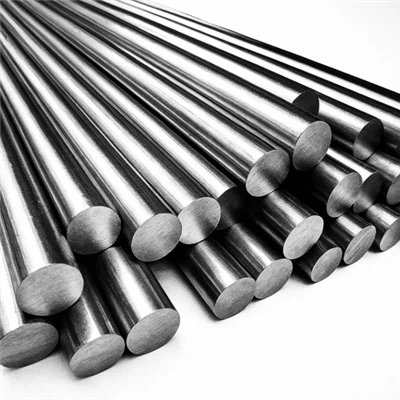
Hey there! As a supplier of 302 Stainless Round Bar, I often get asked about how to improve its corrosion resistance. Well, heat - treatment methods can play a huge role in this. Let's dive into some of the heat - treatment methods that can make our 302 Stainless Round Bar more resistant to corrosion.
Annealing
Annealing is a common heat - treatment method. It involves heating the 302 Stainless Round Bar to a specific temperature and then slowly cooling it. For 302 stainless steel, the typical annealing temperature is around 1010 - 1120°C. When we heat the bar to this temperature range, it helps to relieve internal stresses that might have been introduced during manufacturing processes like cold working.
The slow cooling process allows the grains in the steel to grow in a more uniform way. This uniform grain structure is beneficial for corrosion resistance. A well - annealed 302 Stainless Round Bar has a more stable microstructure, which can better withstand the corrosive environment. For example, in a marine environment where there is a lot of saltwater, an annealed 302 bar will be less likely to corrode compared to a non - annealed one.
Solution Treatment
Solution treatment is another effective way. First, we heat the 302 Stainless Round Bar to a high temperature, usually around 1050 - 1100°C. At this high temperature, the carbides in the steel dissolve into the matrix. After that, we quickly quench the bar, usually in water.
This process ensures that the carbides remain in solution, preventing them from precipitating at the grain boundaries. When carbides precipitate at the grain boundaries, they can create a phenomenon called sensitization, which makes the steel more susceptible to corrosion. By keeping the carbides in solution, solution treatment enhances the corrosion resistance of the 302 Stainless Round Bar.
Stress Relieving
Stress relieving is a heat - treatment method that can also improve corrosion resistance. When the 302 Stainless Round Bar undergoes various manufacturing processes, it accumulates internal stresses. These stresses can act as initiation points for corrosion.
We heat the bar to a relatively low temperature, typically between 400 - 650°C. This temperature is high enough to relieve the internal stresses but not high enough to cause significant changes in the microstructure. By reducing the internal stresses, we make the bar more resistant to corrosion. For instance, in a chemical processing plant where the bar is exposed to corrosive chemicals, stress - relieved bars are less likely to develop corrosion pits.
Comparison with Other Bars
Now, let's compare our 302 Stainless Round Bar with some other types of bars. The 316 Round Bar is well - known for its excellent corrosion resistance, especially in marine environments. It contains more molybdenum than 302 stainless steel, which gives it better resistance to pitting and crevice corrosion. However, our 302 Stainless Round Bar can still be a great option if proper heat - treatment methods are applied.
The Inconel 625 Bar Stock is another high - performance material. It has outstanding corrosion resistance in a wide range of harsh environments, including high - temperature and highly corrosive chemical environments. But it is also more expensive. Our 302 Stainless Round Bar, with the right heat - treatment, can offer a cost - effective alternative for many applications.
How Heat - Treatment Affects Corrosion Resistance
The heat - treatment methods we've discussed change the microstructure of the 302 Stainless Round Bar. A more uniform and stable microstructure means that the bar is less likely to form corrosion cells. Corrosion cells are areas where the metal starts to corrode due to differences in electrochemical potential.
For example, in an annealed bar, the uniform grain structure reduces the chances of creating local areas with different electrochemical properties. This makes it harder for corrosion to start and spread. Similarly, solution treatment prevents sensitization, which is a major cause of corrosion in stainless steels.
Applications of Heat - Treated 302 Stainless Round Bar
Heat - treated 302 Stainless Round Bar has a wide range of applications. In the food processing industry, where the bars are in contact with food and cleaning agents, good corrosion resistance is crucial. Our heat - treated 302 bars can be used in equipment like conveyor systems and mixing tanks.
In the automotive industry, these bars can be used in various components such as shafts and fasteners. The improved corrosion resistance ensures that the components have a longer lifespan, reducing maintenance costs.


Why Choose Our 302 Stainless Round Bar
As a supplier, we take pride in providing high - quality 302 Stainless Round Bar. We have a team of experts who are well - versed in heat - treatment processes. We can customize the heat - treatment according to your specific requirements. Whether you need a bar for a marine application or a chemical processing plant, we can ensure that our 302 Stainless Round Bar has the optimal corrosion resistance.
If you're interested in our 302 Stainless Round Bar, don't hesitate to contact us for a quote or to discuss your specific needs. We're always here to help you find the best solution for your project.
References
- ASM Handbook Volume 4: Heat Treating. ASM International.
- Stainless Steel: A Technical Guide. The Nickel Institute.