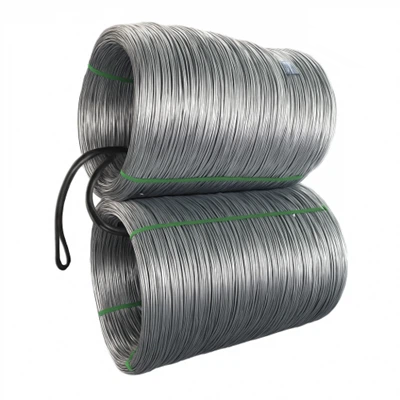
Hey there! As a supplier of stainless steel angle bars, I'm super excited to walk you through the production process of these versatile products. Stainless steel angle bars are widely used in construction, manufacturing, and various other industries due to their strength, durability, and corrosion resistance. So, let's dive right in and explore how these angle bars are made.
Raw Material Selection
The first step in the production of stainless steel angle bars is selecting the right raw materials. We typically use high - quality stainless steel alloys, which are a combination of iron, chromium, nickel, and other elements. Chromium is what gives stainless steel its corrosion - resistant properties, while nickel enhances its ductility and toughness.
The choice of alloy depends on the specific application of the angle bar. For example, if the angle bar is going to be used in a marine environment, we might choose an alloy with a higher chromium and nickel content to ensure better corrosion resistance. Once we've selected the appropriate alloy, we source the raw materials from reliable suppliers. We make sure that the materials meet strict quality standards, as the quality of the raw materials directly impacts the quality of the final product.
Melting and Refining
After we've got the raw materials, it's time to melt them down. The melting process takes place in a large electric arc furnace or a basic oxygen furnace. In an electric arc furnace, an electric current is passed through the raw materials, generating enough heat to melt them. In a basic oxygen furnace, pure oxygen is blown into the furnace to speed up the melting process and remove impurities.
Once the raw materials are melted, the molten steel goes through a refining process. This is where we remove any remaining impurities such as sulfur, phosphorus, and excess carbon. We use various techniques like ladle refining and vacuum degassing to achieve the desired purity level. Ladle refining involves adding certain chemicals to the molten steel in a ladle to react with the impurities and remove them. Vacuum degassing, on the other hand, removes dissolved gases like hydrogen and nitrogen from the molten steel by subjecting it to a vacuum.
Continuous Casting
After the refining process, the molten steel is ready for continuous casting. In this process, the molten steel is poured into a water - cooled copper mold, which gives it an initial shape. As the steel cools and solidifies in the mold, it is continuously pulled out at a controlled speed. This results in a long, semi - finished product called a billet or a bloom, depending on its size.
Continuous casting is a very efficient process as it reduces the amount of waste and improves the quality of the product. The billets or blooms produced in this step have a more uniform structure and fewer internal defects compared to products made by traditional casting methods.
Hot Rolling
The next step is hot rolling. The billets or blooms are reheated to a high temperature, usually around 1200°C, and then passed through a series of rolling mills. The rolling mills apply pressure to the heated steel, gradually reducing its thickness and shaping it into the desired cross - section of an angle bar.

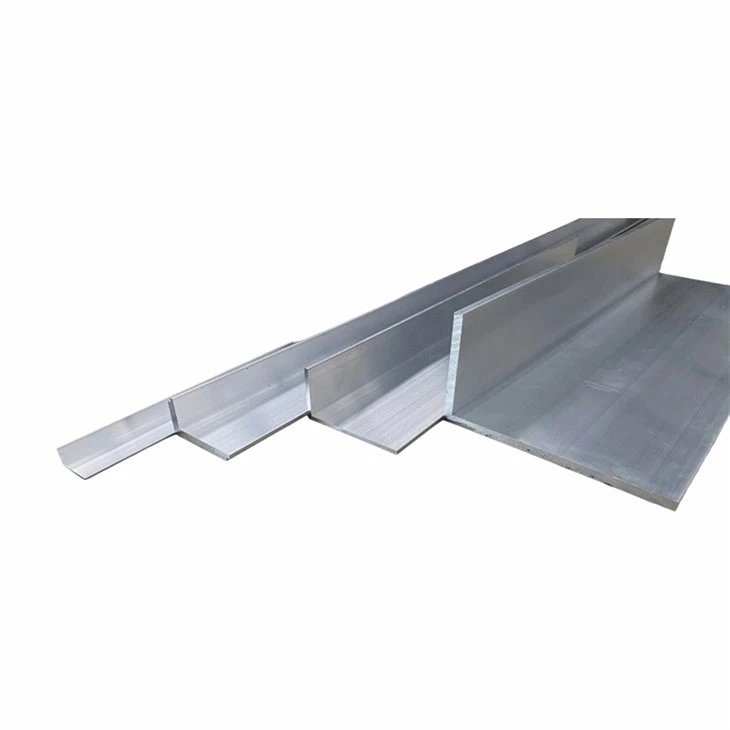
During the hot rolling process, the steel becomes more malleable, and its grains are refined, which improves its mechanical properties. The angle bars are rolled to the required dimensions, including the leg length, thickness, and angle. We can produce different types of angle bars, such as L Type Angle Bar, which is one of our popular products. It has an L - shaped cross - section and is widely used in structural applications.
Cooling and Straightening
Once the hot rolling is complete, the angle bars are cooled down. The cooling rate is carefully controlled to ensure that the angle bars have the right mechanical properties. If the cooling is too fast, the angle bars may become brittle, while if it's too slow, the grain structure may not be ideal.
After cooling, the angle bars may go through a straightening process. Sometimes, during the hot rolling and cooling, the angle bars can become slightly bent or warped. The straightening process uses special equipment to correct these deformities and make sure the angle bars are perfectly straight. This is important because straight angle bars are easier to install and use in various applications.
Cutting and Finishing
The cooled and straightened angle bars are then cut to the desired lengths. We use saws or shearing machines for this purpose. The cutting process is precise to ensure that the angle bars meet the customer's length requirements.
After cutting, the angle bars go through a finishing process. This may include surface treatment to improve their appearance and corrosion resistance. We can apply processes like pickling, which involves immersing the angle bars in an acid solution to remove any scale or impurities from the surface. We can also apply a passivation treatment, which creates a thin, protective oxide layer on the surface of the angle bars. This layer helps prevent corrosion and gives the angle bars a shiny finish. Another type of angle bar we offer is the Steel Solid Angle Bar. It has a solid cross - section and is known for its high strength.
Quality Inspection
Before the angle bars are shipped to the customers, they undergo a thorough quality inspection. We check for various aspects such as dimensions, surface finish, mechanical properties, and chemical composition. We use advanced testing equipment like calipers to measure the dimensions, hardness testers to check the hardness, and spectrometers to analyze the chemical composition.
If any angle bars don't meet our strict quality standards, they are either re - worked or rejected. This ensures that only the highest - quality angle bars reach our customers. We also offer a Welding Angle Bar, which is designed for easy welding and is commonly used in fabrication work.
Why Choose Our Stainless Steel Angle Bars
As a supplier, we take pride in offering high - quality stainless steel angle bars. Our products are made using the latest production techniques and strict quality control measures. We have a wide range of angle bars available, including different sizes, shapes, and grades to meet the diverse needs of our customers.
Whether you're working on a small DIY project or a large - scale construction project, our angle bars are a reliable choice. They are strong, durable, and resistant to corrosion, which means they will last for a long time. Plus, we offer competitive prices and excellent customer service.
If you're interested in purchasing our stainless steel angle bars, we'd love to have a chat with you. We can discuss your specific requirements, provide you with a quote, and answer any questions you may have. Just reach out to us, and let's start a conversation about how our angle bars can fit into your project.
References
- ASM Handbook Volume 1: Properties and Selection: Irons, Steels, and High - Performance Alloys
- Metals Handbook Desk Edition, Third Edition
So, there you have it - the production process of stainless steel angle bars from start to finish. I hope this blog has given you a better understanding of how these useful products are made. If you have any more questions, feel free to ask!