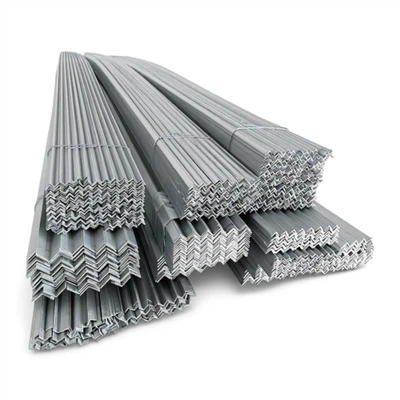
Welded angle is a steel product that is processed into L-shaped cross-section by welding process, compared with the traditional hot rolled angle, welded angle has the significant advantages of flexible production, diverse specifications, accurate size and so on. As an important material in modern steel structure engineering, welded angle plays an irreplaceable role in construction, machinery, bridge, electric power and other fields.
Product Parameter (Specification)
Products description:
|
Product information |
Parameter |
Product intormation |
Parameter |
|
Product name |
Stainless steel angle bar |
Standard |
ASTM, JIS, DIN, EN |
|
Length |
Customised to customer requirements |
Certification |
ISO, SGS |
|
Grade-ASTM |
304,316,430,Q235,A36,SS400,Q345,Q390& other |
Price term |
FOB |
|
Technique |
Cold-formed hot rolled |
Payment terms |
T/T L/C |
|
Packaging and delivery |
|||
|
Note : bundle, plastic bags, thin film, wooden pallet, standard seaworthy export packing or as customer demands |
|||
Product Feature and Application
Construction and civil engineering
In concrete structures, welded angles can be used as embedded parts for fixing equipment bases; in roof trusses or curtain wall keels, they can be welded to form a grid-like support system to improve overall seismic resistance and wind pressure resistance. In addition, welded angles can also be used for stair handrails, maintenance platforms and other ancillary structures, taking into account the functionality and safety.
bridge and traffic facilities
Bridge engineering requires high strength and durability of materials, welded steel angle is often used for bridge truss, guardrail and connecting parts. In railway bridges, welded angle constitutes the lateral support between rail sleepers, dispersing the track load; in the tower part of suspension bridge or cable-stayed bridge, multi-layer angle welded structure can enhance the stability of the tower column. In addition, traffic signal light poles, highway noise barrier skeleton is also mostly used welded steel angle, through the anti-corrosion treatment to adapt to the complex outdoor environment.
machinery manufacturing and heavy equipment
Mechanical equipment requires a large number of rigid brackets and connecting parts, welded steel angle because of its easy processing characteristics become preferred. For example, the chassis frame of engineering machinery, mining equipment conveyor belt bracket, all through the welded angle to achieve modular assembly; in the automated production line, angle welded frame can provide a solid installation platform for precision instruments. In addition, agricultural machinery (such as harvesters, planters) shield and load-bearing structure also rely on the lightweight design of welded steel angle.
power and communications infrastructure
Facilities such as power transmission towers and communication base stations are exposed to the field for a long time, which requires strict resistance to corrosion and deformation of the structure. Welded angle steel through hot-dip galvanising or spraying process, become the main material of high-voltage transmission towers, its triangular or quadrilateral welded frame can effectively resist strong wind loads. In the field of communication, the angle welded base station tower not only supports the antenna equipment, but also need to adapt to the mountain, coastal and other terrain, its modular design is easy to transport and on-site assembly.
ships and marine engineering
Shipbuilding, welded steel angle is commonly used in bulkhead reinforcement, deck support and the construction of the hull skeleton. Its welded nodes need to meet strict sealing and fatigue resistance requirements to cope with wave impact. In marine platforms, port terminals and other projects, welded angle steel structure can be used as anti-collision piles, bollards or buoy bases, through special anti-corrosion treatment to resist seawater erosion and extend service life.
home and decorative innovation
The application of welded steel angle is not only limited to industrial scenes, in recent years in furniture design and architectural decoration has also emerged. Industrial style furniture is often exposed welded steel frame with wood or glass, highlighting the simple and tough style; shopping malls, exhibition halls, decorative partitions or art installations, welded steel through creative splicing can be formed by the geometric aesthetics of a strong three-dimensional structure. In addition, greenhouses, storage shelves and other civil facilities also rely on its low-cost, high-strength characteristics.
Production Details
The product specifications in the following table are regular specifications, if there are special circumstances, we can be customised according to customer requirements
|
Type |
Side length (mm) |
Thickness (mm) |
Theoretical weight (kg/m) |
Length (m) |
|
equilateral angle |
20×20 |
3 |
0.89 |
6(customizable) |
|
30×30 |
3 |
1.37 |
|
|
|
40×40 |
4 |
2.42 |
|
|
|
50×50 |
5 |
3.77 |
|
|
|
60×60 |
6 |
5.42 |
|
|
|
80×80 |
8 |
9.66 |
|
|
|
Unequal angles |
30×20 |
3 |
1.12 |
6(customizable) |
|
40×25 |
4 |
2.11 |
|
|
|
50×30 |
5 |
3.05 |
|
|
|
60×40 |
6 |
4.58 |
|
FAQ
Packaging Display

Hot Tags: welding angle bar, China welding angle bar manufacturers, suppliers, factory