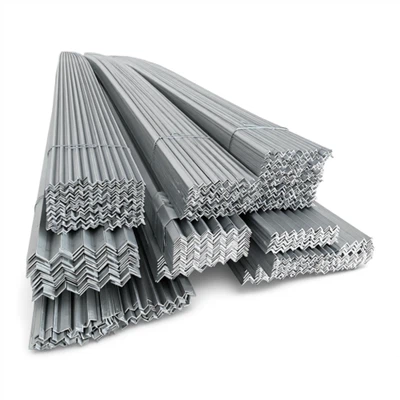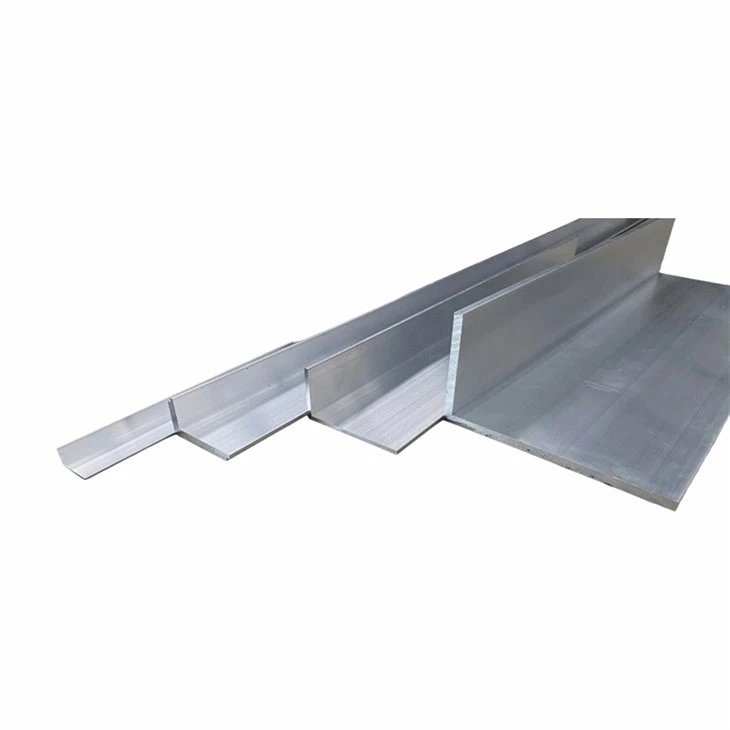
L-angle, also known as angle iron, is a long steel bar with two sides perpendicular to each other to form a right angle shape, and its cross-section is in the shape of the letter 'L', which is one of the most commonly used basic steel materials in the fields of construction, machinery manufacturing, and bridge construction, etc. As a kind of economical steel, L-angle plays an irreplaceable role in various engineering projects due to its simple structure and easy installation. As a kind of economic steel, L-type angle plays an irreplaceable role in all kinds of engineering projects because of its simple structure, easy installation, strong bearing capacity and other characteristics.
Product Parameter (Specification)
Products description:
|
Product information |
parameter |
Product intormation |
Parameter |
|
Product name |
Stainless steel angle bar |
Standard |
ASTM, JIS, DIN, EN |
|
Length |
Customised to customer requirements |
Certification |
ISO, SGS |
|
Grade-ASTM |
304,316,430,Q235,A36,SS400,Q345,Q390& other |
Price term |
FOB |
|
Technique |
Cold-formed hot rolled |
Payment terms |
T/T L/C |
|
Packaging and delivery |
|||
|
Note : bundle, plastic bags, thin film, wooden pallet, standard seaworthy export packing or as customer demands |
|||
Hot rolled L-angle
moulded by high temperature hot rolling process, with rough surface but high strength, suitable for load-bearing structure.
Cold-formed L-angle
Processed through the cold bending process, with a smooth surface and precise dimensions, mostly used for decorative or light structures.
Product Feature and Application
Building Structure
Beam and column support systems for factories and warehouses
Connectors and reinforcements for steel structure buildings
Keel supports for curtain walls
01
Machinery and Equipment
Equipment frames and support structures
Brackets and guide rails for conveying machinery
Reinforcement parts for heavy machinery
02
Power Communication
Main structure of transmission towers
Antenna supports for communication base stations
Supporting members of cable bridges
03
Transport
Auxiliary support structures for bridges
Reinforcement members for vehicle chassis and carriages
Contact network supports for rail transport
04
Other Areas
Columns and beams for shelving systems
Skeletons for billboards and signage
Support structures for furniture manufacturing
05
Production Details
Product specifications and forms
The product specifications in the following table are regular specifications, if there are special circumstances, we can be customised according to customer requirements
|
Type |
Side length (mm) |
Thickness (mm) |
Theoretical weight (kg/m) |
Length (m) |
|
equilateral angle |
20×20 |
3 |
0.89 |
6(customizable) |
|
30×30 |
3 |
1.37 |
|
|
|
40×40 |
4 |
2.42 |
|
|
|
50×50 |
5 |
3.77 |
|
|
|
60×60 |
6 |
5.42 |
|
|
|
80×80 |
8 |
9.66 |
|
|
|
Unequal angles |
30×20 |
3 |
1.12 |
6(customizable) |
|
40×25 |
4 |
2.11 |
|
|
|
50×30 |
5 |
3.05 |
|
|
|
60×40 |
6 |
4.58 |
|
FAQ
Packaging Display

Hot Tags: l type angle bar, China l type angle bar manufacturers, suppliers, factory