As a supplier of 304 stainless steel wire, I often encounter inquiries about its various properties, and one question that frequently comes up is: "What is the impact toughness of 304 stainless steel wire?" In this blog post, I'll delve into this topic, exploring the concept of impact toughness, the factors affecting the impact toughness of 304 stainless steel wire, and its practical implications.
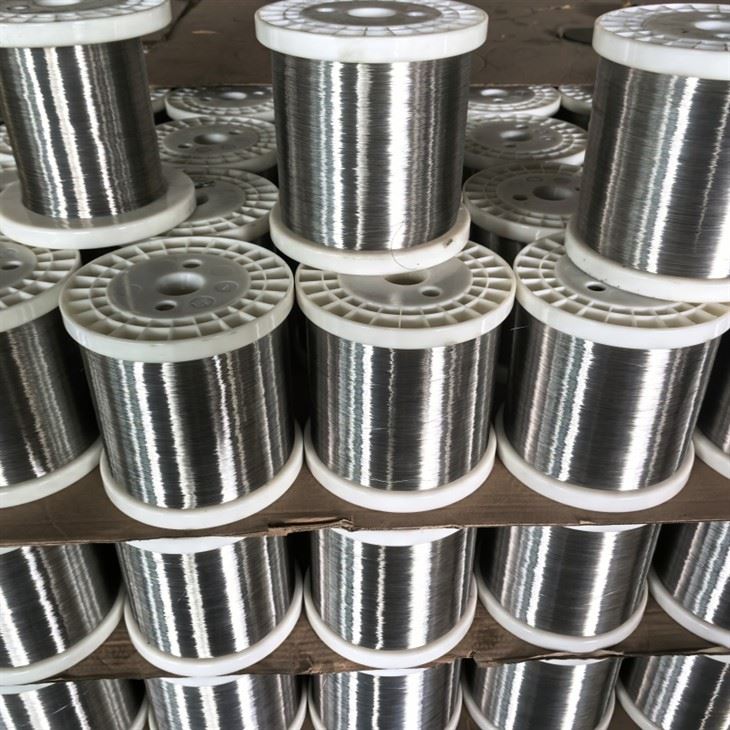

Understanding Impact Toughness
Impact toughness is a critical mechanical property that measures a material's ability to absorb energy and deform plastically before fracturing under an impact load. In simple terms, it reflects how well a material can withstand sudden, high - energy impacts without breaking. This property is of utmost importance in applications where the material may be subjected to dynamic loading, such as in machinery parts, structural components, and wire products used in high - stress environments.
The impact toughness of a material is typically determined through standardized tests, such as the Charpy V - notch test or the Izod test. In these tests, a notched specimen of the material is struck by a swinging pendulum, and the energy absorbed during the fracture process is measured. The higher the energy absorbed, the greater the impact toughness of the material.
Impact Toughness of 304 Stainless Steel Wire
304 stainless steel is one of the most widely used grades of stainless steel, known for its excellent corrosion resistance, good formability, and moderate strength. When it comes to impact toughness, 304 stainless steel wire generally exhibits decent performance under normal conditions.
The chemical composition of 304 stainless steel plays a significant role in determining its impact toughness. It typically contains about 18 - 20% chromium and 8 - 10.5% nickel, which form a passive oxide layer on the surface of the wire, providing corrosion resistance. The presence of these alloying elements also contributes to the material's toughness. Chromium enhances the strength and hardness of the steel, while nickel improves its ductility and toughness, allowing the wire to deform plastically under impact without immediate fracture.
However, the impact toughness of 304 stainless steel wire can be affected by several factors:
Temperature
Temperature has a profound influence on the impact toughness of 304 stainless steel wire. At room temperature, 304 stainless steel wire usually has good impact toughness. But as the temperature decreases, the material becomes more brittle, and its impact toughness decreases significantly. This phenomenon is known as the ductile - brittle transition. In extremely cold environments, the wire may fracture suddenly under impact, even at relatively low loads. On the other hand, at elevated temperatures, the impact toughness of 304 stainless steel wire may also be affected due to changes in its microstructure and mechanical properties.
Microstructure
The microstructure of 304 stainless steel wire can also affect its impact toughness. A fine - grained microstructure generally results in higher impact toughness compared to a coarse - grained one. This is because fine grains can impede the propagation of cracks, forcing the cracks to change direction and absorb more energy during the fracture process. Heat treatment processes, such as annealing, can be used to control the grain size and improve the impact toughness of the wire.
Work Hardening
During the manufacturing process of 304 stainless steel wire, such as cold drawing, the wire undergoes work hardening. While work hardening can increase the strength of the wire, it may also reduce its ductility and impact toughness. Excessive work hardening can lead to the formation of micro - cracks and a more brittle fracture behavior. Therefore, it is important to control the degree of work hardening during the production process to maintain a good balance between strength and impact toughness.
Practical Implications
The impact toughness of 304 stainless steel wire has significant practical implications in various applications.
In the construction industry, 304 stainless steel wire is often used in applications such as wire ropes for suspension bridges, cables for elevators, and reinforcement in concrete structures. In these applications, the wire needs to withstand sudden impacts, such as wind gusts, seismic events, or accidental collisions. Good impact toughness ensures the safety and reliability of these structures.
In the manufacturing of machinery parts, 304 stainless steel wire is used in springs, fasteners, and other components. These parts may be subjected to dynamic loads during operation, and high impact toughness helps prevent premature failure and extends the service life of the machinery.
Comparison with Other Stainless Steel Wires
When comparing 304 stainless steel wire with other types of stainless steel wires, such as 420 - stainless Steel Wire and 317L Stainless Steel Welding Wire, there are some differences in impact toughness.
420 stainless steel is a martensitic stainless steel, which is known for its high strength and hardness but relatively lower impact toughness compared to 304 stainless steel. The martensitic structure of 420 stainless steel makes it more brittle, especially at low temperatures.
317L stainless steel, on the other hand, is an austenitic stainless steel with a higher molybdenum content than 304 stainless steel. This gives 317L stainless steel better corrosion resistance and generally higher impact toughness, especially in harsh chemical environments.
Another related grade is 304L Stainless Wire. 304L is a low - carbon version of 304 stainless steel, which has better weldability and similar impact toughness to 304 stainless steel. However, the lower carbon content in 304L can reduce the risk of carbide precipitation during welding, which may improve the long - term performance and impact toughness in welded applications.
Conclusion
In conclusion, the impact toughness of 304 stainless steel wire is an important property that depends on factors such as temperature, microstructure, and work hardening. Under normal conditions, 304 stainless steel wire has decent impact toughness, making it suitable for a wide range of applications. However, it is crucial to consider the specific service conditions, especially temperature, when selecting 304 stainless steel wire for applications where impact resistance is critical.
If you are in the market for high - quality 304 stainless steel wire or have any questions about its impact toughness or other properties, I encourage you to reach out to me. We can discuss your specific requirements and find the best solution for your project. Whether you need wire for construction, machinery, or other applications, I'm here to assist you in making an informed decision.
References
- ASM Handbook Volume 1: Properties and Selection: Irons, Steels, and High - Performance Alloys. ASM International.
- Callister, W. D., & Rethwisch, D. G. (2017). Materials Science and Engineering: An Introduction. Wiley.
- Stainless Steel World magazine, various issues related to stainless steel properties and applications.