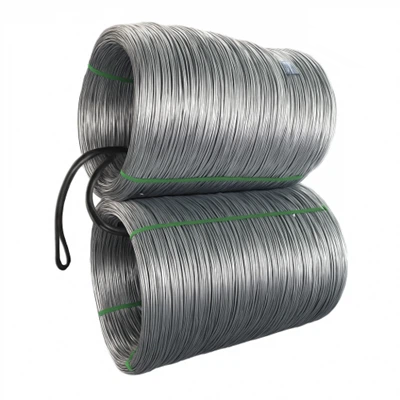
Hey there! As a supplier of 410 Stainless Steel Wire, I often get asked about the fatigue crack growth rate of this particular material. It's a crucial topic, especially for those in industries where reliability and durability are non - negotiable. So, let's dive right in and explore what the fatigue crack growth rate of 410 stainless steel wire is all about.
First off, what is 410 stainless steel wire? 410 stainless steel is a martensitic stainless steel. It's known for its good corrosion resistance, high strength, and excellent mechanical properties. These wires are widely used in various applications, such as springs, fasteners, and surgical instruments.
Now, onto the main topic - fatigue crack growth rate. Fatigue is the weakening of a material caused by cyclic loading. When a 410 stainless steel wire is subjected to repeated stress, tiny cracks can start to form. Over time, these cracks grow, and if left unchecked, they can lead to the failure of the wire.
The fatigue crack growth rate is essentially how fast these cracks propagate under cyclic loading. It's usually expressed in terms of the change in crack length per cycle (da/dN), where 'da' is the change in crack length and 'dN' is the number of cycles.
There are several factors that can affect the fatigue crack growth rate of 410 stainless steel wire. One of the most significant factors is the stress intensity factor range (ΔK). This is a measure of the stress field at the crack tip. As ΔK increases, the fatigue crack growth rate also increases. In simple terms, the higher the stress applied to the wire, the faster the cracks will grow.
Another factor is the environment. 410 stainless steel has good corrosion resistance, but in harsh environments, such as those with high humidity or exposure to corrosive chemicals, the fatigue crack growth rate can be accelerated. Corrosion can weaken the material at the crack tip, making it easier for the crack to propagate.
The microstructure of the 410 stainless steel wire also plays a role. A fine - grained microstructure generally leads to a lower fatigue crack growth rate compared to a coarse - grained one. This is because the grain boundaries can act as barriers to crack propagation, slowing down the growth of the cracks.
Heat treatment can also have a significant impact on the fatigue crack growth rate. Proper heat treatment can improve the mechanical properties of the 410 stainless steel wire, such as its hardness and toughness. For example, quenching and tempering can result in a more uniform microstructure and better resistance to crack growth.


When it comes to measuring the fatigue crack growth rate of 410 stainless steel wire, there are several methods. One common method is the compact tension (CT) test. In this test, a specimen of the wire is loaded cyclically, and the crack growth is monitored using techniques like optical microscopy or ultrasonic testing. The data collected from these tests can then be used to determine the fatigue crack growth rate.
Now, you might be wondering how the fatigue crack growth rate of 410 stainless steel wire compares to other types of stainless steel wires. Let's take a look at some popular alternatives.
316 Stainless Steel Spring Wire is a popular choice for applications where high corrosion resistance is required. It has a lower carbon content compared to 410 stainless steel, which gives it better resistance to intergranular corrosion. In terms of fatigue crack growth rate, 316 stainless steel spring wire generally has a lower rate in corrosive environments due to its superior corrosion resistance.
316 Stainless Steel Wire is also widely used. It's similar to 316 stainless steel spring wire but may have different mechanical properties depending on its application. The fatigue crack growth rate of 316 stainless steel wire can be affected by factors like its cold - working history and the specific alloy composition.
304L Stainless Steel Wire is another common option. It has good formability and corrosion resistance. However, in terms of fatigue crack growth rate, it may not be as good as 316 stainless steel in highly corrosive environments. But in less severe conditions, it can perform quite well.
So, why should you choose our 410 stainless steel wire? Well, we ensure that our wires are manufactured using high - quality raw materials and undergo strict quality control processes. We pay close attention to the heat treatment and microstructure of the wires to optimize their mechanical properties and reduce the fatigue crack growth rate.
Whether you're in the automotive, aerospace, or medical industry, our 410 stainless steel wire can meet your requirements. We understand the importance of reliability and durability in your applications, and we're committed to providing you with the best - quality products.
If you're interested in purchasing 410 stainless steel wire or have any questions about its fatigue crack growth rate or other properties, don't hesitate to reach out. We're here to help you make the right choice for your project. We can provide you with detailed technical data and samples so that you can test the wire in your specific application.
In conclusion, understanding the fatigue crack growth rate of 410 stainless steel wire is crucial for ensuring the long - term performance of your products. By considering the factors that affect the crack growth rate and choosing high - quality wire, you can minimize the risk of fatigue failure and improve the reliability of your applications. So, get in touch with us today and let's start a conversation about how our 410 stainless steel wire can benefit your business.
References
- ASTM Standard E647 - Standard Test Method for Measurement of Fatigue Crack Growth Rates
- "Stainless Steels: A Practical Guide" by L. C. Smith