316 Stainless Steel Spring Wire

316 Stainless Steel Spring Wire
Details:
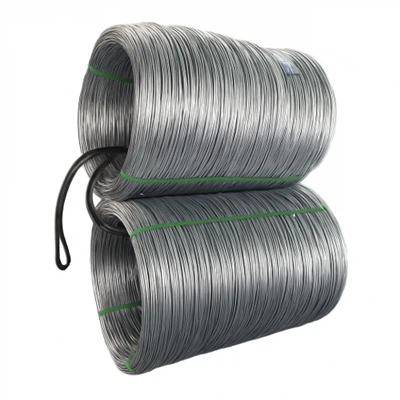
316 stainless steel spring wire is a kind of austenitic stainless steel 316 as the base material, through the precision cold-drawing process from the high-end metal wire. Its core composition contains 16-18% chromium, 10-14% nickel and 2-3% molybdenum, by virtue of the unique alloy ratio and manufacturing process, both excellent corrosion resistance, high elasticity and fatigue resistance, is the manufacture of precision springs, elastic components and high requirements of industrial components of the ideal material.
Send Inquiry
Description
Send Inquiry

316 stainless steel spring wire is a kind of austenitic stainless steel 316 as the base material, through the precision cold-drawing process from the high-end metal wire. Its core composition contains 16-18% chromium, 10-14% nickel and 2-3% molybdenum, by virtue of the unique alloy ratio and manufacturing process, both excellent corrosion resistance, high elasticity and fatigue resistance, is the manufacture of precision springs, elastic components and high requirements of industrial components of the ideal material.


Product Parameter (Specification)


Products description:

Product information

Parameter

Product intormation

Parameter

Product name

Stainless steel wire

Standard

ASTM, JIS, DIN, EN

Length

Customised to customer requirements

Certification

ISO, SGS

Grade-ASTM

201, 202, 302, 304, 304L, 310, 310S, 316, 316L, 321, 410, 431, 430F, 904L & other

Price term

FOB

Technique

Cold drawn annealing pickling & other

Payment terms

T/T

L/C

Packaging and delivery

Note : bundle, plastic bags, thin film, wooden pallet, standard seaworthy export packing or as customer demands


Product Feature and Application


Excellent corrosion resistance

316 stainless steel spring wire due to the addition of molybdenum, significantly improve the resistance to pitting and crevice corrosion, especially for marine environments, chemical media (such as chlorides, acidic solutions) and other highly corrosive scenarios, the performance is far more than 304 stainless steel.

01

High strength and elasticity

Through the cold-drawing strengthening process, the internal grain structure of the material is densified, and the tensile strength can reach 1600-2000 MPa, while maintaining excellent elasticity recovery ability, and can withstand repeated deformation without relaxation.

02

High and low temperature resistance

In a wide temperature range of -200 ℃ to 400 ℃, 316 stainless steel spring wire can still maintain stable mechanical properties, short-term resistance to higher temperatures, suitable for heat exchangers, automotive engines and other high-temperature components.

03

Surface finish and easy processing

The surface can be polished or coated to achieve a high degree of finish, reducing friction loss; support for cold-winding forming, welding and other processes to meet the design needs of complex spring structures.

04

Application


Medical Devices

Surgical instrument springs, implantable device elastic components, to meet the requirements of biocompatibility and sterilisation environment.

01

Marine Engineering

Marine hardware, seawater filter springs, resistance to salt spray corrosion.

02

Automotive Industry

Engine valve springs, sensor parts, to adapt to high temperature and high pressure working conditions.

03

Chemical Equipment

Pump valve seals, reactor elastic support, resistance to acid and alkali media erosion.

04

Precision Electronics

Miniature connector springs, precision instrument parts, to ensure long-term stability.

05


Production Details


1.Material composition (ASTM A276 standard)

Major Elements:

Element

Chromium (Cr)

Nickel (Ni)

Carbon (C)

Manganese (Mn)

silicon (Si)

sulfur (S)

phosphorus (P)

Molybdenum (Mo)

Content(%)

16-18

10-14

MAX 0.08

MAX 2

MAX 1

MAX 0.03

MAX 0.045

2-3


2.Mechanical properties

Condition

Tensile strength (MPa)

Yield strength (MPa)

Elongation (%)

Hardness (HB)

Data

≥515

≥205

≥40

≤217


3.Physical properties

Condition

Density

Melting point

Thermal conductivity

Resistivity

Data

8.0 g/cm³

1370-1400°C

15-16 W/m-K (at 100℃)

740-800 nΩ-m

product-800-600
product-800-600
product-800-600
product-800-1067
product-800-1067
product-800-1067


FAQ


Q: What is the difference between 316 stainless steel spring wire and 304 stainless steel?

A: 316 stainless steel contains 2-3% molybdenum, which significantly improves corrosion resistance (especially resistance to chloride corrosion and acidic media), while 304 does not contain molybdenum. Therefore, 316 is more suitable for marine environment, chemical equipment and other high corrosion scenarios, while 304 is mostly used in general industrial or civil fields.

Q: What is the maximum operating temperature of 316 spring wire?

A: The long-term stable working temperature range is from -200℃ to 400℃, short-term (such as intermittent high temperature environment) can withstand 500-600℃, but the elastic modulus may decline at high temperature, need to be evaluated according to the actual working conditions.

Q: Is it suitable for food or medical equipment?

A: Yes. 316 stainless steel meets FDA food-grade standards and ISO 13485 certification for medical devices. It is non-toxic, has no heavy metal precipitation, and is resistant to high-temperature and autoclave sterilisation, and is widely used in surgical instruments and implantable devices.

Q: Does the elasticity of spring wire decay with use?

A: 316 stainless steel is strengthened by cold-drawing process, with excellent fatigue resistance and very low elasticity decay under normal working condition. However, if long-term overload or frequent over-limit deformation, may lead to permanent deformation, it is recommended that the design load of 80% of the following use.

Q: What are the problems to be paid attention to when processing?

A: Lubrication: Special lubricants are required for cold winding and forming to reduce surface wear;
Tools: avoid contact with carbon steel tools to prevent contamination by iron filings;
Welding: preferred argon arc welding (TIG), after welding need to pickling passivation to restore corrosion resistance.

Q: What is the wire diameter specification range? Does it support customisation?

A: Conventional wire diameter is φ0.1mm~φ6.0mm, special specifications (such as ultra-fine wire or shaped cross-section) can be customised, need to provide specific size and performance requirements.

Q: Will it rust in the marine environment?

A: 316 stainless steel is extremely resistant to salt spray corrosion, but when exposed to high concentration of seawater or extreme humidity for a long period of time, it is recommended to clean it regularly and avoid direct contact with carbon steel parts to prolong its service life.

Q: How to judge whether it is high quality 316 material?

A: Material report: Ask the supplier to provide the chemical composition analysis (e.g. molybdenum content ≥2%) from third party testing;
Performance test: Verified by salt spray test (e.g. ASTM B117), tensile strength test (≥1600MPa);
Surface quality: observe whether there are cracks, scratches or uneven oxidation colour.

Q: Why is the price higher than ordinary spring steel wire?

A: 316 stainless steel has higher raw material costs due to the presence of nickel, molybdenum and other precious metal elements, and requires precision cold-drawing and heat-treatment processes, but its long service life and low maintenance costs provide a higher overall cost-effectiveness in demanding environments.

Q: What do I need to pay attention to when storing?

A: Keep the environment dry and ventilated, avoid coexistence with corrosive substances such as acids and alkalis;
It is recommended to use moisture-proof paper or plastic film wrapping to prevent dust contamination;
Place separately from carbon steel materials to avoid contact leading to galvanic corrosion.

Hot Tags: 316 stainless steel spring wire, China 316 stainless steel spring wire manufacturers, suppliers, factory
Send Inquiry