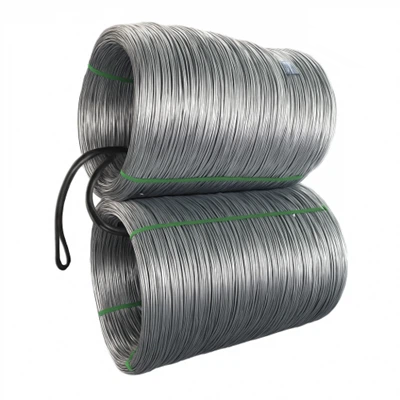
Surface defects can have a significant impact on the performance of 316 stainless steel wire, a product we supply with pride. As a trusted 316 Stainless Steel Wire supplier, we understand the importance of addressing these issues to ensure our customers receive the highest quality products. In this blog post, we will explore the various effects of surface defects on the performance of 316 stainless steel wire and why it matters in different applications.
Understanding 316 Stainless Steel Wire
316 stainless steel wire is a popular choice in many industries due to its excellent corrosion resistance, high strength, and good formability. It contains chromium, nickel, and molybdenum, which contribute to its corrosion - resistant properties, especially in environments with chloride ions. This makes it suitable for applications in marine, chemical, and food processing industries.
Types of Surface Defects
Surface defects in 316 stainless steel wire can occur during various stages of production, including casting, rolling, and drawing. Some common types of surface defects are:
- Scratches: These can be caused by contact with rough surfaces during handling, transportation, or processing. Scratches can be superficial or deep, and they can expose the underlying metal to the environment.
- Pits: Pitting corrosion can occur when the protective oxide layer on the surface of the stainless steel is damaged. Chloride ions in the environment can accelerate this process, leading to the formation of small pits on the surface of the wire.
- Inclusions: Non - metallic inclusions such as oxides, sulfides, or silicates can be present in the steel matrix. These inclusions can act as stress concentrators and initiate cracks, reducing the mechanical properties of the wire.
- Cracks: Cracks can form due to excessive stress during processing or as a result of fatigue. They can propagate under load and eventually lead to the failure of the wire.
Effects on Corrosion Resistance
One of the most critical properties of 316 stainless steel wire is its corrosion resistance. Surface defects can significantly compromise this property. Scratches and pits can break the protective oxide layer that forms on the surface of the stainless steel. Once the oxide layer is damaged, the underlying metal is exposed to the corrosive environment. Chloride ions, in particular, can penetrate the damaged areas and initiate corrosion.
For example, in marine applications, 316 stainless steel wire is often used in structures exposed to seawater, which contains high levels of chloride ions. A wire with surface scratches or pits is more likely to experience pitting corrosion, which can lead to the weakening of the wire over time. This can be a serious safety concern, especially in applications where the wire is used for load - bearing purposes.
Effects on Mechanical Properties
Surface defects can also have a negative impact on the mechanical properties of 316 stainless steel wire. Inclusions and cracks act as stress concentrators. When a load is applied to the wire, the stress is concentrated around these defects, leading to premature failure.
For instance, a wire with a crack may have a reduced tensile strength. Under tension, the crack can propagate rapidly, causing the wire to break at a lower load than a wire without defects. Similarly, inclusions can reduce the ductility of the wire, making it more brittle and prone to fracture.
Effects on Aesthetic Appearance
In addition to performance - related issues, surface defects can also affect the aesthetic appearance of 316 stainless steel wire. In applications where the wire is visible, such as in architectural or decorative uses, scratches, pits, or discoloration can be unacceptable. Customers often expect a smooth and uniform surface finish, and surface defects can lead to customer dissatisfaction.
Impact on Weldability
If the 316 stainless steel wire is to be welded, surface defects can pose problems during the welding process. Scratches and inclusions can introduce impurities into the weld, which can affect the quality of the weld joint. The presence of surface defects can also lead to uneven heat distribution during welding, resulting in poor fusion and potential cracking in the weld.
Detection and Prevention of Surface Defects
As a 316 Stainless Steel Wire supplier, we take several measures to detect and prevent surface defects. We use advanced inspection techniques such as ultrasonic testing, magnetic particle inspection, and visual inspection to identify surface defects in our products.
During the production process, we ensure that the raw materials are of high quality and that the manufacturing equipment is well - maintained. We also pay close attention to the handling and transportation of the wire to minimize the risk of scratches and other surface damage.
Comparison with Other Stainless Steel Wires
When considering the effects of surface defects, it's interesting to compare 316 stainless steel wire with other types of stainless steel wires. For example, 420 HC Stainless Steel Wire has different properties compared to 316. 420 HC is a martensitic stainless steel, which is generally less corrosion - resistant than 316. Surface defects on 420 HC stainless steel wire may have a more severe impact on its corrosion resistance, especially in aggressive environments.
304L Stainless Steel Welding Wire and 304L Stainless Wire are also commonly used. While 304L has good corrosion resistance, it contains less molybdenum than 316, which means it may be more susceptible to pitting corrosion in chloride - rich environments. Surface defects on 304L wires can exacerbate this issue.
Conclusion
Surface defects can have a wide range of effects on the performance of 316 stainless steel wire, including reduced corrosion resistance, compromised mechanical properties, poor aesthetic appearance, and problems with weldability. As a 316 Stainless Steel Wire supplier, we are committed to providing our customers with high - quality products that are free from surface defects.


If you are in the market for 316 stainless steel wire or have any questions about our products, we encourage you to contact us for a detailed discussion. We can provide you with samples, technical specifications, and pricing information to help you make an informed decision. Our team of experts is always ready to assist you in finding the right solution for your specific application.
References
- ASM Handbook, Volume 13A: Corrosion: Fundamentals, Testing, and Protection.
- Stainless Steel: A Guide to Selection, Fabrication, and Applications by George E. Totten and D. Scott MacKenzie.
- Welding Metallurgy and Weldability of Stainless Steels by John C. Lippold and David J. Kotecki.