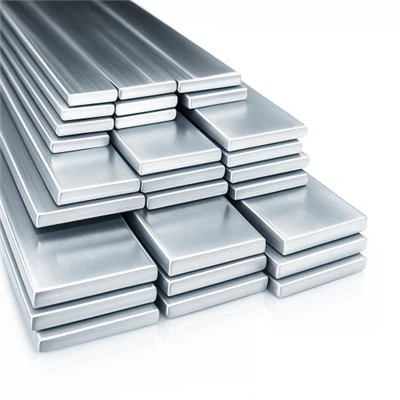
As a seasoned supplier of stainless steel flat bars, I've witnessed firsthand the distinct characteristics and applications of both hot-rolled and cold-rolled stainless steel flat bars. These two manufacturing processes yield products with unique properties that cater to different industrial needs. In this blog, I'll delve into the differences between hot-rolled and cold-rolled stainless steel flat bars, exploring their production methods, physical attributes, and typical uses.


Production Processes
The fundamental difference between hot-rolled and cold-rolled stainless steel flat bars lies in their production processes. Hot rolling is the initial step in the manufacturing of most stainless steel products. In this process, large slabs or billets of stainless steel are heated to extremely high temperatures, typically above 1700°F (927°C). At this temperature, the steel becomes malleable and can be easily shaped. The heated steel is then passed through a series of rollers, which reduce its thickness and shape it into the desired flat bar dimensions.
On the other hand, cold rolling is a secondary process that is often performed after hot rolling. Cold rolling involves passing the hot-rolled steel through a set of rollers at room temperature. This process further reduces the thickness of the steel and improves its surface finish, dimensional accuracy, and mechanical properties. Cold rolling also increases the strength and hardness of the steel by work hardening, which occurs when the steel is deformed under pressure.
Physical Attributes
The production processes of hot-rolled and cold-rolled stainless steel flat bars result in distinct physical attributes. Hot-rolled stainless steel flat bars typically have a rough, scaly surface finish due to the oxidation that occurs during the high-temperature rolling process. This surface finish is not suitable for applications where a smooth, aesthetically pleasing appearance is required. However, the rough surface can provide better adhesion for coatings and paints, making hot-rolled steel ideal for applications where corrosion protection is a priority.
Cold-rolled stainless steel flat bars, on the other hand, have a smooth, shiny surface finish that is free of scale and oxidation. This surface finish is highly desirable for applications where appearance is important, such as architectural and decorative applications. Cold-rolled steel also has better dimensional accuracy and a more uniform thickness than hot-rolled steel, making it suitable for applications that require precise measurements.
In terms of mechanical properties, cold-rolled stainless steel flat bars are generally stronger and harder than hot-rolled steel. This is because the cold rolling process work hardens the steel, increasing its yield strength and tensile strength. Cold-rolled steel also has better ductility and formability than hot-rolled steel, which means it can be bent, shaped, and formed into complex geometries without cracking or breaking.
Typical Uses
The unique physical attributes of hot-rolled and cold-rolled stainless steel flat bars make them suitable for different applications. Hot-rolled stainless steel flat bars are commonly used in structural applications, such as building construction, bridges, and industrial machinery. The rough surface finish of hot-rolled steel provides better adhesion for welds and fasteners, making it ideal for applications where strength and durability are critical.
Cold-rolled stainless steel flat bars are often used in applications where appearance and precision are important, such as architectural and decorative applications, automotive components, and consumer products. The smooth surface finish of cold-rolled steel gives it a sleek, modern look that is highly desirable for these types of applications. Cold-rolled steel is also commonly used in applications that require precise measurements, such as machining and fabrication.
Specific Examples of Stainless Steel Flat Bars
Let's take a closer look at some specific examples of stainless steel flat bars and their applications. 304 Stainless Steel Flat Bar is one of the most commonly used stainless steel grades due to its excellent corrosion resistance, high strength, and good formability. It is often used in a wide range of applications, including food processing equipment, chemical processing equipment, and architectural applications.
Polished Stainless Steel Flat Bar is a cold-rolled stainless steel flat bar that has been polished to a smooth, mirror-like finish. This type of flat bar is commonly used in architectural and decorative applications, such as handrails, elevator interiors, and signage. The polished surface finish gives the flat bar a sleek, modern look that is highly desirable for these types of applications.
410 Stainless Steel Flat Bar is a martensitic stainless steel that is known for its high strength, hardness, and wear resistance. It is often used in applications where high strength and corrosion resistance are required, such as cutlery, surgical instruments, and automotive components.
Conclusion
In conclusion, the difference between hot-rolled and cold-rolled stainless steel flat bars lies in their production processes, physical attributes, and typical uses. Hot-rolled stainless steel flat bars are characterized by a rough surface finish, good adhesion for coatings and paints, and high strength and durability. They are commonly used in structural applications where strength and corrosion resistance are critical. Cold-rolled stainless steel flat bars, on the other hand, have a smooth, shiny surface finish, better dimensional accuracy, and higher strength and hardness. They are often used in applications where appearance and precision are important, such as architectural and decorative applications.
As a stainless steel flat bar supplier, I understand the importance of choosing the right type of stainless steel for your specific application. Whether you need hot-rolled or cold-rolled stainless steel flat bars, I can provide you with high-quality products that meet your requirements. If you have any questions or need assistance in selecting the right stainless steel flat bar for your project, please don't hesitate to contact me. I'm here to help you make the best decision for your business.
References
- ASM Handbook, Volume 1: Properties and Selection: Irons, Steels, and High-Performance Alloys
- Stainless Steel World Americas
- The Fabricator