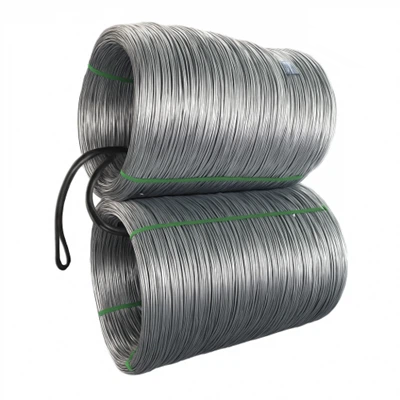
The corrosion resistance of materials is a crucial factor in various industrial applications, especially when they are exposed to harsh chemical environments. As a supplier of 304 stainless steel wire, I often receive inquiries about its performance in alkaline solutions. In this blog post, I will delve into the corrosion resistance of 304 stainless steel wire in alkaline solutions, exploring the underlying mechanisms, influencing factors, and practical implications.
Composition and General Properties of 304 Stainless Steel Wire
304 stainless steel is one of the most widely used grades of stainless steel, known for its excellent corrosion resistance, formability, and weldability. The chemical composition of 304 stainless steel typically consists of approximately 18 - 20% chromium (Cr), 8 - 10.5% nickel (Ni), and the remainder being iron (Fe) with small amounts of carbon (C), manganese (Mn), silicon (Si), phosphorus (P), and sulfur (S). Chromium is the key element that imparts corrosion resistance to stainless steel. It forms a thin, passive oxide layer on the surface of the steel, which acts as a protective barrier against further oxidation and corrosion. Nickel enhances the stability of the passive layer and improves the steel's resistance to corrosion in various environments, including acidic and chloride - containing solutions.
Corrosion Resistance in Alkaline Solutions
In general, 304 stainless steel wire exhibits good corrosion resistance in alkaline solutions. Alkaline solutions are characterized by a high pH value (greater than 7). The passive oxide layer on the surface of 304 stainless steel remains stable in moderately alkaline environments, providing effective protection against corrosion.
The corrosion mechanism of stainless steel in alkaline solutions is mainly related to the dissolution and repassivation processes of the passive layer. In an alkaline environment, the hydroxide ions (OH⁻) can react with the metal ions in the passive layer. However, as long as the passive layer can be continuously repaired, the corrosion rate remains low. For example, in a sodium hydroxide (NaOH) solution with a relatively low concentration and mild temperature conditions, 304 stainless steel wire can maintain its integrity for a long time.

Influencing Factors
Concentration of Alkaline Solution
The concentration of the alkaline solution has a significant impact on the corrosion resistance of 304 stainless steel wire. At low concentrations, the passive layer on the surface of the steel can effectively resist the attack of hydroxide ions. However, as the concentration of the alkaline solution increases, the dissolution rate of the passive layer may exceed the repassivation rate, leading to accelerated corrosion. For instance, in highly concentrated sodium hydroxide solutions (e.g., above 50% NaOH), the corrosion rate of 304 stainless steel wire can increase significantly, and pitting corrosion or general corrosion may occur.
Temperature
Temperature is another important factor affecting the corrosion resistance of 304 stainless steel wire in alkaline solutions. Higher temperatures generally accelerate the chemical reactions between the steel and the alkaline solution. The increased thermal energy promotes the diffusion of ions and the dissolution of the passive layer. As a result, the corrosion rate of 304 stainless steel wire in alkaline solutions tends to increase with rising temperature. For example, at room temperature, 304 stainless steel may have good resistance to a certain alkaline solution, but when the temperature is elevated to 80 - 100°C, the corrosion rate may increase several - fold.
Presence of Other Ions
The presence of other ions in the alkaline solution can also influence the corrosion behavior of 304 stainless steel wire. Chloride ions (Cl⁻) are particularly notorious for their ability to break down the passive layer on stainless steel. Even in alkaline solutions, the presence of chloride ions can cause pitting corrosion or stress - corrosion cracking of 304 stainless steel wire. Other ions, such as sulfate ions (SO₄²⁻) and carbonate ions (CO₃²⁻), may have different effects on the corrosion resistance. Sulfate ions can sometimes enhance the stability of the passive layer, while carbonate ions can form a protective carbonate film on the surface of the steel under certain conditions.
Practical Applications and Considerations
In many industrial applications, 304 stainless steel wire is used in alkaline environments. For example, in the food and beverage industry, alkaline cleaning solutions are often used for equipment sanitation. 304 stainless steel wire can be used in the construction of conveyor belts, filters, and other components in these facilities. However, it is essential to consider the specific conditions of the alkaline environment, such as the concentration of the cleaning solution, the temperature during the cleaning process, and the presence of other contaminants.
In the chemical processing industry, 304 stainless steel wire may be exposed to various alkaline solutions during different production steps. When designing equipment or selecting materials, engineers need to carefully evaluate the corrosion resistance of 304 stainless steel wire based on the specific chemical composition and operating conditions of the alkaline solutions. In some cases, if the alkaline environment is too harsh, alternative materials such as Stainless Steel 1.4529, Alloy 926, UNS N08926 may be considered. These materials have higher alloying elements, such as molybdenum (Mo), which can provide better corrosion resistance in more aggressive alkaline and chloride - containing environments.
Comparison with Other Stainless Steel Wires
Compared with some other stainless steel wires, 304 stainless steel wire has its own advantages and limitations in terms of corrosion resistance in alkaline solutions. For example, 316 stainless steel, which contains a higher amount of molybdenum (about 2 - 3%), generally has better corrosion resistance in chloride - containing alkaline solutions than 304 stainless steel. However, 304 stainless steel is more cost - effective and is suitable for many applications where the chloride content in the alkaline environment is relatively low.
Stainless Flat Wire and Black Stainless Wire are also popular products in our inventory. The corrosion resistance of these wires in alkaline solutions is similar to that of 304 stainless steel wire, but their specific performance may vary depending on their surface treatment and manufacturing processes.
Conclusion
In conclusion, 304 stainless steel wire generally exhibits good corrosion resistance in moderately alkaline solutions. However, its performance is highly dependent on factors such as the concentration of the alkaline solution, temperature, and the presence of other ions. When using 304 stainless steel wire in alkaline environments, it is crucial to carefully evaluate the specific conditions and take appropriate measures to ensure its long - term performance.
As a supplier of 304 stainless steel wire, we are committed to providing high - quality products and professional technical support. If you are considering using 304 stainless steel wire in your project or have any questions about its corrosion resistance in alkaline solutions, please feel free to contact us for further discussion and procurement negotiation. Our team of experts will be happy to assist you in selecting the most suitable materials for your specific needs.
References
- ASM Handbook Volume 13A: Corrosion: Fundamentals, Testing, and Protection. ASM International.
- Stainless Steel: A Practical Guide. George E. Totten, Kenji Tsuchida. Elsevier.
- Corrosion Resistance of Stainless Steels in Alkaline Solutions: A Review. Journal of Materials Science and Technology.