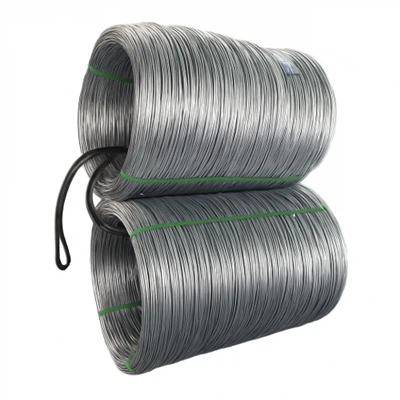
As a supplier of 304 stainless steel wire, I often get asked about its chemical composition. Understanding the chemical makeup of 304 stainless steel wire is crucial for various industries that rely on its unique properties. In this blog post, I'll delve into the specific elements that make up 304 stainless steel wire and how they contribute to its performance.
The Basics of 304 Stainless Steel Wire
304 stainless steel wire is one of the most widely used stainless steel grades due to its excellent corrosion resistance, formability, and strength. It belongs to the austenitic stainless steel family, which is characterized by its face - centered cubic crystal structure. This structure gives 304 stainless steel wire its non - magnetic properties and good ductility.
Key Chemical Elements in 304 Stainless Steel Wire
Chromium (Cr)
Chromium is the primary alloying element in 304 stainless steel wire, typically present in a range of 18% - 20%. Chromium plays a vital role in providing corrosion resistance. When exposed to oxygen, chromium forms a thin, passive oxide layer on the surface of the steel wire. This oxide layer acts as a protective barrier, preventing further oxidation and corrosion of the underlying metal. The higher the chromium content, the better the corrosion resistance of the 304 stainless steel wire.
Nickel (Ni)
Nickel is another essential element in 304 stainless steel wire, usually present at around 8% - 10.5%. Nickel helps to stabilize the austenitic structure of the steel, enhancing its ductility, toughness, and corrosion resistance. It also improves the wire's resistance to stress - corrosion cracking, which is particularly important in applications where the wire is exposed to corrosive environments and mechanical stress.
Carbon (C)
Carbon is present in 304 stainless steel wire in a relatively low amount, typically less than 0.08%. While carbon can increase the strength and hardness of the steel, excessive carbon content can lead to the formation of chromium carbides. These carbides can deplete the chromium content in the vicinity of the grain boundaries, reducing the corrosion resistance of the wire. Therefore, the carbon content in 304 stainless steel wire is carefully controlled to maintain a balance between strength and corrosion resistance.


Manganese (Mn)
Manganese is added to 304 stainless steel wire in amounts up to 2%. Manganese helps to improve the hot - working properties of the steel and can also act as a deoxidizer during the steelmaking process. It can partially replace nickel in the austenitic structure, reducing the cost of the alloy while still maintaining its desirable properties.
Silicon (Si)
Silicon is present in 304 stainless steel wire at levels up to 1%. Silicon is a powerful deoxidizer and can improve the resistance of the wire to high - temperature oxidation. It also enhances the strength and hardness of the steel to some extent.
Phosphorus (P) and Sulfur (S)
Phosphorus and sulfur are considered impurities in 304 stainless steel wire. The maximum allowable content of phosphorus is 0.045%, and for sulfur, it is 0.03%. High levels of phosphorus and sulfur can reduce the ductility and corrosion resistance of the wire, so their content is strictly controlled during the steelmaking process.
Impact of Chemical Composition on Properties
The chemical composition of 304 stainless steel wire directly influences its mechanical and chemical properties. The combination of chromium and nickel provides excellent corrosion resistance, making it suitable for applications in food processing, chemical handling, and marine environments. The low carbon content ensures good weldability, which is important for fabricating the wire into various shapes and structures.
The austenitic structure, stabilized by nickel and other elements, gives 304 stainless steel wire good formability. It can be easily drawn into thin wires, bent, and shaped without cracking. This makes it a popular choice for applications such as springs, wire mesh, and jewelry.
Comparison with Other Stainless Steel Wires
It's interesting to compare 304 stainless steel wire with other types of stainless steel wires. For example, 302 Stainless Steel Spring Wire has a slightly higher carbon content than 304, which gives it higher strength and hardness. However, this also reduces its corrosion resistance to some extent.
403 Stainless Steel Spring Wire belongs to the martensitic stainless steel family. It has a different crystal structure compared to 304, which results in magnetic properties and higher strength but lower corrosion resistance in certain environments.
Stainless Steel 1.4529, Alloy 926, UNS N08926 is a high - alloy stainless steel with a much higher content of nickel, chromium, and molybdenum. It offers superior corrosion resistance, especially in highly corrosive environments such as those containing chloride ions.
Applications of 304 Stainless Steel Wire
Due to its excellent properties, 304 stainless steel wire has a wide range of applications. In the construction industry, it is used for reinforcement, fencing, and mesh. In the automotive industry, it can be found in springs, exhaust systems, and engine components. In the food and beverage industry, 304 stainless steel wire is used for food processing equipment, conveyor belts, and storage tanks because of its corrosion resistance and hygienic properties.
Conclusion
In conclusion, the chemical composition of 304 stainless steel wire is a carefully balanced combination of elements that gives it unique properties. The presence of chromium, nickel, and other elements provides corrosion resistance, strength, and formability, making it a versatile material for various industries.
If you are in the market for high - quality 304 stainless steel wire, I invite you to contact me for more information and to discuss your specific requirements. Whether you need a small quantity for a prototype or a large volume for a long - term project, I can provide you with the best solutions.
References
- ASM Handbook Volume 1: Properties and Selection: Irons, Steels, and High - Performance Alloys. ASM International.
- Stainless Steel Handbook. Outokumpu Stainless.