When it comes to materials with diverse applications, 420 stainless steel wire stands out for its unique combination of properties. As a reputable supplier of 420 Stainless Steel Wire, I am often asked about its acoustic performance. In this blog post, I will delve into the acoustic characteristics of 420 stainless steel wire, exploring how it behaves in different acoustic scenarios and what makes it a potential choice for acoustic - related applications.

Understanding 420 Stainless Steel Wire
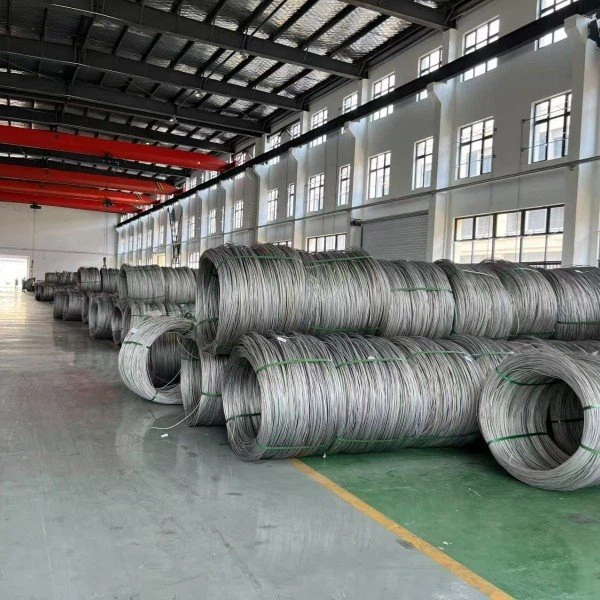
Before we discuss its acoustic performance, let's briefly review the basic properties of 420 stainless steel wire. 420 stainless steel is a martensitic stainless steel alloy. It contains a significant amount of chromium, which gives it corrosion - resistance properties, and a small amount of carbon, which contributes to its hardness and strength. The wire is commonly used in various industries, such as automotive, aerospace, and manufacturing, due to its excellent mechanical properties, including high tensile strength and good wear resistance.
Acoustic Basics
Acoustics is the science of sound, including its production, transmission, and reception. When a material is involved in an acoustic system, several factors come into play. These include the material's density, elasticity, and internal damping. Density affects how sound waves interact with the material at the surface. A denser material may reflect more sound waves, while a less dense one may allow more sound to penetrate. Elasticity determines how the material responds to the vibrations caused by sound waves. A highly elastic material can transmit sound waves more efficiently, while a less elastic one may absorb or dissipate the energy of the sound waves. Internal damping refers to the ability of a material to convert the mechanical energy of sound waves into heat energy, thereby reducing the amplitude of the sound waves.
Acoustic Performance of 420 Stainless Steel Wire
Sound Reflection
The density of 420 stainless steel wire is relatively high compared to some other materials. This high density means that when sound waves hit the surface of the wire, a significant portion of the sound energy is reflected. In an environment where sound reflection needs to be controlled, such as in a recording studio or a concert hall, the use of 420 stainless steel wire may need to be carefully considered. However, in some industrial applications where sound needs to be redirected, the reflective property of 420 stainless steel wire can be an advantage. For example, in a sound - proofing system designed to redirect noise away from a certain area, the wire can be used to create barriers that reflect the sound waves.
Sound Transmission
420 stainless steel wire has good elasticity, which allows it to transmit sound waves relatively efficiently. When the wire is part of a structure, sound waves can travel along the length of the wire. This property can be useful in applications where sound needs to be transmitted over a distance. For instance, in some acoustic sensors, the wire can act as a conductor for sound waves, carrying the acoustic signals from the source to the detection device. However, this efficient transmission also means that if the wire is part of a structure where sound isolation is required, additional measures may be needed to prevent the unwanted spread of sound.
Sound Absorption
The internal damping of 420 stainless steel wire is relatively low. This means that it has a limited ability to absorb sound energy and convert it into heat. In applications where sound absorption is crucial, such as in acoustic panels or mufflers, 420 stainless steel wire alone may not be sufficient. However, it can be combined with other sound - absorbing materials to create a composite structure. For example, the wire can be used as a framework or reinforcement in a sound - absorbing panel made of fiberglass or foam. The wire provides structural integrity, while the other materials absorb the sound.
Applications Based on Acoustic Performance
Industrial Noise Control
In industrial settings, there is often a need to control noise levels. 420 stainless steel wire can be used in the construction of noise barriers. The wire can be woven into a mesh structure and then combined with other materials. The high - density wire reflects a significant amount of sound, while the other materials in the barrier absorb the remaining sound energy. This combination can effectively reduce the transmission of noise from industrial machinery to the surrounding environment.
Acoustic Sensors
As mentioned earlier, the good elasticity of 420 stainless steel wire allows it to transmit sound waves efficiently. This property makes it suitable for use in acoustic sensors. The wire can be used as a sensing element, detecting the vibrations caused by sound waves and converting them into electrical signals. These sensors can be used in various applications, such as in environmental monitoring to detect the presence of certain frequencies of sound or in security systems to detect abnormal acoustic events.
Comparison with Other Stainless Steel Wires
When comparing the acoustic performance of 420 stainless steel wire with other types of stainless steel wires, such as 310s Stainless Steel Wire Mesh, 204Cu Stainless Steel Wire, and 347H Stainless Wire, there are some differences.
310s stainless steel wire mesh has a different density and internal structure compared to 420 stainless steel wire. The mesh structure of 310s wire may allow more sound to pass through, resulting in less sound reflection. This makes it more suitable for applications where sound diffusion is required.
204Cu stainless steel wire has a different chemical composition, which affects its density and elasticity. It may have different acoustic properties in terms of sound transmission and absorption. For example, it may have a higher internal damping than 420 stainless steel wire, making it more suitable for applications where sound absorption is a priority.
347H stainless wire is known for its high - temperature resistance. In terms of acoustic performance, its properties may also vary from 420 stainless steel wire. The difference in alloy composition can lead to differences in density, elasticity, and internal damping, which in turn affect how sound waves interact with the wire.
Conclusion
The acoustic performance of 420 stainless steel wire is a complex topic that involves multiple factors such as density, elasticity, and internal damping. While it has certain characteristics such as high sound reflection and efficient sound transmission, its relatively low internal damping means that it may need to be combined with other materials in many acoustic applications. Whether you are looking to control industrial noise, build an acoustic sensor, or design a sound - proofing system, understanding the acoustic properties of 420 stainless steel wire is essential.
As a supplier of 420 Stainless Steel Wire, I am committed to providing high - quality products that meet the diverse needs of our customers. If you are interested in learning more about the acoustic performance of our 420 stainless steel wire or have specific requirements for your acoustic applications, I encourage you to contact us. We can work together to explore the best solutions for your projects.
References
- "The Science of Sound" by Thomas D. Rossing, Paul M. Wheeler, and F. Richard Moore.
- "Materials Science and Engineering: An Introduction" by William D. Callister Jr. and David G. Rethwisch.
- Industry research reports on stainless steel materials and acoustic applications.