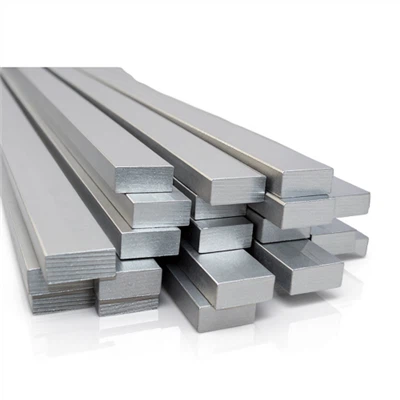
Determining the specific gravity of flat bar stock is a crucial aspect for both suppliers and customers in the metal industry. As a flat bar stock supplier, understanding and accurately communicating the specific gravity of our products is essential for ensuring quality, proper usage, and customer satisfaction. In this blog, we'll explore the methods to determine the specific gravity of flat bar stock and why it matters.
What is Specific Gravity?
Specific gravity is the ratio of the density of a substance to the density of a reference substance, usually water at a specified temperature (typically 4°C, where the density of water is 1 g/cm³). For flat bar stock, which can be made from various materials such as steel, stainless steel, and aluminum, the specific gravity provides valuable information about the material's mass relative to its volume. It helps in estimating the weight of a given volume of flat bar stock, which is important for shipping, handling, and structural design.

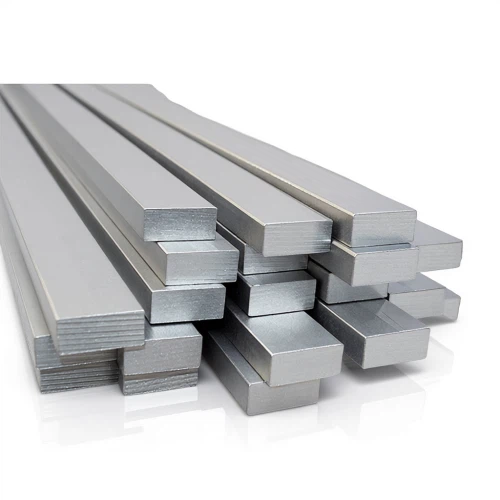
Why is Specific Gravity Important for Flat Bar Stock?
- Weight Estimation: Knowing the specific gravity allows us to calculate the weight of a flat bar stock based on its dimensions. This is crucial for shipping and handling, as it helps in determining the cost of transportation and the equipment needed to move the bars.
- Material Identification: Different materials have different specific gravities. By measuring the specific gravity of a flat bar stock, we can confirm the material type and ensure that it meets the required specifications.
- Quality Control: Specific gravity can be used as a quality control parameter. Deviations from the expected specific gravity may indicate impurities or defects in the material.
Methods to Determine the Specific Gravity of Flat Bar Stock
Archimedes' Principle
Archimedes' principle states that the buoyant force acting on an object submerged in a fluid is equal to the weight of the fluid displaced by the object. This principle can be used to determine the specific gravity of flat bar stock.
- Weigh the bar in air: Use a precision scale to measure the weight of the flat bar stock in air, denoted as (W_{air}).
- Weigh the bar in water: Suspend the bar in a container of water using a thin string or wire and measure its weight in water, denoted as (W_{water}).
- Calculate the specific gravity: The specific gravity ((SG)) can be calculated using the formula:
[SG=\frac{W_{air}}{W_{air}-W_{water}}]
For example, if a flat bar stock weighs 500 grams in air and 450 grams in water, the specific gravity is:
[SG=\frac{500}{500 - 450}=\frac{500}{50}=10]
Pycnometer Method
A pycnometer is a small, precisely calibrated container used to measure the density of a liquid or solid. To determine the specific gravity of flat bar stock using a pycnometer:
- Weigh the empty pycnometer: Record the weight of the empty pycnometer, denoted as (W_{1}).
- Fill the pycnometer with water: Fill the pycnometer with distilled water at a known temperature and weigh it again, denoted as (W_{2}).
- Weigh the bar and add it to the pycnometer: Weigh the flat bar stock, denoted as (W_{3}). Then, carefully add the bar to the pycnometer filled with water. Some water will overflow, and the pycnometer should be filled to the same level as before.
- Weigh the pycnometer with the bar and remaining water: Record the weight of the pycnometer with the bar and the remaining water, denoted as (W_{4}).
- Calculate the specific gravity: The specific gravity ((SG)) can be calculated using the formula:
[SG=\frac{W_{3}}{W_{2}-W_{1}-(W_{4}-W_{1}-W_{3})}]
Using Density Tables
If the material of the flat bar stock is known, we can use density tables to find the specific gravity. Most common metals have well - established density values. For example, the density of 304 stainless steel is approximately 7.93 g/cm³, and the specific gravity (relative to water) is also 7.93.
Specific Gravity of Different Types of Flat Bar Stock
- 410 Stainless Steel Flat Bar: 410 stainless steel is a martensitic stainless steel with a specific gravity of around 7.75. It is known for its good corrosion resistance and high strength, making it suitable for applications in the automotive, aerospace, and construction industries.
- Black Steel Flat Bar: Black steel flat bar is typically made from carbon steel. The specific gravity of carbon steel can vary depending on its composition, but it is generally around 7.85. Black steel flat bars are commonly used in structural applications due to their high strength and relatively low cost.
- 304 Stainless Steel Flat Bar: 304 stainless steel is an austenitic stainless steel with a specific gravity of approximately 7.93. It is widely used in food processing, chemical, and architectural applications due to its excellent corrosion resistance and aesthetic appearance.
Factors Affecting the Specific Gravity of Flat Bar Stock
- Alloy Composition: The addition of different alloying elements can significantly affect the specific gravity of flat bar stock. For example, adding nickel to stainless steel can increase its specific gravity.
- Impurities: The presence of impurities in the material can also affect the specific gravity. Impurities such as dirt, rust, or other contaminants can increase or decrease the measured specific gravity.
- Temperature: The specific gravity of a material can change with temperature. As the temperature increases, the volume of the material expands, and the density decreases, resulting in a lower specific gravity.
Importance of Accurate Specific Gravity Determination for Suppliers
As a flat bar stock supplier, accurate specific gravity determination is crucial for several reasons:
- Product Quality: Ensuring that the specific gravity of our flat bar stock meets the required specifications is essential for maintaining product quality. Deviations from the expected specific gravity may indicate problems with the manufacturing process or the material itself.
- Customer Satisfaction: Providing accurate information about the specific gravity of our products helps our customers make informed decisions. It allows them to estimate the weight and cost of the flat bar stock accurately, which is important for their projects.
- Compliance: In some industries, there are specific regulations and standards regarding the specific gravity of materials. By accurately determining the specific gravity of our flat bar stock, we can ensure compliance with these regulations.
Contact for Procurement
If you are interested in purchasing flat bar stock and need more information about the specific gravity or other properties of our products, please feel free to contact us. We are committed to providing high - quality flat bar stock and excellent customer service.
References
- Callister, W. D., & Rethwisch, D. G. (2018). Materials Science and Engineering: An Introduction. Wiley.
- ASM Handbook Committee. (2004). ASM Handbook, Volume 1: Properties and Selection: Irons, Steels, and High - Performance Alloys. ASM International.