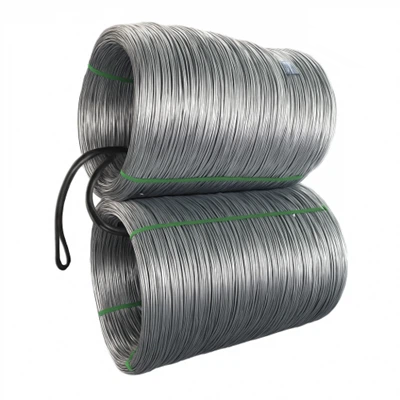
###How to Bend 302 Stainless Round Bar
As a supplier of 302 stainless round bars, I've encountered numerous inquiries regarding the bending process of these bars. Clients often have concerns about achieving the right bend without compromising the bar's integrity or incurring excessive costs. In this blog post, I'll share valuable insights into how to bend 302 stainless round bars effectively and safely.
###Understanding 302 Stainless Steel Round Bars
Before delving into the bending process, it's crucial to understand the characteristics of 302 stainless round bars. 302 stainless steel is a common austenitic stainless steel grade known for its excellent corrosion resistance, high strength, and good formability. It contains chromium and nickel, which contribute to its anti - corrosion properties and make it suitable for various applications, such as architectural structures, automotive components, and machinery parts.
The round bars are typically available in different diameters and lengths, and their properties may vary slightly depending on the manufacturing process and heat treatment. For bending, we need to take into account the bar's hardness, ductility, and the specific requirements of the final application.
###Preparing for Bending
####Material Inspection
The first step in the bending process is to inspect the 302 stainless round bar. Check for any surface defects, such as scratches, cracks, or unevenness. Surface imperfections can act as stress concentrators during bending and may lead to cracking or failure. Ensure that the bar has the correct diameter, length, and straightness as per the project requirements.


####Selecting the Right Tools
The choice of bending tools depends on the diameter of the bar and the desired bend radius. For small - diameter bars (less than 1/2 inch), hand - held bending tools like pipe benders or vice - mounted benders can be used. These tools are relatively inexpensive and easy to operate. However, for larger - diameter bars, mechanical or hydraulic benders are more suitable.
Mechanical benders use gears and levers to apply force to the bar, while hydraulic benders use hydraulic pressure. Hydraulic benders are generally more powerful and precise, making them ideal for large - scale bending operations.
####Determining the Bend Radius
The bend radius is a critical factor in the bending process. A too - tight bend radius can cause the outer surface of the bar to crack, while a too - large bend radius may not meet the design requirements. The minimum bend radius for 302 stainless round bars depends on the bar diameter. As a general rule, the minimum bend radius should be at least 2 - 3 times the bar diameter.
###Bending Methods
####Cold Bending
Cold bending is the most common method for bending 302 stainless round bars. It involves bending the bar at room temperature without the need for heating. Cold bending is suitable for bars with small to medium diameters and relatively simple bend shapes.
To cold bend a 302 stainless round bar, first, secure the bar in the bending tool. Make sure the bar is properly aligned and clamped to prevent slippage during bending. Then, gradually apply force to the bar using the bending tool, following the desired bend angle and radius.
One advantage of cold bending is that it preserves the mechanical properties of the stainless steel. However, cold bending can work - harden the material, which may reduce its ductility in the bent area. To mitigate this, it may be necessary to perform stress - relieving heat treatment after bending.
####Hot Bending
Hot bending is used when a tight bend radius is required or when the bar is too thick to be bent cold. In hot bending, the bar is heated to a specific temperature range (usually between 1,700°F and 2,000°F) to increase its ductility.
The heating can be done using a variety of methods, such as an induction heater, a gas furnace, or an oxy - acetylene torch. Once the bar reaches the appropriate temperature, it is quickly transferred to the bending tool and bent to the desired shape.
Hot bending allows for greater flexibility in achieving complex bend shapes and smaller bend radii. However, it requires specialized equipment and trained operators. Additionally, the heating process can cause oxidation on the surface of the bar, which may need to be removed after bending.
###Post - Bending Considerations
####Stress Relief
As mentioned earlier, cold bending can cause work - hardening and residual stresses in the bar. To relieve these stresses and restore the ductility of the material, stress - relieving heat treatment is often recommended. The stress - relieving temperature for 302 stainless steel is typically around 1,000°F to 1,200°F, followed by slow cooling.
####Surface Finishing
After bending, the bar may require surface finishing to remove any oxidation, scale, or scratches. Common surface finishing methods include grinding, polishing, and pickling. Grinding can be used to remove large surface irregularities, while polishing can give the bar a smooth and shiny appearance. Pickling is a chemical process used to remove oxidation and scale from the surface of the stainless steel.
###Comparisons with Other Stainless Steel Round Bars
It's worth comparing 302 stainless round bars with other popular stainless steel round bar grades, such as 316 Round Bar and 304 Stainless Steel Round Bar as well as Alloy 925 Round Bar.
- 316 Round Bar: 316 stainless steel has a higher molybdenum content than 302, which gives it better corrosion resistance, especially in marine and chemical environments. However, 316 is generally more expensive and may be slightly more difficult to bend due to its higher strength.
- 304 Stainless Steel Round Bar: 304 is the most widely used stainless steel grade. It has good corrosion resistance and formability, similar to 302. The main difference lies in the slightly higher nickel content in 304, which gives it better toughness and austenitic stability. For bending, 304 and 302 perform quite similarly, but the choice between them often depends on the specific corrosion requirements of the application.
- Alloy 925 Round Bar: Alloy 925 is a nickel - based alloy with high strength and excellent corrosion resistance at high temperatures. Bending Alloy 925 round bars may require more specialized techniques and equipment compared to 302 stainless round bars, as it has different mechanical properties.
###Contact for Purchase and Consultation
If you are in the market for high - quality 302 stainless round bars or need further advice on the bending process, we are here to assist you. Our team of experts can provide detailed information on product specifications, bending capabilities, and cost - effective solutions for your projects. Whether you are a small - scale manufacturer or a large - scale construction company, we can meet your needs. Reach out to us to start a productive discussion about your requirements.
###References
- ASM Handbook, Volume 1: Properties and Selection: Irons, Steels, and High - Performance Alloys.
- “Stainless Steel: A Primer” by the Nickel Institute.
- Technical documentation from stainless steel bar manufacturers.