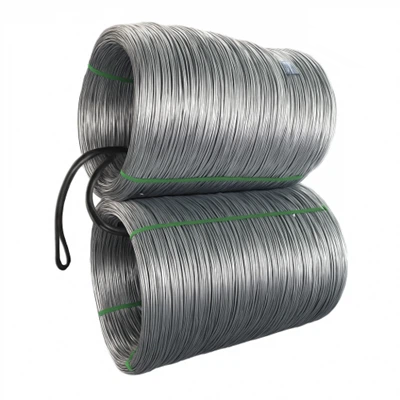
In the realm of high - performance materials, Inconel 625 bar stock stands out as a remarkable choice for a multitude of applications. As a trusted supplier of Inconel 625 bar stock, I am often asked about the weight per unit length of this material. In this blog post, I will delve into the factors that determine the weight per unit length of Inconel 625 bar stock and provide you with the necessary information to make informed decisions for your projects.
Understanding Inconel 625
Inconel 625 is a nickel - chromium - molybdenum alloy with niobium additions. It is known for its excellent corrosion resistance, high strength, and good fabricability. These properties make it suitable for a wide range of applications, including aerospace components, marine engineering, chemical processing, and more. The chemical composition of Inconel 625 typically includes approximately 58% nickel, 20 - 23% chromium, 8 - 10% molybdenum, and 3.15 - 4.15% niobium, along with small amounts of other elements such as iron, carbon, and silicon.
Density of Inconel 625
The weight per unit length of any bar stock is directly related to its density. The density of Inconel 625 is approximately 8.44 g/cm³ (0.305 lb/in³). This density value is a crucial factor in calculating the weight of the bar stock. The density remains relatively constant under normal conditions, but it can be affected by factors such as temperature and the presence of impurities. However, for most practical applications, we can consider the standard density value for our calculations.
Calculating the Weight per Unit Length
The weight per unit length of a round bar can be calculated using the following formula:
[W = \rho\times A]
Where (W) is the weight per unit length, (\rho) is the density of the material, and (A) is the cross - sectional area of the bar. For a round bar, the cross - sectional area (A=\pi\times(d/2)^2), where (d) is the diameter of the bar.
For example, if we have a round Inconel 625 bar with a diameter (d = 10) mm ((1) cm). First, we calculate the cross - sectional area:
[A=\pi\times(1/2)^2=\pi/4\approx 0.785\mathrm{cm}^2]
Using the density of Inconel 625 (\rho = 8.44\mathrm{g/cm}^3), the weight per unit length (W) in grams per centimeter is:
[W=\rho\times A=8.44\times0.785 = 6.62\mathrm{g/cm}]
If the diameter is given in inches and we want the weight in pounds per foot, we need to convert the units appropriately. The density of Inconel 625 in lb/in³ is 0.305. For a bar with a diameter (d) in inches, the cross - sectional area (A=\pi\times(d/2)^2) in in². And since 1 foot = 12 inches, the weight per foot (W_f) in pounds per foot is:
[W_f=0.305\times A\times12]
Comparison with Other Bar Stocks
It's often useful to compare the weight per unit length of Inconel 625 bar stock with other common bar stocks. For instance, 302 Stainless Round Bar, 316L Stainless Steel Round Bar, and 420 Stainless Steel Round Bar are popular choices in the stainless - steel family.
The density of 302 stainless steel is approximately 7.93 g/cm³, 316L stainless steel is around 8.0 g/cm³, and 420 stainless steel is about 7.75 g/cm³. Compared to these stainless - steel alloys, Inconel 625 has a relatively higher density due to its higher nickel and molybdenum content. This means that for bars of the same diameter and length, Inconel 625 bars will be heavier. However, the superior properties of Inconel 625, such as its corrosion resistance and high - temperature strength, often justify the additional weight in many demanding applications.
Factors Affecting Weight per Unit Length
While the density and the cross - sectional area are the primary factors in determining the weight per unit length, there are other factors that can have a minor impact.


- Manufacturing tolerances: The actual diameter of the bar stock may deviate slightly from the specified value. A bar with a larger than - specified diameter will have a greater cross - sectional area and thus a higher weight per unit length.
- Surface finish: A rough or heavily machined surface may remove a small amount of material, which can slightly reduce the weight per unit length compared to a bar with a smooth finish.
- Alloy variations: Although the composition of Inconel 625 is relatively well - defined, small variations in the alloying elements can occur during the manufacturing process. These variations can cause minor changes in the density and therefore in the weight per unit length.
Applications and Considerations of Weight
In different applications, the weight per unit length of Inconel 625 bar stock can have various implications.
In aerospace applications, weight is a critical factor. Engineers need to balance the structural integrity provided by Inconel 625 with the overall weight requirements of the aircraft. While Inconel 625 is heavier than some other materials, its high strength - to - weight ratio allows for the design of components that are both strong and relatively lightweight compared to alternatives with lower strength.
In marine engineering, the weight of the bar stock may not be as critical as its corrosion resistance. Inconel 625's ability to withstand the harsh marine environment makes it a preferred choice, even though it may add some weight to the structures.
Conclusion
The weight per unit length of Inconel 625 bar stock is determined by its density and cross - sectional area. With a density of approximately 8.44 g/cm³, Inconel 625 is denser than many common stainless - steel alloys, resulting in heavier bars for the same dimensions. However, its superior properties make it an ideal material for a wide range of applications, from aerospace to marine engineering.
If you are in need of high - quality Inconel 625 bar stock for your project, I encourage you to reach out. Our team of experts is ready to assist you in selecting the right bar stock based on your specific requirements, including the appropriate weight per unit length. We can also provide you with detailed information on pricing, availability, and delivery options. Contact us to start a conversation about your Inconel 625 bar stock needs and let us help you achieve your project goals.
References
- ASM Handbook, Volume 2: Properties and Selection: Nonferrous Alloys and Special - Purpose Materials.
- Manufacturer's technical data sheets for Inconel 625.