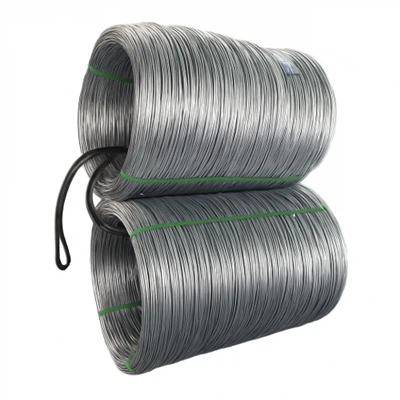
As a trusted supplier of black stainless wire, I am often asked about the wear rate of this remarkable product. In this blog post, I'll delve into the intricacies of the wear rate of black stainless wire, exploring the factors that influence it and how it compares to other materials.
Understanding Wear Rate
The wear rate is a crucial metric that measures the amount of material removed from a surface over a specific period due to friction, abrasion, or other mechanical actions. It is typically expressed in terms of volume loss per unit of sliding distance or time. A lower wear rate indicates better wear resistance, which is highly desirable in applications where the wire is subjected to continuous rubbing, scraping, or contact with other surfaces.


Factors Affecting the Wear Rate of Black Stainless Wire
Material Composition
The composition of black stainless wire plays a significant role in determining its wear rate. Stainless steel is an alloy primarily composed of iron, chromium, and nickel, with other elements such as molybdenum, titanium, and carbon added in varying amounts to enhance specific properties. The chromium content in stainless steel forms a passive oxide layer on the surface, which provides excellent corrosion resistance and also contributes to wear resistance. The higher the chromium content, the more stable and protective the oxide layer, resulting in a lower wear rate.
In addition to chromium, other alloying elements can also affect the wear rate. For example, molybdenum improves the pitting and crevice corrosion resistance of stainless steel, which can indirectly reduce wear by preventing surface damage. Titanium and niobium are often added to stabilize the carbon in the alloy, preventing the formation of chromium carbides, which can reduce the corrosion and wear resistance of the material.
Surface Finish
The surface finish of black stainless wire can have a significant impact on its wear rate. A smooth surface finish reduces friction and wear by minimizing the contact area between the wire and the mating surface. It also helps to prevent the accumulation of debris and contaminants, which can cause abrasion and accelerate wear.
There are several methods for achieving a smooth surface finish on black stainless wire, including polishing, grinding, and electropolishing. Polishing involves using abrasive materials to remove surface irregularities and create a smooth, shiny surface. Grinding is a more aggressive process that uses abrasive wheels to remove larger amounts of material and achieve a finer surface finish. Electropolishing is an electrochemical process that removes a thin layer of material from the surface, resulting in a smooth, mirror-like finish.
Hardness
The hardness of black stainless wire is another important factor that affects its wear rate. Hardness is a measure of a material's resistance to indentation, scratching, and deformation. A harder material generally has a lower wear rate because it is more resistant to abrasion and deformation.
The hardness of stainless steel can be increased through various heat treatment processes, such as quenching and tempering. Quenching involves rapidly cooling the material from a high temperature to room temperature, which results in a hard, brittle structure. Tempering is a subsequent heat treatment process that involves heating the quenched material to a lower temperature for a specific period of time, which reduces the brittleness and improves the toughness of the material.
Operating Conditions
The operating conditions under which black stainless wire is used can also have a significant impact on its wear rate. Factors such as load, speed, temperature, and the presence of lubricants or contaminants can all affect the wear behavior of the wire.
Higher loads and speeds generally result in higher wear rates because they increase the contact pressure and friction between the wire and the mating surface. Elevated temperatures can also accelerate wear by reducing the hardness and strength of the material and promoting the formation of oxide layers, which can be more brittle and prone to cracking.
The presence of lubricants can significantly reduce the wear rate of black stainless wire by reducing friction and preventing direct contact between the wire and the mating surface. Lubricants can also help to dissipate heat and prevent the accumulation of debris and contaminants. However, the effectiveness of lubricants depends on their type, viscosity, and compatibility with the material.
Comparing the Wear Rate of Black Stainless Wire with Other Materials
Black stainless wire offers several advantages over other materials in terms of wear resistance. Compared to traditional carbon steel wire, black stainless wire has a much lower wear rate due to its higher chromium content and the presence of a passive oxide layer on the surface. This makes it more suitable for applications where corrosion and wear resistance are required, such as in the marine, food processing, and chemical industries.
Compared to other stainless steel alloys, black stainless wire also offers excellent wear resistance. For example, 304 Stainless Steel Spring Wire is a popular choice for many applications due to its good corrosion resistance and mechanical properties. However, black stainless wire generally has a lower wear rate than 304 stainless steel spring wire because it is specifically designed to provide enhanced wear resistance.
Similarly, 304L Stainless Steel Wire is another commonly used stainless steel alloy that offers good corrosion resistance and weldability. However, black stainless wire typically has a lower wear rate than 304L stainless steel wire because it is formulated with a higher chromium content and other alloying elements to improve its wear resistance.
In addition to stainless steel alloys, black stainless wire also offers better wear resistance than other materials such as copper, aluminum, and brass. These materials are generally softer and more prone to wear than stainless steel, making them less suitable for applications where high wear resistance is required.
Applications of Black Stainless Wire
The excellent wear resistance of black stainless wire makes it suitable for a wide range of applications in various industries. Some common applications include:
Automotive Industry
Black stainless wire is used in the automotive industry for applications such as engine components, suspension systems, and exhaust systems. In these applications, the wire is subjected to high loads, temperatures, and vibrations, which require excellent wear resistance and corrosion resistance.
Aerospace Industry
In the aerospace industry, black stainless wire is used for applications such as aircraft engines, landing gear, and structural components. These applications require materials that can withstand extreme conditions, including high temperatures, pressures, and vibrations, while maintaining their mechanical properties and wear resistance.
Marine Industry
The marine environment is highly corrosive, and black stainless wire is an ideal choice for applications such as boat rigging, fishing equipment, and marine hardware. Its excellent corrosion resistance and wear resistance make it suitable for use in saltwater environments, where other materials may quickly deteriorate.
Food Processing Industry
In the food processing industry, black stainless wire is used for applications such as conveyor belts, food handling equipment, and packaging machinery. These applications require materials that are hygienic, corrosion-resistant, and wear-resistant to ensure the safety and quality of the food products.
Medical Industry
Black stainless wire is also used in the medical industry for applications such as surgical instruments, implants, and medical devices. These applications require materials that are biocompatible, corrosion-resistant, and wear-resistant to ensure the safety and effectiveness of the medical products.
Conclusion
The wear rate of black stainless wire is influenced by several factors, including material composition, surface finish, hardness, and operating conditions. By understanding these factors and selecting the appropriate material and processing techniques, it is possible to achieve a low wear rate and excellent wear resistance in black stainless wire.
As a supplier of black stainless wire, I am committed to providing high-quality products that meet the specific requirements of our customers. Our black stainless wire is manufactured using advanced production techniques and strict quality control measures to ensure its superior wear resistance and performance.
If you are interested in learning more about the wear rate of black stainless wire or would like to discuss your specific application requirements, please feel free to contact us. We would be happy to provide you with more information and assist you in selecting the right product for your needs.
References
- ASM Handbook Volume 18: Friction, Lubrication, and Wear Technology. ASM International, 1992.
- Metals Handbook Desk Edition, Second Edition. ASM International, 1998.
- Stainless Steel: A Guide to Selection and Application. The Nickel Institute, 2002.