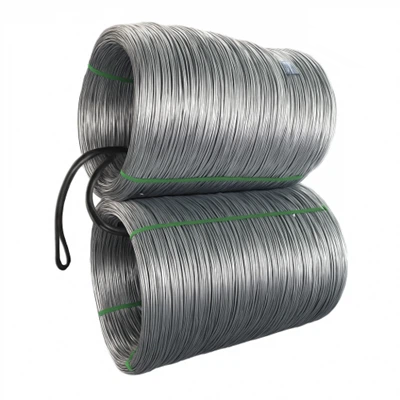
As a supplier of Inconel 625 bar stock, I often get asked about the thermal conductivity of this remarkable material. In this blog post, I'll delve into the details of Inconel 625's thermal conductivity, its significance in various applications, and how it compares to other materials.
Understanding Thermal Conductivity
Thermal conductivity is a measure of a material's ability to conduct heat. It is defined as the quantity of heat, in joules, that passes through a unit area (square meter) in a unit time (second) when a temperature gradient of one kelvin per meter exists across the material. The SI unit for thermal conductivity is watts per meter-kelvin (W/(m·K)).
A high thermal conductivity means that the material can transfer heat quickly, while a low thermal conductivity indicates that the material is a poor conductor of heat and can act as an insulator.
Thermal Conductivity of Inconel 625
Inconel 625 is a nickel-based superalloy known for its excellent corrosion resistance, high strength, and good weldability. Its thermal conductivity varies depending on temperature. At room temperature (around 20°C or 293 K), the thermal conductivity of Inconel 625 is approximately 9.8 W/(m·K).
As the temperature increases, the thermal conductivity of Inconel 625 also changes. For example, at 100°C (373 K), the thermal conductivity is about 10.5 W/(m·K), and at 500°C (773 K), it is around 13.5 W/(m·K). This increase in thermal conductivity with temperature is typical for most metals and alloys.
The relatively low thermal conductivity of Inconel 625 compared to some pure metals like copper (which has a thermal conductivity of about 400 W/(m·K) at room temperature) is due to its complex alloy structure. The presence of various alloying elements such as chromium, molybdenum, and niobium disrupts the regular lattice structure of the nickel matrix, impeding the flow of heat-carrying electrons.
Significance of Thermal Conductivity in Applications
The thermal conductivity of Inconel 625 plays a crucial role in many of its applications. Here are some examples:
Aerospace Industry
In aerospace applications, Inconel 625 is used in components such as turbine blades, exhaust systems, and structural parts. The low thermal conductivity helps to insulate these components from the high temperatures generated during flight, reducing the risk of thermal damage and improving the overall performance and durability of the aircraft.
Chemical Processing
In the chemical processing industry, Inconel 625 is widely used in equipment such as reactors, heat exchangers, and piping systems. The alloy's corrosion resistance and moderate thermal conductivity make it suitable for handling corrosive chemicals at elevated temperatures. The ability to control heat transfer is important in chemical reactions to ensure optimal reaction conditions and prevent overheating.
Marine Industry
In marine environments, Inconel 625 is used in components such as propeller shafts, valves, and fittings. The low thermal conductivity helps to prevent heat transfer from the engine or other heat sources to the surrounding seawater, reducing the risk of corrosion and improving the longevity of the components.
Comparison with Other Materials
To better understand the thermal conductivity of Inconel 625, let's compare it with some other commonly used materials:
Stainless Steel
Stainless steel is another popular material in various industries. For example, 316 Round Bar and 304 Stainless Steel Round Bar have thermal conductivities of around 16 - 17 W/(m·K) at room temperature, which is higher than that of Inconel 625. This means that stainless steel can transfer heat more efficiently than Inconel 625. However, Inconel 625 offers superior corrosion resistance, especially in harsh environments.
Alloy 925
Alloy 925 Round Bar is a nickel-iron-chromium alloy with good corrosion resistance and high strength. Its thermal conductivity is also in the range of 10 - 15 W/(m·K), similar to Inconel 625. The choice between these two alloys depends on specific application requirements, such as the level of corrosion resistance and mechanical properties needed.
Factors Affecting Thermal Conductivity
Several factors can affect the thermal conductivity of Inconel 625:


Composition
The exact composition of Inconel 625 can vary slightly depending on the manufacturing process and specific requirements. Small variations in the amounts of alloying elements can affect the thermal conductivity. For example, an increase in the amount of chromium or molybdenum may further decrease the thermal conductivity due to the increased disruption of the lattice structure.
Microstructure
The microstructure of Inconel 625, including grain size and the presence of precipitates, can also influence its thermal conductivity. A finer grain size generally leads to a lower thermal conductivity because the grain boundaries act as barriers to the flow of heat-carrying electrons.
Temperature
As mentioned earlier, the thermal conductivity of Inconel 625 increases with temperature. This is because at higher temperatures, the lattice vibrations become more intense, allowing for more efficient heat transfer.
Measuring Thermal Conductivity
There are several methods for measuring the thermal conductivity of materials, including:
Steady-State Methods
In steady-state methods, a constant heat flux is applied to the sample, and the temperature difference across the sample is measured. The thermal conductivity is then calculated using Fourier's law of heat conduction. Examples of steady-state methods include the guarded hot plate method and the heat flow meter method.
Transient Methods
Transient methods involve applying a short pulse of heat to the sample and measuring the temperature response over time. These methods are faster and more suitable for measuring the thermal conductivity of small samples. Examples of transient methods include the laser flash method and the hot wire method.
Conclusion
In conclusion, the thermal conductivity of Inconel 625 is an important property that influences its performance in various applications. With a relatively low thermal conductivity compared to some pure metals and stainless steels, Inconel 625 offers good insulation properties, which are beneficial in many high-temperature and corrosive environments.
As a supplier of Inconel 625 bar stock, I can provide high-quality products that meet your specific requirements. Whether you need Inconel 625 for aerospace, chemical processing, or marine applications, I'm here to assist you. If you're interested in purchasing Inconel 625 bar stock or have any questions about its thermal conductivity or other properties, please feel free to contact me for a detailed discussion and to start the procurement process.
References
- ASM Handbook, Volume 2: Properties and Selection: Nonferrous Alloys and Special-Purpose Materials.
- Callister, W. D., & Rethwisch, D. G. (2010). Materials Science and Engineering: An Introduction. Wiley.
- Perry, R. H., & Green, D. W. (1997). Perry's Chemical Engineers' Handbook. McGraw-Hill.