Hey there! As a supplier of stainless steel angle bars, I often get asked about the tensile strength of these handy pieces of metal. So, I thought I'd take a moment to break it down for you and explain what it all means.
First off, let's talk about what tensile strength actually is. In simple terms, tensile strength is the maximum amount of stress a material can withstand while being pulled or stretched before it breaks. It's an important property to consider when choosing a material for a particular application, especially in construction, manufacturing, and engineering.
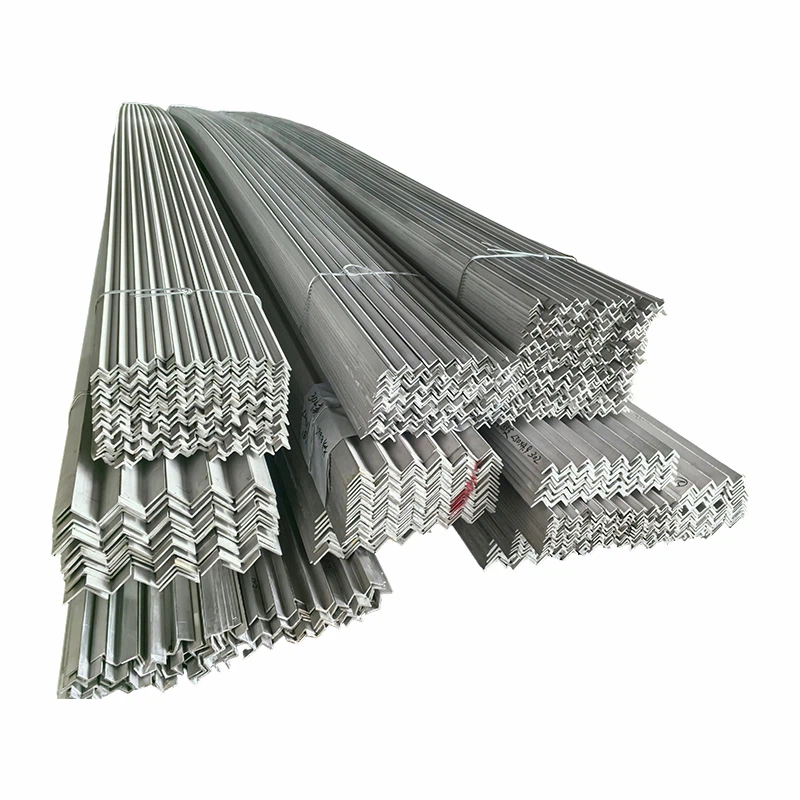
When it comes to stainless steel angle bars, the tensile strength can vary depending on a few factors. One of the main factors is the grade of stainless steel used. There are several different grades of stainless steel, each with its own unique properties and characteristics. Some of the most common grades used for angle bars include 304 and 316 stainless steel.
Let's start with Stainless Steel 304 Angle Bar. This is one of the most widely used grades of stainless steel due to its excellent corrosion resistance, good formability, and relatively low cost. The tensile strength of 304 stainless steel angle bar typically ranges from about 515 MPa (megapascals) to 620 MPa. That means it can withstand a significant amount of pulling force before it gives way.
On the other hand, Stainless Steel 316 Angle Bar is known for its superior corrosion resistance, especially in harsh environments such as marine applications. The addition of molybdenum in 316 stainless steel gives it better resistance to pitting and crevice corrosion. The tensile strength of 316 stainless steel angle bar is similar to that of 304, usually ranging from around 515 MPa to 620 MPa as well.
Another factor that can affect the tensile strength of stainless steel angle bars is the manufacturing process. The way the angle bar is formed, whether it's hot-rolled or cold-rolled, can have an impact on its mechanical properties. Hot-rolled angle bars are generally more ductile and have a slightly lower tensile strength compared to cold-rolled ones. Cold-rolled angle bars, on the other hand, are often stronger and have a more precise dimensional tolerance.
The size and shape of the angle bar also play a role in its tensile strength. Thicker and larger angle bars tend to have higher tensile strength because they have more material to resist the pulling force. Additionally, the angle of the bar can affect its strength. A 90-degree angle bar is typically stronger in tension than an angle bar with a different angle, as it provides a more stable structure.
Now, you might be wondering why tensile strength is so important when it comes to stainless steel angle bars. Well, in many applications, these angle bars are used to support heavy loads or provide structural stability. For example, in construction, they might be used as frames for buildings, supports for bridges, or reinforcement in concrete structures. In manufacturing, they can be used to make machinery frames, conveyor systems, or storage racks. In these situations, having a high tensile strength is crucial to ensure the safety and durability of the structure or equipment.
Let's take a look at some specific examples of how stainless steel angle bars are used based on their tensile strength. In a building construction project, Standard Angle Bar with a high tensile strength can be used to create the framework for a multi-story building. The angle bars need to be able to support the weight of the building, including the floors, walls, and any additional loads such as people, furniture, and equipment. If the tensile strength of the angle bars is too low, there's a risk of the structure collapsing under the weight.
In the manufacturing industry, Steel Solid Angle Bar can be used to make the frames for industrial machinery. These frames need to be strong enough to withstand the vibrations and forces generated by the machinery during operation. A high tensile strength ensures that the frames won't break or deform over time, which could lead to costly repairs and downtime.
When you're choosing a stainless steel angle bar for your project, it's important to consider not only the tensile strength but also other factors such as corrosion resistance, weldability, and cost. You want to make sure you're getting the right balance of properties for your specific application.
If you're in the market for stainless steel angle bars, we've got you covered. We offer a wide range of grades, sizes, and shapes to meet your needs. Whether you need a small quantity for a DIY project or a large order for a commercial construction job, we can help. Our angle bars are made from high-quality stainless steel and are manufactured to strict standards to ensure consistent quality and performance.
So, if you're interested in learning more about our stainless steel angle bars or have any questions about tensile strength or other properties, don't hesitate to reach out. We're here to help you find the perfect solution for your project. Just drop us a line, and we'll be happy to assist you with your procurement and answer any queries you might have.

In conclusion, the tensile strength of stainless steel angle bars is an important property that determines their suitability for various applications. By understanding the factors that affect tensile strength and choosing the right grade and size of angle bar, you can ensure the safety and durability of your structures and equipment. And if you're looking for a reliable supplier of stainless steel angle bars, look no further. We're here to provide you with top-quality products and excellent customer service.
References
- ASM Handbook Volume 1: Properties and Selection: Irons, Steels, and High-Performance Alloys
- Stainless Steel World Handbook