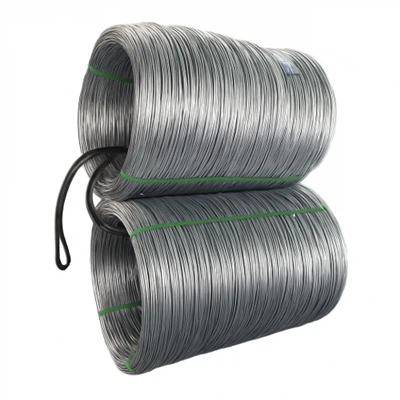
420 stainless steel wire is a popular material in various industries due to its unique combination of properties. As a reliable supplier of 420 Stainless Steel Wire, I am often asked about its processing performance. In this blog post, I will delve into the details of what makes the processing of 420 stainless steel wire a distinct and advantageous aspect, comparing it with other commonly used stainless steel wires like Stainless Flat Wire, 410 Stainless Steel Wire, and 304 Stainless Steel Wire.
Composition and General Properties of 420 Stainless Steel Wire
Before discussing its processing performance, it's essential to understand the composition and basic properties of 420 stainless steel wire. 420 stainless steel is a martensitic stainless steel, which typically contains 12 - 14% chromium and a relatively low carbon content (usually around 0.15 - 0.40%). This composition gives it good corrosion resistance, especially in mild environments, and high hardness after heat treatment.
Machinability
One of the key aspects of processing performance is machinability. 420 stainless steel wire generally has moderate machinability. Compared to austenitic stainless steels like 304, 420 stainless steel can be machined with relative ease. The martensitic structure of 420 allows for better chip formation during machining operations such as turning, drilling, and milling.
However, due to its hardness, especially after heat treatment, special cutting tools may be required. High - speed steel (HSS) tools can be used for lower - volume machining, but for more demanding applications, carbide - tipped tools are recommended. These tools can withstand the high cutting forces generated when machining the relatively hard 420 stainless steel wire.
In contrast, 304 Stainless Steel Wire has a more ductile austenitic structure. While it is also machinable, it tends to work - harden during machining, which can lead to increased tool wear and difficulty in achieving smooth surfaces. On the other hand, 410 Stainless Steel Wire, another martensitic stainless steel, has a lower carbon content than 420. This makes 410 slightly more machinable in some cases, but it also results in lower hardness and strength compared to 420.
Cold Working
Cold working is an important process in shaping stainless steel wires. 420 stainless steel wire can be cold - worked to a certain extent. Cold drawing, for example, can be used to reduce the diameter of the wire and improve its surface finish. During cold working, the strength and hardness of 420 stainless steel wire increase due to strain hardening.
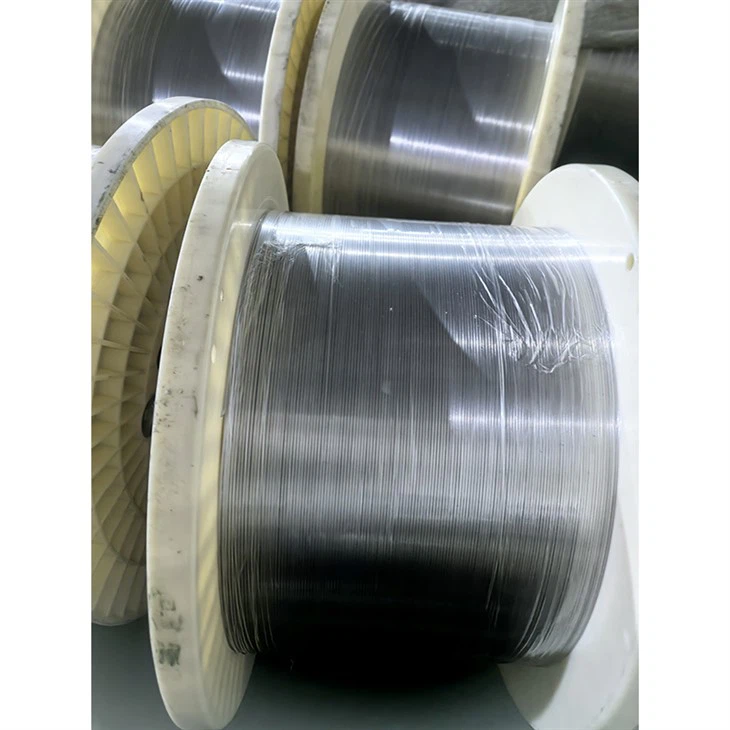

However, compared to some austenitic stainless steels like 304, 420 has a lower ductility. This means that excessive cold working can lead to cracking or fracturing of the wire. Therefore, when cold - working 420 stainless steel wire, it is necessary to carefully control the deformation rate and the amount of deformation in each pass.
Stainless Flat Wire can be made from various stainless steel grades, including 420. Cold rolling is a common process for manufacturing flat wire. The processing performance of 420 in cold rolling is similar to its performance in cold drawing, with the need for careful control to avoid defects.
Heat Treatment
Heat treatment is a crucial process for 420 stainless steel wire as it can significantly alter its mechanical properties. The typical heat treatment processes for 420 stainless steel include annealing, hardening, and tempering.
Annealing is used to relieve internal stresses and improve the ductility of the wire. It involves heating the wire to a specific temperature (usually around 800 - 900°C) and then slowly cooling it. This process softens the wire, making it easier to perform subsequent cold working operations.
Hardening is achieved by heating the wire to a high temperature (around 1000 - 1050°C) and then quenching it in oil or water. This results in a significant increase in hardness and strength. However, the quenched wire is very brittle, so tempering is usually required. Tempering involves reheating the hardened wire to a lower temperature (around 200 - 650°C) and then cooling it. This reduces the brittleness while still maintaining a high level of hardness and strength.
In comparison, 304 stainless steel is not typically hardened by heat treatment in the same way as 420. 304 is an austenitic stainless steel, and its strength is mainly improved through cold working. 410 Stainless Steel Wire also undergoes heat treatment, but its response to heat treatment is different from 420 due to its lower carbon content.
Welding
Welding 420 stainless steel wire requires careful consideration. Due to its martensitic structure, 420 is prone to cracking during welding, especially when high - heat input welding processes are used. Pre - heating the wire before welding and post - weld heat treatment can help reduce the risk of cracking.
Common welding processes for 420 stainless steel wire include gas tungsten arc welding (GTAW) and shielded metal arc welding (SMAW). These processes allow for better control of the heat input compared to some other welding methods.
304 Stainless Steel Wire is generally easier to weld than 420. Its austenitic structure is more forgiving during welding, and it is less prone to cracking. However, proper welding techniques and filler metals still need to be selected to ensure good weld quality.
Surface Finishing
The surface finish of 420 stainless steel wire is an important aspect of its processing performance. After cold working or heat treatment, the wire may have a rough surface that needs to be finished. Common surface finishing methods for 420 stainless steel wire include polishing, grinding, and pickling.
Polishing can be used to achieve a smooth and shiny surface, which is often required for aesthetic or functional purposes. Grinding can be used to remove surface defects and improve dimensional accuracy. Pickling is a chemical process that is used to remove scale and oxide layers from the surface of the wire, improving its corrosion resistance.
Applications and Processing Performance
The processing performance of 420 stainless steel wire makes it suitable for a wide range of applications. In the cutlery industry, its high hardness after heat treatment allows it to hold a sharp edge, while its moderate corrosion resistance is sufficient for most household and commercial use. In the manufacturing of springs, the ability to be cold - worked and heat - treated to achieve the desired strength and elasticity makes 420 a viable option.
Conclusion
In conclusion, the processing performance of 420 stainless steel wire is a combination of its machinability, cold - working ability, heat - treatment response, welding performance, and surface - finishing characteristics. While it has some challenges compared to other stainless steel grades, such as its lower ductility and tendency to crack during welding, its unique properties make it a valuable material in many industries.
If you are interested in purchasing 420 Stainless Steel Wire and have specific processing requirements, please feel free to contact us. We are committed to providing high - quality products and professional technical support to meet your needs.
References
- ASM Handbook Volume 1: Properties and Selection: Irons, Steels, and High - Performance Alloys. ASM International.
- "Stainless Steel: A Technical Guide" by The Nickel Institute.