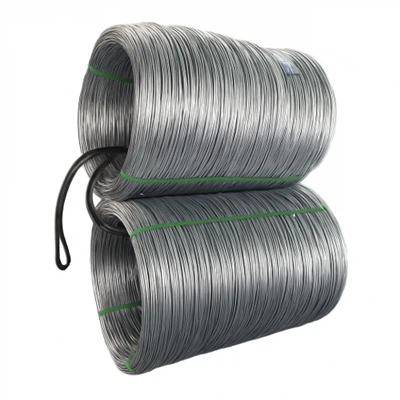
Hey there! As a supplier of stainless flat wire, I often get asked about the surface finish of this product. So, I thought I'd take some time to break it down for you.
Let's start with the basics. The surface finish of stainless flat wire refers to the appearance and texture of the wire's outer layer. It's not just about looks, though. The surface finish can also affect the wire's performance, durability, and resistance to corrosion.
Common Surface Finishes
Matte Finish
A matte finish on stainless flat wire gives it a non - reflective, dull appearance. This finish is achieved through processes like mechanical abrasion or chemical treatments. It's great for applications where you don't want the wire to reflect light, like in some architectural or decorative uses. For example, if you're using the wire in an interior design project where a subdued look is desired, a matte finish would be a perfect choice. The lack of shine also means that fingerprints and smudges are less noticeable, which is a plus in high - traffic areas.
Bright Finish
On the other hand, a bright finish is all about that shiny look. This finish is typically achieved through processes like electropolishing or bright annealing. Electropolishing involves using an electrical current to remove a thin layer of the metal's surface, leaving it smooth and reflective. Bright annealing, meanwhile, heats the wire in a controlled atmosphere to produce a bright, clean surface. Bright - finished stainless flat wire is often used in applications where aesthetics are important, such as in jewelry making or high - end consumer products. It can give a product a sleek and modern look.
Bead - Blasted Finish
A bead - blasted finish is created by propelling small beads at high speed onto the surface of the wire. This process creates a uniform, textured surface that has a slightly rough appearance. The bead - blasted finish not only looks cool but also provides better grip. It's commonly used in applications where the wire needs to be handled, like in some industrial tools or equipment. The texture helps prevent slippage, making it safer to work with.
Impact of Surface Finish on Performance
The surface finish of stainless flat wire can have a significant impact on its performance. For instance, a smooth finish like the bright finish reduces friction. This is important in applications where the wire needs to move freely, such as in springs. A spring made from bright - finished stainless flat wire will have less internal friction, which means it can operate more efficiently and have a longer lifespan.
On the other hand, a textured finish like the bead - blasted one can improve adhesion. If you're planning to coat the wire or use it in a composite material, the textured surface provides more area for the coating or bonding agent to grip onto. This results in a stronger bond and better overall performance.


Corrosion Resistance
Corrosion resistance is one of the key advantages of stainless steel, and the surface finish plays a role here too. A well - finished surface can enhance the wire's ability to resist corrosion. For example, electropolished bright finishes can remove impurities from the surface of the wire, leaving behind a more homogeneous and corrosion - resistant layer. This is especially important in harsh environments, like marine applications or chemical processing plants.
Our Offerings
As a supplier, we offer a wide range of stainless flat wire with different surface finishes to meet your specific needs. We have 304L Stainless Steel Wire available in both matte and bright finishes. 304L is a popular choice due to its good corrosion resistance and relatively low cost. It's suitable for a variety of applications, from general industrial uses to consumer products.
We also stock 316 Stainless Steel Spring Wire and 316 Stainless Steel Wire. 316 stainless steel has even better corrosion resistance than 304L, especially in environments with high chloride content, like near the ocean. The spring wire, with its appropriate surface finish, is perfect for applications that require elasticity and durability, such as in automotive or aerospace components.
Testing and Quality Control
We take quality seriously. Before we send out any stainless flat wire, we conduct a series of tests to ensure that the surface finish meets our high standards. We use techniques like visual inspection, surface roughness measurement, and corrosion testing. Visual inspection allows us to check for any obvious defects or inconsistencies in the finish. Surface roughness measurement helps us ensure that the texture of the finish is within the specified range. And corrosion testing, of course, verifies the wire's ability to resist rust and other forms of corrosion.
Choosing the Right Surface Finish
When choosing the surface finish for your stainless flat wire, you need to consider your specific application. If aesthetics are your top priority, a bright finish might be the way to go. But if functionality, like grip or corrosion resistance, is more important, then a matte or bead - blasted finish could be a better choice. You also need to think about the environment in which the wire will be used. Harsh environments will require a finish that can withstand corrosion and wear.
Conclusion
In conclusion, the surface finish of stainless flat wire is more than just skin - deep. It affects the wire's appearance, performance, and durability. As a supplier, we're here to help you choose the right finish for your needs. Whether you're working on a small DIY project or a large - scale industrial application, we have the right stainless flat wire with the perfect surface finish for you.
If you're interested in purchasing stainless flat wire or have any questions about our products, feel free to reach out. We're always happy to have a chat and help you find the best solution for your project.
References
- ASM Handbook, Volume 5: Surface Engineering.
- ASTM Standards on Stainless Steel Products.
- "Stainless Steel: A Technical Guide" by The Nickel Institute.