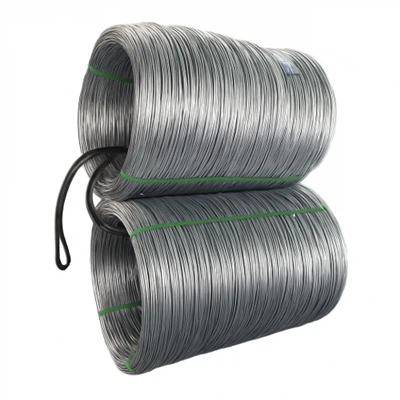
Residual stress is a critical factor that significantly influences the performance and reliability of 410 stainless steel wire. As a trusted supplier of 410 Stainless Steel Wire, I am well - versed in the nature of residual stress in this material and its implications. In this blog, I will delve into what residual stress is in 410 stainless steel wire, how it forms, its effects, and ways to manage it.
What is Residual Stress?
Residual stress refers to the stress that remains within a material after the external forces that caused its initial deformation have been removed. In the context of 410 stainless steel wire, these stresses can be either tensile or compressive. Tensile residual stresses act to pull the material apart, while compressive residual stresses push the material together.
These stresses are not visible to the naked eye, but they can have a profound impact on the mechanical properties of the wire. For example, high levels of tensile residual stress can make the wire more susceptible to cracking, while compressive residual stress can enhance the wire's resistance to fatigue and stress - corrosion cracking.
How Residual Stress Forms in 410 Stainless Steel Wire
Manufacturing Processes
The manufacturing of 410 stainless steel wire involves several processes that can induce residual stress. One of the primary processes is cold drawing. During cold drawing, the wire is pulled through a series of dies to reduce its diameter. This process deforms the wire plastically, causing internal stresses to build up. As the wire passes through the dies, the outer layers of the wire experience more deformation than the inner layers, leading to non - uniform stress distribution.
Another manufacturing process that can generate residual stress is heat treatment. When 410 stainless steel wire is heated and then cooled, different parts of the wire may cool at different rates. This uneven cooling can cause thermal expansion and contraction, resulting in residual stress. For instance, if the outer surface of the wire cools faster than the core during quenching, the outer layer will contract more rapidly, creating tensile residual stress on the surface and compressive residual stress in the core.
Service Conditions
In addition to manufacturing processes, the service conditions of the 410 stainless steel wire can also contribute to the formation of residual stress. For example, if the wire is subjected to repeated bending or torsion during use, it can accumulate plastic deformation over time, leading to the development of residual stress. Environmental factors such as temperature changes and exposure to corrosive substances can also affect the stress state of the wire.
Effects of Residual Stress on 410 Stainless Steel Wire
Mechanical Properties
Residual stress can have a significant impact on the mechanical properties of 410 stainless steel wire. Tensile residual stress can reduce the wire's fatigue life. When the wire is subjected to cyclic loading, the tensile residual stress adds to the applied stress, increasing the likelihood of crack initiation and propagation. On the other hand, compressive residual stress can improve the fatigue resistance of the wire by counteracting the applied tensile stress.
Residual stress can also affect the wire's strength and ductility. High levels of tensile residual stress can cause premature yielding of the wire, reducing its effective strength. In some cases, the presence of residual stress can lead to a decrease in ductility, making the wire more brittle and prone to fracture.
Corrosion Resistance
The corrosion resistance of 410 stainless steel wire can be influenced by residual stress. Tensile residual stress can promote stress - corrosion cracking (SCC). In a corrosive environment, the combination of tensile stress and corrosion can lead to the formation and growth of cracks in the wire. Compressive residual stress, however, can inhibit SCC by reducing the effective tensile stress on the surface of the wire.
Measuring Residual Stress in 410 Stainless Steel Wire
There are several methods available for measuring residual stress in 410 stainless steel wire. One of the most common methods is the hole - drilling method. In this method, a small hole is drilled into the surface of the wire, and the relaxation of the residual stress around the hole is measured using strain gauges. The measured strain values are then used to calculate the residual stress.
Another method is X - ray diffraction. This non - destructive technique analyzes the crystal structure of the material to determine the residual stress. X - rays are directed at the surface of the wire, and the diffraction pattern is analyzed to measure the lattice spacing changes caused by residual stress.
Managing Residual Stress in 410 Stainless Steel Wire
Heat Treatment
One of the most effective ways to manage residual stress in 410 stainless steel wire is through heat treatment. Annealing is a common heat - treatment process used to relieve residual stress. During annealing, the wire is heated to a specific temperature and held for a certain period of time, allowing the atoms in the material to rearrange and the residual stress to relax.
Stress - relieving heat treatment can also be used. This process involves heating the wire to a lower temperature than annealing, typically below the recrystallization temperature. The purpose of stress - relieving is to reduce the residual stress without significantly altering the mechanical properties of the wire.


Shot Peening
Shot peening is a mechanical process that can be used to introduce compressive residual stress on the surface of the 410 stainless steel wire. In shot peening, small spherical particles are propelled at high velocity onto the surface of the wire. The impact of the particles causes plastic deformation on the surface, creating compressive residual stress. This compressive stress can improve the wire's fatigue resistance and resistance to stress - corrosion cracking.
Our Offerings as a 410 Stainless Steel Wire Supplier
As a leading supplier of 410 stainless steel wire, we are committed to providing high - quality products with well - managed residual stress. Our manufacturing processes are carefully controlled to minimize the generation of residual stress during production. We use advanced heat - treatment techniques to relieve any residual stress that may have been introduced during manufacturing, ensuring that our wires have excellent mechanical properties and corrosion resistance.
In addition to our standard 410 stainless steel wire products, we also offer customized solutions to meet the specific needs of our customers. Whether you need wire with a specific diameter, strength, or surface finish, we can work with you to develop the perfect product.
If you are interested in learning more about our 410 stainless steel wire products or have any questions about residual stress, please feel free to contact us. We are always ready to assist you with your procurement needs.
We also offer a wide range of other stainless - steel wire products, such as Stainless Steel 1.4529, Alloy 926, UNS N08926, Stainless Steel 316Ti Wire Mesh, and Stainless Flat Wire. These products are also manufactured with strict quality control to ensure optimal performance.
Conclusion
Residual stress is an important consideration in the production and use of 410 stainless steel wire. Understanding what residual stress is, how it forms, and its effects on the wire is crucial for ensuring the reliability and performance of the wire. As a 410 stainless steel wire supplier, we take great care in managing residual stress to provide our customers with high - quality products. If you are in the market for 410 stainless steel wire or any of our other stainless - steel wire products, we invite you to contact us for a detailed discussion on your procurement requirements. We look forward to partnering with you to meet your needs.
References
- Bhadeshia, H. K. D. H., & Honeycombe, R. W. K. (2017). Steels: Microstructure and Properties. Elsevier.
- ASM Handbook Committee. (2000). ASM Handbook, Volume 2: Properties and Selection: Nonferrous Alloys and Special - Purpose Materials. ASM International.
- Macherauch, E. (1987). Residual Stress Analysis by Nondestructive Methods. Springer - Verlag.