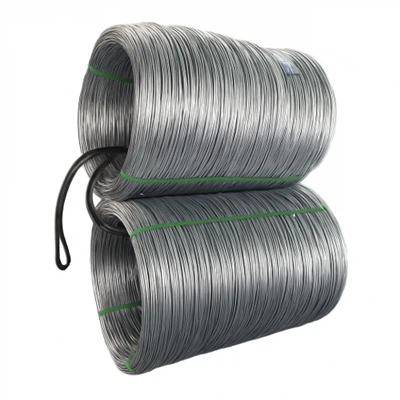
Hey there! As a supplier of 316 Stainless Steel Wire, I often get asked about various technical properties of the wire we offer. One question that pops up quite a bit is, "What is the modulus of rigidity of 316 stainless steel wire?" Let's dive into this topic and break it down in a way that's easy to understand.
First off, what exactly is the modulus of rigidity? Well, it's also known as the shear modulus. In simple terms, it measures a material's resistance to shearing forces. When you apply a force that causes one part of the material to slide past another parallel part, the modulus of rigidity tells you how much the material will deform under that shear stress.
For 316 stainless steel wire, the modulus of rigidity is typically around 77 GPa (gigapascals). This value can vary slightly depending on factors like the specific manufacturing process, heat treatment, and the exact composition of the steel. But in general, 77 GPa is a good ballpark figure.
Now, why does the modulus of rigidity matter? It's crucial in applications where the wire will be subjected to shear forces. For example, if you're using 316 stainless steel wire in a spring, the modulus of rigidity affects how the spring will behave when compressed or stretched. A higher modulus of rigidity means the wire is stiffer and will resist deformation more effectively.
Let's compare 316 stainless steel wire with some other types of stainless steel wire. We have 304 Stainless Steel Spring Wire, 304 Stainless Steel Wire, and 304L Stainless Steel Wire. The modulus of rigidity for 304 and 304L stainless steel is also in the same general range as 316, around 77 GPa. However, 316 has better corrosion resistance, especially in environments with chloride ions, like marine settings.
When it comes to manufacturing 316 stainless steel wire, we take great care to ensure the quality and consistency of the modulus of rigidity. We start with high - quality raw materials and use advanced manufacturing processes. Our team of experts monitors every step of the production, from melting the steel to drawing the wire to the desired diameter. This way, we can guarantee that our customers get wire with the expected mechanical properties, including the modulus of rigidity.
Another factor that can influence the modulus of rigidity is the wire's diameter. Thicker wires may have slightly different behavior under shear stress compared to thinner ones. But we've done extensive testing to understand these relationships and can provide our customers with accurate information based on the specific wire diameter they need.


In real - world applications, the knowledge of the modulus of rigidity helps engineers and designers make informed decisions. If they're designing a structure that requires a wire to withstand a certain amount of shear force, they can use the modulus of rigidity value to calculate the appropriate wire size and grade.
Let's talk about some of the common applications of 316 stainless steel wire. It's widely used in the construction industry for things like fencing and reinforcement. The high modulus of rigidity ensures that the wire can maintain its shape and integrity under various loads. In the automotive industry, it's used in components like suspension springs, where the ability to resist shear forces is essential for a smooth and safe ride.
In the food and beverage industry, 316 stainless steel wire is a popular choice because of its corrosion resistance and hygienic properties. The modulus of rigidity plays a role here too, as the wire needs to be able to handle the stresses of processing and packaging without deforming.
If you're in the market for 316 stainless steel wire, you might be wondering how to choose the right product. First, consider the application and the amount of shear force the wire will be exposed to. Based on that, you can determine if the standard modulus of rigidity of 77 GPa is sufficient or if you need a wire with special properties.
We're always here to help you make the right choice. Our team of technical experts can answer any questions you have about the modulus of rigidity or any other properties of our 316 stainless steel wire. Whether you're a small - scale manufacturer or a large - scale industrial client, we can provide you with the right amount of wire at a competitive price.
So, if you're interested in purchasing 316 stainless steel wire, don't hesitate to reach out. We'd love to have a chat with you about your specific needs and how our wire can meet them. Whether it's for a new project or to replace an existing component, we're confident that our 316 stainless steel wire will be a great fit.
In conclusion, the modulus of rigidity of 316 stainless steel wire is an important property that affects its performance in many applications. With a typical value of around 77 GPa, it offers a good balance of stiffness and resistance to shear forces. And as a reliable supplier, we ensure that our wire meets the highest standards of quality and consistency.
References:
- "Stainless Steel Handbook" - A comprehensive guide on the properties and applications of stainless steel.
- Industry research reports on the mechanical properties of stainless steel wires.