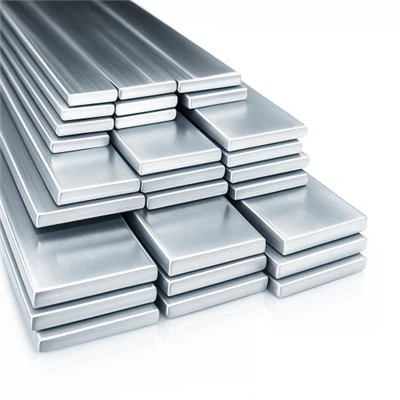
Hey there! As a supplier of 304 stainless channels, I often get asked about the magnetic permeability of 304 stainless channel. So, I thought I'd take the time to break it down for you in this blog post.
First off, let's talk a bit about what 304 stainless steel is. It's one of the most commonly used grades of stainless steel out there. It's known for its good corrosion resistance, formability, and weldability. You can find 304 stainless steel in all sorts of applications, from kitchen appliances to architectural structures. And when it comes to channels, 304 stainless channels are super popular due to their versatility and durability.
Now, let's dive into the topic of magnetic permeability. Magnetic permeability is a measure of how easily a material can be magnetized. In simple terms, it tells us how well a material can support the formation of a magnetic field within itself. Materials with high magnetic permeability can be easily magnetized, while those with low magnetic permeability are more difficult to magnetize.
So, what's the deal with the magnetic permeability of 304 stainless channel? Well, 304 stainless steel is generally considered to be a non - magnetic material. That's because it has an austenitic crystal structure. Austenitic stainless steels, like 304, have a face - centered cubic (FCC) crystal lattice, which gives them their non - magnetic properties. In an austenitic structure, the atoms are arranged in a way that the magnetic moments of the individual atoms cancel each other out, resulting in a net magnetic moment of zero.
However, it's not that cut and dry. Sometimes, 304 stainless steel can exhibit some magnetic behavior. This can happen for a few reasons. One common cause is cold working. When 304 stainless steel is cold worked, like during the process of forming a channel, some of the austenite can transform into martensite. Martensite is a magnetic phase, so if there's a significant amount of martensite formed, the 304 stainless channel may become slightly magnetic.
Another factor that can affect the magnetic permeability is the presence of impurities or alloying elements. Small amounts of elements like ferrite can increase the magnetic properties of the material. If there are inhomogeneities in the manufacturing process or if the steel has a higher than normal ferrite content, it might show some magnetic characteristics.
The level of magnetic permeability in a 304 stainless channel can also vary depending on the specific manufacturing process. For example, if the channel is produced using a process that involves a lot of mechanical deformation, there's a higher chance of martensite formation and thus, increased magnetic behavior.
Now, why does the magnetic permeability matter? Well, in some applications, the non - magnetic nature of 304 stainless steel is a huge advantage. For instance, in the electronics industry, non - magnetic materials are preferred to avoid interference with magnetic fields. In food processing equipment, non - magnetic materials are also favored as they are less likely to attract metal particles.
On the other hand, if you're in an application where a bit of magnetic behavior is acceptable or even desired, a slightly magnetic 304 stainless channel might work just fine. It all depends on your specific needs.
If you're looking for different types of stainless steel channels, we've got you covered. We offer Polished Stainless Steel Channel, which has a sleek and shiny finish, making it great for decorative applications. We also have 316 Stainless Steel Channel, which has even better corrosion resistance than 304, especially in harsh environments. And if you need a more specific shape, our Metal U Shaped Channel might be the perfect fit.
We understand that choosing the right stainless steel channel can be a tricky decision. That's why we're here to help. Whether you have questions about magnetic permeability, corrosion resistance, or any other aspect of our products, don't hesitate to reach out. We can provide you with samples so you can test them in your specific application.


If you're interested in purchasing 304 stainless channels or any of our other products, we'd love to have a chat with you. We can discuss your requirements in detail and offer you the best solution for your project. So, get in touch with us, and let's start a great partnership!
References
- ASM Handbook Volume 1: Properties and Selection: Irons, Steels, and High - Performance Alloys
- Stainless Steel World magazine articles on stainless steel properties and applications