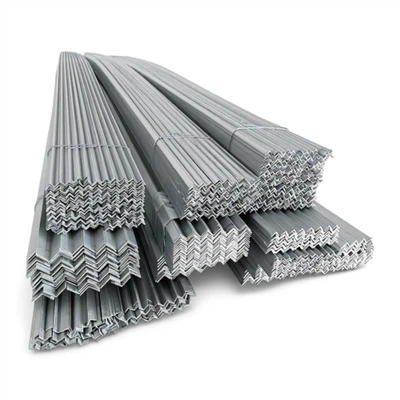
As a supplier of Black Steel Flat Bars, I often encounter inquiries about the ductility of these products. Ductility is a crucial mechanical property that determines how a material can be deformed under tensile stress without fracturing. In this blog, I will delve into the concept of ductility, explain how it applies to Black Steel Flat Bars, and discuss its significance in various applications.
Understanding Ductility
Ductility is defined as the ability of a material to undergo plastic deformation before failure. When a material is subjected to tensile stress, it initially deforms elastically, meaning it returns to its original shape once the stress is removed. However, if the stress exceeds the material's yield strength, it enters the plastic deformation region, where it undergoes permanent deformation. Ductile materials can withstand significant plastic deformation before fracturing, while brittle materials fracture with little or no plastic deformation.
The ductility of a material is typically measured by its elongation and reduction of area. Elongation is the percentage increase in length of a specimen after it has been pulled to failure, while reduction of area is the percentage decrease in cross-sectional area at the fracture point. These measurements provide valuable information about the material's ability to deform and its resistance to cracking.
Ductility of Black Steel Flat Bars
Black Steel Flat Bars are made from carbon steel, which is known for its excellent ductility. Carbon steel contains varying amounts of carbon, which affects its mechanical properties. Generally, as the carbon content increases, the strength and hardness of the steel increase, while its ductility decreases. However, Black Steel Flat Bars are typically made from low-carbon steel, which has a carbon content of less than 0.3%. This low carbon content allows the steel to maintain good ductility while still providing sufficient strength for most applications.
The ductility of Black Steel Flat Bars can be further enhanced through heat treatment processes such as annealing, normalizing, and tempering. Annealing involves heating the steel to a specific temperature and then slowly cooling it to relieve internal stresses and improve its ductility. Normalizing is similar to annealing but involves cooling the steel in air, which results in a finer grain structure and improved mechanical properties. Tempering is a process of reheating the steel after quenching to reduce its brittleness and improve its toughness.
Significance of Ductility in Applications
The ductility of Black Steel Flat Bars is of great importance in various applications. Here are some examples:
- Fabrication and Machining: Ductile materials are easier to fabricate and machine because they can be bent, formed, and cut without cracking. Black Steel Flat Bars can be easily shaped into different forms using techniques such as rolling, forging, and bending. This makes them suitable for a wide range of applications, including construction, automotive, and manufacturing.
- Structural Applications: In structural applications, ductility is essential for ensuring the safety and reliability of the structure. Ductile materials can absorb energy during an earthquake or other dynamic loading events, which helps to prevent sudden and catastrophic failure. Black Steel Flat Bars are commonly used in the construction of buildings, bridges, and other structures where ductility is a critical requirement.
- Welding: Ductility is also important in welding applications. When two pieces of steel are welded together, the heat generated during the welding process can cause the steel to become brittle. Ductile materials are less likely to crack during welding and can withstand the stresses associated with the welding process. Black Steel Flat Bars can be easily welded using various welding techniques, making them suitable for applications where welding is required.
Comparing Black Steel Flat Bars with Other Materials
When considering the ductility of Black Steel Flat Bars, it is useful to compare them with other materials. Here are some comparisons with 410 Stainless Steel Flat Bar and Polished Stainless Steel Flat Bar:
- 410 Stainless Steel Flat Bar: 410 stainless steel is a martensitic stainless steel that contains 11.5-13.5% chromium. It has good corrosion resistance and high strength, but its ductility is lower than that of Black Steel Flat Bars. 410 stainless steel is often used in applications where corrosion resistance and high strength are required, such as in the aerospace and automotive industries.
- Polished Stainless Steel Flat Bar: Polished stainless steel flat bars are made from austenitic stainless steel, which contains 16-26% chromium and 6-22% nickel. Austenitic stainless steel has excellent corrosion resistance and high ductility, but its strength is lower than that of Black Steel Flat Bars. Polished stainless steel flat bars are commonly used in applications where aesthetics and corrosion resistance are important, such as in architectural and decorative applications.
Factors Affecting Ductility
Several factors can affect the ductility of Black Steel Flat Bars. Here are some of the most important factors:
- Carbon Content: As mentioned earlier, the carbon content of the steel has a significant effect on its ductility. Low-carbon steel has better ductility than high-carbon steel.
- Grain Size: The grain size of the steel also affects its ductility. Fine-grained steel has better ductility than coarse-grained steel because the smaller grains provide more boundaries for dislocation movement.
- Impurities and Inclusions: Impurities and inclusions in the steel can reduce its ductility. These impurities can act as stress concentrators and cause cracking during deformation.
- Temperature: The temperature at which the steel is deformed also affects its ductility. Generally, the ductility of steel increases with increasing temperature. However, at very high temperatures, the steel may become too soft and lose its strength.
Conclusion
In conclusion, the ductility of Black Steel Flat Bars is an important mechanical property that determines their suitability for various applications. Black Steel Flat Bars made from low-carbon steel have excellent ductility, which allows them to be easily fabricated, machined, and welded. The ductility of Black Steel Flat Bars can be further enhanced through heat treatment processes. When compared with other materials such as 410 Stainless Steel Flat Bar and Polished Stainless Steel Flat Bar, Black Steel Flat Bars offer a good balance of strength and ductility.


If you are in need of high-quality Black Steel Flat Bars or Flat Bar Stock, please feel free to contact us. We are a reliable supplier of Black Steel Flat Bars and can provide you with the products and services you need. Our team of experts is ready to assist you with any questions or concerns you may have. Let's start a conversation and explore how our products can meet your requirements.
References
- Callister, W. D., & Rethwisch, D. G. (2018). Materials Science and Engineering: An Introduction. Wiley.
- ASM Handbook Committee. (2017). ASM Handbook, Volume 1: Properties and Selection: Irons, Steels, and High-Performance Alloys. ASM International.
- Van Tyne, C. J., & Sheppard, T. (2009). Metal Forming: Mechanics and Metallurgy. ASM International.