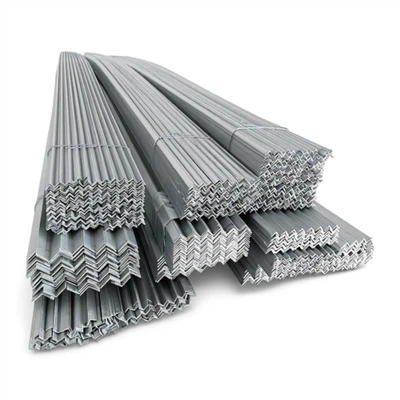
When it comes to the world of stainless steel round bars, one of the fundamental aspects that engineers, manufacturers, and buyers often need to understand is the cross - sectional area. In this blog, we'll focus specifically on the cross - sectional area of a 316 round bar. As a trusted 316 Round Bar supplier, I'm here to provide you with in - depth knowledge about this topic.
Understanding 316 Stainless Steel Round Bars
316 stainless steel is a popular grade known for its excellent corrosion resistance, especially in environments where exposure to chloride ions is common, such as marine settings. This makes 316 round bars highly sought after in industries like construction, food processing, and marine engineering.
The round bar is a cylindrical shape, and its cross - section is a circle. To calculate the cross - sectional area of a 316 round bar, we rely on a well - known geometric formula.
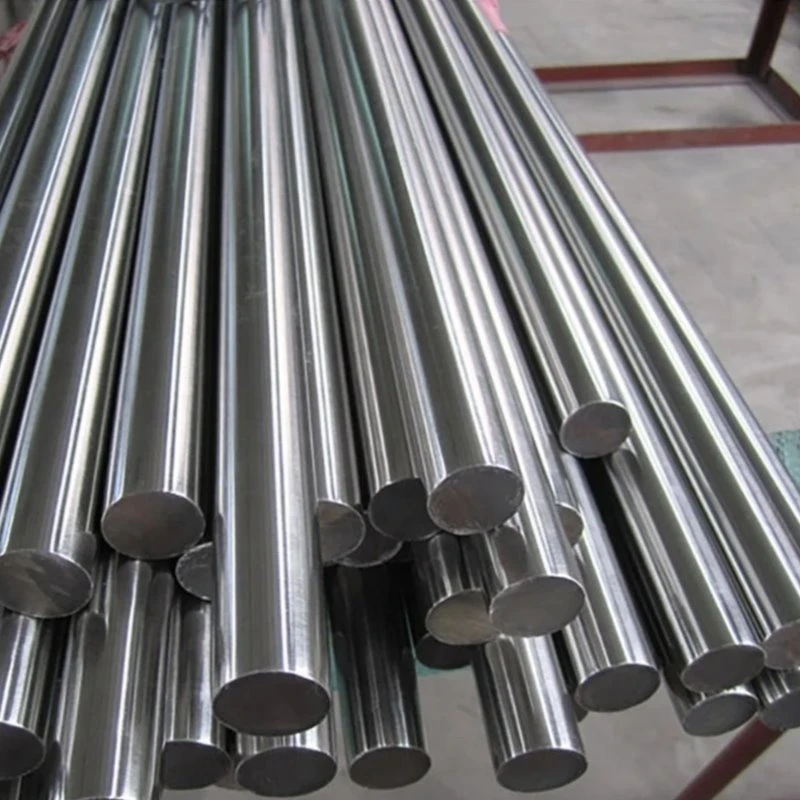

The Formula for Calculating the Cross - Sectional Area of a Round Bar
The formula for the area of a circle is (A=\pi r^{2}), where (A) represents the area, (\pi) is a mathematical constant approximately equal to 3.14159, and (r) is the radius of the circle.
In the context of a 316 round bar, if we know the diameter (d) of the bar, we can find the radius by using the relationship (r = \frac{d}{2}). So, the formula for the cross - sectional area of a round bar in terms of the diameter becomes (A=\pi(\frac{d}{2})^{2}=\frac{\pi d^{2}}{4})
Let's take an example. Suppose we have a 316 round bar with a diameter of 10 mm. First, we substitute (d = 10) mm into the formula.
[
\begin{align*}
A&=\frac{\pi d^{2}}{4}\
&=\frac{3.14159\times10^{2}}{4}\
&=\frac{3.14159\times100}{4}\
& = 78.53975\space mm^{2}
\end{align*}
]
This calculation gives us the cross - sectional area of the 316 round bar. It's important to note that accurate measurements of the diameter are crucial for precise area calculations. Any errors in measuring the diameter can lead to significant discrepancies in the calculated cross - sectional area.
Importance of Cross - Sectional Area in Different Applications
Structural Applications
In construction and engineering projects, the cross - sectional area of a 316 round bar plays a vital role in determining its load - bearing capacity. A larger cross - sectional area generally means the bar can withstand greater forces without deforming or failing. For example, in the construction of a bridge railing made of 316 round bars, the cross - sectional area needs to be carefully selected to ensure it can handle the expected loads, including the weight of people leaning on it and the forces exerted by wind.
Electrical Applications
In some electrical applications, the cross - sectional area of the 316 round bar affects its electrical conductivity. A larger cross - sectional area allows for more electrons to flow through the bar, reducing electrical resistance. This is important in applications where minimizing power loss is critical, such as in electrical grounding systems.
Comparing 316 Round Bars with Other Types of Stainless Steel Round Bars
While 316 round bars have their unique advantages, it's also useful to compare them with other types of stainless steel round bars. For instance, the 430f Stainless Steel Round Bar has different properties. 430f is a free - machining grade of stainless steel, which means it can be easily cut and shaped. However, its corrosion resistance is not as good as that of 316 stainless steel, especially in harsh environments.
Another comparison can be made with the 304 Stainless Steel Round Bar. 304 is a widely used stainless steel grade, known for its good corrosion resistance and relatively low cost. But 316 offers better resistance to pitting and crevice corrosion, making it a better choice for applications where exposure to saltwater or other corrosive substances is likely.
The Bright Steel Rod is another option. Bright steel rods are often cold - drawn to achieve a smooth surface finish. While they may have different surface characteristics compared to 316 round bars, the calculation of the cross - sectional area follows the same principle.
Quality Control in Determining Cross - Sectional Area
As a 316 Round Bar supplier, we implement strict quality control measures to ensure the accuracy of the cross - sectional area of our products. We use high - precision measuring instruments, such as calipers and micrometers, to measure the diameter of the round bars. These measurements are taken at multiple points along the length of the bar to account for any possible variations.
After obtaining the diameter measurements, we perform the area calculations using the correct formula. Our quality control team then verifies these calculations to ensure their accuracy. Any bars that do not meet the specified cross - sectional area requirements are rejected to maintain the high quality of our products.
Conclusion and Call to Action
Understanding the cross - sectional area of a 316 round bar is essential for a wide range of applications. Whether you're an engineer designing a new structure, a manufacturer looking for the right materials, or a buyer in need of high - quality 316 round bars, having accurate information about the cross - sectional area is crucial.
As a reliable 316 Round Bar supplier, we guarantee the quality and accuracy of our products. Our 316 round bars are manufactured to the highest standards, and we offer a wide range of diameters to meet your specific needs. If you're interested in purchasing 316 round bars or have any questions about cross - sectional area calculations, please don't hesitate to contact us. We're here to assist you in making the right choices for your projects.
References
- "Stainless Steel Handbook" by ASM International
- "Engineering Mechanics: Statics" by Russell C. Hibbeler