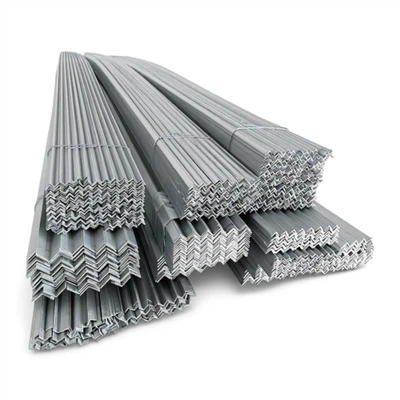
Hey there! I'm a supplier of welding angle bars, and I've been in this business for quite a while. One question that often pops up from our customers is, "What is the best welding position for angle bar to avoid slag inclusion?" Well, let's dive right into it.
First off, let's understand what slag inclusion is. Slag is a by - product of the welding process. It's that crusty stuff that forms on top of the weld. When it gets trapped inside the weld instead of floating to the surface, that's slag inclusion. And it's a big no - no because it weakens the weld and can lead to all sorts of problems down the line.
Now, when it comes to welding angle bars, there are a few common welding positions: flat, horizontal, vertical, and overhead. Each position has its own pros and cons when it comes to avoiding slag inclusion.
Flat Welding Position
The flat welding position is often considered the easiest and most forgiving. In this position, the angle bar is laid flat on a surface, and you're welding from the top. Gravity works in your favor here. The molten metal and the slag have a natural tendency to separate, with the slag floating to the top of the weld pool. This makes it easier to keep the slag out of the weld.
When you're welding in the flat position, you can use a wider range of welding techniques and filler metals. You can also control the heat input more easily, which is crucial for preventing slag inclusion. For example, if you're using a shielded metal arc welding (SMAW) process, you can adjust the amperage and the electrode angle to ensure a smooth weld.
However, just because it's the easiest doesn't mean it's always the best. Sometimes, the design of the project might not allow for the angle bar to be in a flat position. Also, if you're not careful with your welding speed and electrode manipulation, you can still end up with slag inclusion.
Horizontal Welding Position
The horizontal welding position is a bit more challenging than the flat position. In this case, the angle bar is placed horizontally, and you're welding along the side. Gravity still plays a role, but it's not as straightforward as in the flat position.
One of the main issues with horizontal welding is that the slag has a tendency to flow ahead of the weld pool. To avoid this, you need to use a specific welding technique. For instance, you can use a back - and - forth motion with the electrode to keep the slag from getting in front of the molten metal. You also need to be more precise with your heat input. Too much heat can cause the molten metal to sag, and the slag can get trapped.
Despite the challenges, the horizontal position is useful when you're working on structures where the angle bar needs to be installed horizontally. It's also a good position for practicing your welding skills and getting better at controlling the weld pool.
Vertical Welding Position
Vertical welding is even more difficult. There are two types of vertical welding: vertical up and vertical down.
In vertical up welding, you're welding from the bottom of the angle bar to the top. This position requires a lot of skill because you're fighting against gravity. The molten metal has a tendency to run down, and the slag can also flow down and get trapped in the weld. To counter this, you need to use a smaller electrode and a lower amperage. You also need to use a weaving motion with the electrode to keep the molten metal in place.


Vertical down welding is a bit faster, but it also has its own challenges. The slag has a tendency to flow too quickly, and it can be hard to control. You need to be very precise with your welding speed and electrode angle.
Vertical welding is often used when you're working on tall structures or when you need to make a weld in a confined space where the angle bar is in a vertical orientation.
Overhead Welding Position
The overhead welding position is the most challenging of all. In this position, the angle bar is above you, and you're welding upwards. Gravity is working against you big time. The molten metal has a strong tendency to fall, and the slag can also fall into the weld pool.
To weld overhead successfully, you need to use a very small electrode and a low amperage. You also need to be extremely careful with your electrode manipulation. A steady hand is a must. You might also want to use a welding helmet with a good view to help you see what you're doing.
Overhead welding is usually reserved for situations where there's no other way to access the angle bar or when the project design requires it.
Choosing the Best Position
So, what's the best welding position for angle bar to avoid slag inclusion? Well, it depends on several factors.
If you're a beginner, the flat welding position is probably the best place to start. It gives you a chance to learn the basics of welding and get a feel for how the weld pool behaves. As you gain more experience, you can move on to the other positions.
If the project allows for it, the flat position is generally the most reliable for avoiding slag inclusion. But if the angle bar needs to be installed in a horizontal, vertical, or overhead position, you'll need to adjust your welding technique accordingly.
Another factor to consider is the type of angle bar you're using. We offer a variety of angle bars, including Standard Angle Bar, Stainless Steel 304 Angle Bar, and L Type Angle Bar. Different materials and shapes might require different welding positions and techniques.
Tips for Avoiding Slag Inclusion
Regardless of the welding position, there are some general tips you can follow to avoid slag inclusion:
- Clean the angle bar: Make sure the surface of the angle bar is clean before you start welding. Remove any rust, dirt, or oil.
- Use the right welding equipment: Make sure your welding machine, electrode, and other equipment are in good condition and suitable for the job.
- Control the heat input: Too much heat can cause the slag to get trapped. Adjust the amperage and welding speed according to the thickness of the angle bar and the welding position.
- Electrode manipulation: Use the right electrode angle and motion to keep the slag out of the weld pool.
In conclusion, choosing the best welding position for angle bar to avoid slag inclusion is a combination of understanding the welding process, the project requirements, and the type of angle bar you're using. If you're still not sure which position is best for your project, don't hesitate to reach out to us. We're here to help you make the right choice and ensure that your welding projects are a success. Whether you're a professional welder or a DIY enthusiast, we have the right angle bars for you. So, if you're in the market for high - quality welding angle bars, let's start a conversation about your procurement needs.
References
- Welding Handbook, American Welding Society
- Modern Welding Technology, Richard L. Petzold