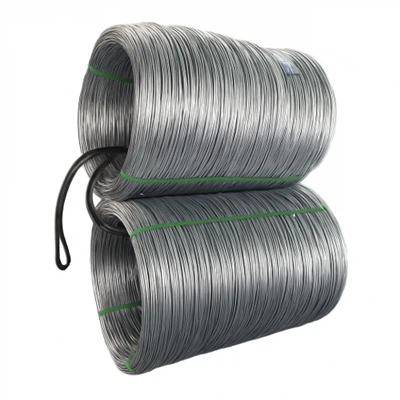
Hey there! As a supplier of 410 stainless steel wire, I often get asked about the adhesion of this particular type of wire. So, I thought I'd take some time to break it down and give you a better understanding of what adhesion means in the context of 410 stainless steel wire.
First off, let's talk about what 410 stainless steel wire is. It's a martensitic stainless steel, which means it has a high carbon content and can be hardened through heat treatment. This gives it good strength and wear resistance, making it a popular choice for a variety of applications, like in the automotive, aerospace, and construction industries.
Now, when we're talking about adhesion, we're essentially looking at how well the wire can stick to other materials. Adhesion is super important because it affects how the wire performs in different applications. For example, if you're using 410 stainless steel wire in a welding process, good adhesion ensures a strong and reliable bond between the wire and the base material.
There are a few factors that can influence the adhesion of 410 stainless steel wire. One of the main ones is the surface condition of the wire. If the surface is dirty, oily, or has oxide layers, it can reduce the adhesion. That's why it's crucial to clean the wire properly before using it. You can use solvents or mechanical methods to remove any contaminants from the surface.
Another factor is the composition of the materials being joined. Different metals have different chemical properties, and these can affect how well they bond with the 410 stainless steel wire. For instance, if you're trying to bond the wire to a material with a very different thermal expansion coefficient, it can cause stress during heating and cooling cycles, which might lead to poor adhesion or even cracking.
The welding process itself also plays a big role. The type of welding method, the welding parameters (like current, voltage, and welding speed), and the shielding gas used can all impact the adhesion. For example, in gas tungsten arc welding (GTAW), the choice of shielding gas can affect the quality of the weld and the adhesion of the wire. Argon is commonly used as a shielding gas for 410 stainless steel welding because it helps to prevent oxidation and provides good protection for the weld pool.
Let's compare 410 stainless steel wire with some other types of stainless steel wires. 304 Stainless Steel Wire is a popular austenitic stainless steel wire. It has better corrosion resistance than 410, but its adhesion properties might be different. 304 stainless steel is non - magnetic and has a lower carbon content compared to 410. This can make it more suitable for applications where corrosion resistance is the main concern, but the adhesion requirements might be different depending on the specific application.
304L Stainless Steel Welding Wire is another option. The "L" in 304L stands for low carbon, which means it has even less carbon than regular 304. This makes it less prone to sensitization during welding, which can improve the corrosion resistance of the weld. However, when it comes to adhesion, the low - carbon content might also have an impact on how well it bonds with other materials.
Stainless Flat Wire is also worth mentioning. It has a different shape compared to round 410 stainless steel wire, and this can affect its adhesion in some applications. The flat shape might provide a larger contact area, which could potentially improve the adhesion in certain situations, but it also depends on how the wire is being used and the surface preparation.
In practical applications, ensuring good adhesion of 410 stainless steel wire is essential for the long - term performance of the product. For example, in the automotive industry, if the wire is used in exhaust systems, poor adhesion could lead to leaks and reduced performance. In the construction industry, if it's used for structural connections, weak adhesion could compromise the integrity of the structure.
To improve the adhesion, there are some best practices you can follow. As I mentioned earlier, proper surface preparation is key. You should also make sure to select the right welding process and parameters for your specific application. It's a good idea to do some test welds or trials to optimize the adhesion before starting large - scale production.
If you're in the market for 410 stainless steel wire, you need to pay attention to these adhesion factors. At our supply, we make sure that our 410 stainless steel wire meets high - quality standards. We carefully control the manufacturing process to ensure that the wire has a clean surface and consistent composition. And we're always here to provide technical support and advice on how to get the best adhesion for your specific application.
Whether you're a welder, an engineer, or someone involved in a project that requires 410 stainless steel wire, understanding the adhesion is crucial for the success of your work. If you have any questions about 410 stainless steel wire or need help with your project, don't hesitate to reach out. We're more than happy to discuss your requirements and see how we can assist you in getting the right wire for your needs.
In conclusion, the adhesion of 410 stainless steel wire is a complex but important topic. By considering the surface condition, material composition, and welding process, you can ensure good adhesion and achieve high - quality results. If you're interested in learning more about stainless steel wires in general, you can also check out our other products like 304 Stainless Steel Wire, 304L Stainless Steel Welding Wire, and Stainless Flat Wire.
If you're thinking about purchasing 410 stainless steel wire, we'd love to have a chat with you. Just let us know your requirements, and we can work together to find the best solution for your project.
References:

- Welding Metallurgy and Weldability of Stainless Steels by John C. Lippold and David J. Kotecki
- Stainless Steel: A Guide to Selection and Application by ASM International