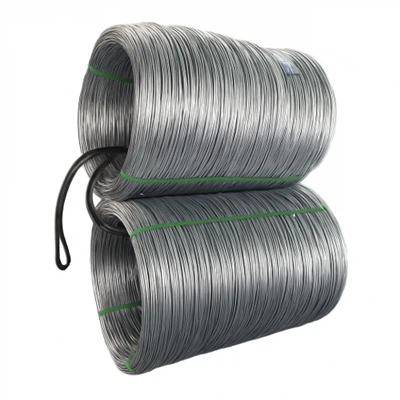
Stainless steel wire is a versatile and essential material in various industries, and the chemical industry is no exception. As a leading stainless steel wire supplier, I have witnessed firsthand the diverse applications and benefits of stainless steel wire in chemical processes. In this blog post, I will explore the different uses of stainless steel wire in the chemical industry, highlighting its unique properties and advantages.
Corrosion Resistance
One of the primary reasons stainless steel wire is widely used in the chemical industry is its exceptional corrosion resistance. Chemical processes often involve exposure to harsh chemicals, acids, and bases, which can quickly corrode other materials. Stainless steel wire, however, contains chromium, which forms a thin, protective oxide layer on the surface. This oxide layer prevents the underlying metal from reacting with the corrosive substances, ensuring the wire's durability and longevity.
For example, in chemical storage tanks, stainless steel wire is used to reinforce the tank walls and prevent leaks. The wire's corrosion resistance ensures that it can withstand the aggressive chemicals stored in the tanks, such as sulfuric acid, hydrochloric acid, and sodium hydroxide. Additionally, stainless steel wire is used in piping systems to transport corrosive fluids. Its resistance to corrosion helps to maintain the integrity of the pipes and prevent contamination of the chemicals being transported.
High Strength and Durability
In addition to its corrosion resistance, stainless steel wire offers high strength and durability, making it suitable for demanding chemical applications. Chemical processes often involve high pressures, temperatures, and mechanical stresses, which require materials that can withstand these conditions without deforming or breaking. Stainless steel wire has excellent tensile strength, allowing it to resist stretching and breaking under high loads.
For instance, in chemical reactors, stainless steel wire is used to construct agitators and impellers. These components are responsible for mixing and stirring the chemicals during the reaction process. The high strength of the wire ensures that the agitators and impellers can withstand the mechanical forces generated by the mixing process without bending or breaking. Moreover, stainless steel wire is used in filtration systems to support filter media. Its durability helps to maintain the shape and integrity of the filter, ensuring efficient filtration of the chemicals.
Heat Resistance
Many chemical processes involve high temperatures, and stainless steel wire is well-suited for these applications due to its heat resistance. Stainless steel wire can withstand elevated temperatures without losing its strength or corrosion resistance, making it ideal for use in high-temperature chemical reactions.
For example, in the production of plastics and polymers, stainless steel wire is used in extrusion and molding processes. These processes involve heating the plastic or polymer to a molten state and then shaping it into the desired form. The heat resistance of the wire allows it to withstand the high temperatures required for the extrusion and molding processes without melting or deforming. Additionally, stainless steel wire is used in heat exchangers, which are used to transfer heat between two fluids. Its heat resistance helps to ensure efficient heat transfer and prevent damage to the heat exchanger.
Electrical Conductivity
Stainless steel wire also exhibits good electrical conductivity, which makes it useful in certain chemical applications. In electrochemical processes, such as electroplating and electrolysis, stainless steel wire is used as an electrode. The wire's electrical conductivity allows it to conduct electricity efficiently, facilitating the chemical reactions that occur at the electrode surface.
For instance, in electroplating, stainless steel wire is used as the cathode or anode. The wire is immersed in an electrolyte solution, and an electric current is passed through the solution. The electrical conductivity of the wire allows the metal ions in the electrolyte to be deposited onto the surface of the wire, creating a thin layer of metal coating. Similarly, in electrolysis, stainless steel wire is used as an electrode to separate the components of a chemical compound. The electrical conductivity of the wire enables the flow of electrons, which drives the chemical reaction.
Specific Applications in the Chemical Industry
Now, let's take a closer look at some specific applications of stainless steel wire in the chemical industry:
Chemical Filtration
Stainless steel wire is commonly used in chemical filtration systems to remove impurities and contaminants from chemical solutions. The wire is woven into a mesh or screen, which acts as a filter medium. The size of the mesh openings can be customized to suit the specific filtration requirements. The corrosion resistance and high strength of the wire ensure that the filter can withstand the harsh chemicals and mechanical stresses involved in the filtration process.


Catalyst Support
In chemical reactions, catalysts are used to speed up the reaction rate without being consumed in the process. Stainless steel wire can be used as a support material for catalysts. The wire provides a large surface area for the catalyst to be deposited on, increasing the contact between the catalyst and the reactants. This enhances the catalytic activity and efficiency of the reaction.
Chemical Reactors
As mentioned earlier, stainless steel wire is used in the construction of agitators and impellers in chemical reactors. These components are crucial for ensuring proper mixing and reaction of the chemicals. The high strength and corrosion resistance of the wire make it suitable for use in the harsh environment of chemical reactors.
Piping and Tubing
Stainless steel wire is also used in the manufacturing of pipes and tubing for transporting chemicals. The wire is used to reinforce the pipes and tubing, increasing their strength and resistance to pressure. The corrosion resistance of the wire helps to prevent the pipes and tubing from corroding and leaking, ensuring the safe and efficient transportation of chemicals.
Types of Stainless Steel Wire for Chemical Applications
There are several types of stainless steel wire available, each with its own unique properties and characteristics. Some of the commonly used types of stainless steel wire in the chemical industry include:
410 Stainless Steel Wire
410 Stainless Steel Wire is a martensitic stainless steel that offers good corrosion resistance and high strength. It is often used in applications where high hardness and wear resistance are required. 410 stainless steel wire is commonly used in chemical filtration systems and as a support material for catalysts.
304 Stainless Steel Spring Wire
304 Stainless Steel Spring Wire is an austenitic stainless steel that provides excellent corrosion resistance and good formability. It is widely used in the chemical industry for applications such as springs, fasteners, and wire mesh. 304 stainless steel spring wire is known for its high tensile strength and flexibility.
Black Stainless Wire
Black Stainless Wire is a type of stainless steel wire that has been treated to develop a black oxide coating on its surface. This coating provides additional corrosion resistance and a decorative finish. Black stainless wire is often used in applications where aesthetics are important, such as in chemical processing equipment and architectural applications.
Conclusion
In conclusion, stainless steel wire plays a vital role in the chemical industry due to its corrosion resistance, high strength, durability, heat resistance, and electrical conductivity. It is used in a wide range of applications, including chemical filtration, catalyst support, chemical reactors, and piping and tubing. As a stainless steel wire supplier, I am committed to providing high-quality stainless steel wire products that meet the specific needs of the chemical industry.
If you are in the chemical industry and are looking for reliable stainless steel wire solutions, I encourage you to contact me for more information. We can discuss your specific requirements and provide you with the best stainless steel wire products for your applications. Let's work together to ensure the success of your chemical processes.
References
- ASM Handbook, Volume 13A: Corrosion: Fundamentals, Testing, and Protection
- Metals Handbook, Volume 1: Properties and Selection: Irons, Steels, and High-Performance Alloys
- Stainless Steel: A Practical Guide, Second Edition by David A. Woodford