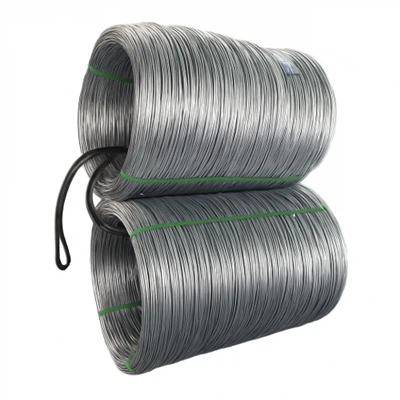
The wire drawing process of bright steel rod is a crucial manufacturing step that significantly impacts the quality and performance of the final wire products. As a seasoned supplier of bright steel rod, I've witnessed firsthand how various factors can either enhance or detract from the wire drawing quality. In this blog post, I'll delve into the key elements that affect the wire drawing quality of bright steel rod, offering insights based on years of industry experience.


Material Composition
The chemical composition of bright steel rod is fundamental to its wire drawing quality. Different alloying elements play distinct roles in determining the mechanical properties of the steel, which in turn influence the wire drawing process. For instance, carbon content affects the hardness and strength of the steel. Higher carbon levels generally result in increased strength but reduced ductility, which can make the wire more prone to cracking during drawing. On the other hand, low - carbon steels are more ductile but may lack the necessary strength for certain applications.
Alloying elements such as chromium, nickel, and molybdenum can also have a significant impact. Chromium enhances corrosion resistance and hardness, making it suitable for applications where the wire will be exposed to harsh environments. Nickel improves toughness and ductility, which is beneficial for wire drawing as it allows the steel to deform without fracturing. Molybdenum increases strength and creep resistance, which can be important for high - stress applications.
At our company, we offer a variety of bright steel rods with different compositions to meet the diverse needs of our customers. For example, our 304 Stainless Steel Round Bar contains chromium and nickel, providing excellent corrosion resistance and good ductility, making it ideal for wire drawing in applications such as decorative wire products. Our Alloy 925 Round Bar has a specific alloy composition that offers a balance of strength and ductility, suitable for more demanding wire drawing processes.
Surface Quality
The surface condition of the bright steel rod is another critical factor. A smooth and defect - free surface is essential for successful wire drawing. Surface defects such as cracks, scratches, and scale can act as stress concentrators during the drawing process, leading to wire breakage or surface irregularities in the final product.
Scale, which is formed during the hot - rolling process, can be particularly problematic. It can cause abrasion on the drawing dies, reducing their lifespan and affecting the surface finish of the wire. To ensure high - quality surface finish, we employ advanced descaling techniques such as acid pickling or mechanical descaling. These processes remove the scale and other impurities from the surface of the bright steel rod, leaving a clean and smooth surface that is conducive to wire drawing.
In addition, surface roughness can also affect the wire drawing quality. A surface that is too rough can increase friction between the rod and the drawing dies, requiring higher drawing forces and potentially causing damage to the wire. Conversely, a surface that is too smooth may result in insufficient grip between the rod and the dies, leading to slippage. We carefully control the surface roughness of our bright steel rods to optimize the wire drawing process.
Microstructure
The microstructure of the bright steel rod has a profound influence on its mechanical properties and wire drawing behavior. A homogeneous and fine - grained microstructure is generally preferred for wire drawing. Fine - grained microstructures offer better ductility and formability, allowing the steel to deform more easily during the drawing process without cracking.
Heat treatment processes can be used to control the microstructure of the bright steel rod. Annealing, for example, can be used to soften the steel and refine its microstructure. By heating the rod to a specific temperature and then cooling it slowly, the internal stresses are relieved, and the grain size is reduced. This improves the ductility of the steel, making it more suitable for wire drawing.
Normalizing is another heat treatment process that can be beneficial. It involves heating the rod to a temperature above the critical point and then cooling it in air. Normalizing helps to produce a more uniform microstructure and improves the mechanical properties of the steel.
Drawing Dies
The quality and design of the drawing dies are crucial for achieving high - quality wire drawing. Drawing dies are used to reduce the diameter of the bright steel rod by forcing it through a series of progressively smaller holes. The material, shape, and surface finish of the dies can all affect the wire drawing quality.
The die material should have high hardness, wear resistance, and thermal stability. Common die materials include tungsten carbide, which offers excellent wear resistance and can withstand high drawing forces. The shape of the die also plays an important role. A well - designed die should have a smooth and gradual reduction in diameter to minimize stress concentrations and ensure uniform deformation of the wire.
The surface finish of the die is also critical. A rough or damaged die surface can cause scratches or other surface defects on the wire. Regular maintenance and inspection of the drawing dies are necessary to ensure their optimal performance. We work closely with die manufacturers to select the best - suited dies for our customers' wire drawing requirements, ensuring high - quality results.
Drawing Speed and Lubrication
The drawing speed and lubrication are two interrelated factors that affect the wire drawing quality. The drawing speed determines the rate at which the bright steel rod is pulled through the dies. A too - high drawing speed can cause excessive heat generation, which can lead to oxidation, surface damage, and reduced ductility of the wire. On the other hand, a too - low drawing speed can be inefficient and may result in uneven deformation of the wire.
Lubrication is essential for reducing friction between the rod and the drawing dies. A good lubricant can lower the drawing forces, prevent surface damage, and improve the surface finish of the wire. There are various types of lubricants available, including dry lubricants such as graphite and wet lubricants such as mineral oils. The choice of lubricant depends on factors such as the drawing speed, the material of the rod, and the die material.
We recommend that our customers carefully select the appropriate drawing speed and lubricant based on their specific wire drawing requirements. By optimizing these parameters, they can achieve better wire drawing quality and improve the efficiency of their production processes.
Environmental Factors
Environmental factors such as temperature and humidity can also have an impact on the wire drawing quality. High temperatures can increase the oxidation rate of the bright steel rod, leading to surface scale formation and reduced surface quality. Humidity can cause corrosion of the rod and the drawing dies, which can affect the wire drawing process.
In addition, dust and other contaminants in the environment can also be a problem. They can get into the drawing dies and cause abrasion or surface defects on the wire. To minimize the impact of environmental factors, it is important to maintain a clean and controlled environment in the wire drawing facility. Temperature and humidity should be regulated, and proper ventilation should be provided to remove dust and other contaminants.
Conclusion
In conclusion, the wire drawing quality of bright steel rod is affected by a multitude of factors, including material composition, surface quality, microstructure, drawing dies, drawing speed, lubrication, and environmental factors. As a supplier of bright steel rod, we understand the importance of these factors and take every measure to ensure that our products meet the highest quality standards.
We offer a wide range of bright steel rods, including 304 Stainless Steel Round Bar, Alloy 925 Round Bar, and 303 Stainless Steel Round Bar, to meet the diverse needs of our customers. Our technical team is always available to provide expert advice on wire drawing processes and to help our customers select the most suitable products for their applications.
If you are interested in purchasing bright steel rod for your wire drawing needs, we encourage you to contact us for a detailed discussion. We are committed to providing high - quality products and excellent customer service, and we look forward to partnering with you to achieve your production goals.
References
- "Metal Forming: Processes and Analysis" by Robert H. Wagoner and Narendra R. Sridhar
- "Handbook of Stainless Steels" by Samir K. Mukherjee
- "Manufacturing Engineering and Technology" by S. Kalpakjian and S. R. Schmid