Hey there! As a supplier of Welding Angle Bar, I've seen firsthand how crucial it is to understand the relationship between welding current and the penetration of angle bar welds. In this blog, I'll break down the effects of welding current on angle bar weld penetration, and why it matters for your projects.
Understanding Welding Current
Let's start with the basics. Welding current is the amount of electrical current flowing through the welding circuit during the welding process. It's measured in amperes (A), and it plays a significant role in determining the quality and characteristics of the weld. When it comes to angle bar welding, the right welding current can make all the difference in achieving a strong and reliable weld.
The Impact of Welding Current on Penetration
Penetration refers to how deep the weld metal fuses into the base metal. It's a critical factor in determining the strength and integrity of the weld. The welding current has a direct impact on penetration, and here's how:
Low Welding Current
When the welding current is too low, the heat input is insufficient to melt the base metal properly. As a result, the penetration is shallow, and the weld may not bond effectively with the angle bar. This can lead to weak welds that are prone to cracking and failure under stress. In some cases, a low welding current may also cause incomplete fusion, where the weld metal doesn't fully merge with the base metal.
High Welding Current
On the other hand, using a high welding current can result in excessive heat input. This can cause the base metal to overheat and melt, leading to deep penetration. While deep penetration may seem desirable, it can also have negative consequences. Excessive heat can cause the angle bar to warp or distort, and it may also lead to the formation of porosity and other defects in the weld. Additionally, high welding currents can increase the risk of burn-through, where the weld metal penetrates completely through the angle bar.
Optimal Welding Current
Finding the optimal welding current is crucial for achieving the right balance between penetration and weld quality. The optimal current depends on several factors, including the type and thickness of the angle bar, the welding process, and the electrode or filler metal being used. Generally, a higher current is required for thicker angle bars, while a lower current is suitable for thinner materials.
Factors Affecting the Optimal Welding Current
In addition to the thickness of the angle bar, several other factors can influence the optimal welding current:
Welding Process
Different welding processes have different requirements for welding current. For example, shielded metal arc welding (SMAW) typically requires a higher current compared to gas metal arc welding (GMAW). Understanding the specific requirements of your chosen welding process is essential for determining the optimal current.
Electrode or Filler Metal
The type and size of the electrode or filler metal also play a role in determining the welding current. Different electrodes have different current-carrying capacities, and using the wrong electrode can result in poor weld quality. It's important to choose an electrode or filler metal that is compatible with the angle bar and the welding process.
Joint Design
The design of the joint can also affect the optimal welding current. For example, a butt joint may require a different current than a fillet joint. The angle and fit-up of the joint can also influence the current requirements.
How to Determine the Optimal Welding Current
Determining the optimal welding current requires some experimentation and testing. Here are some steps you can take to find the right current for your angle bar welds:
Consult the Welding Procedure Specification (WPS)
The WPS provides detailed information about the welding process, including the recommended welding current. It's a good starting point for determining the optimal current for your specific application.
Conduct Weld Tests
Before starting a production run, it's a good idea to conduct weld tests on sample pieces of angle bar. This will allow you to evaluate the weld quality and adjust the welding current as needed. You can use non-destructive testing methods, such as visual inspection and ultrasonic testing, to check the quality of the welds.
Monitor the Weld Pool
During the welding process, pay close attention to the weld pool. The appearance of the weld pool can provide valuable information about the welding current. A healthy weld pool should be smooth and well-defined, with no signs of excessive spatter or porosity. If the weld pool appears too small or too large, it may indicate that the welding current needs to be adjusted.
The Importance of Proper Weld Penetration
Proper weld penetration is essential for ensuring the strength and integrity of the angle bar welds. A weld with insufficient penetration may not be able to withstand the stresses and loads placed on it, while a weld with excessive penetration can cause distortion and other defects. By achieving the right balance of penetration, you can ensure that your angle bar welds are strong, reliable, and meet the required standards.
Our Welding Angle Bar Products
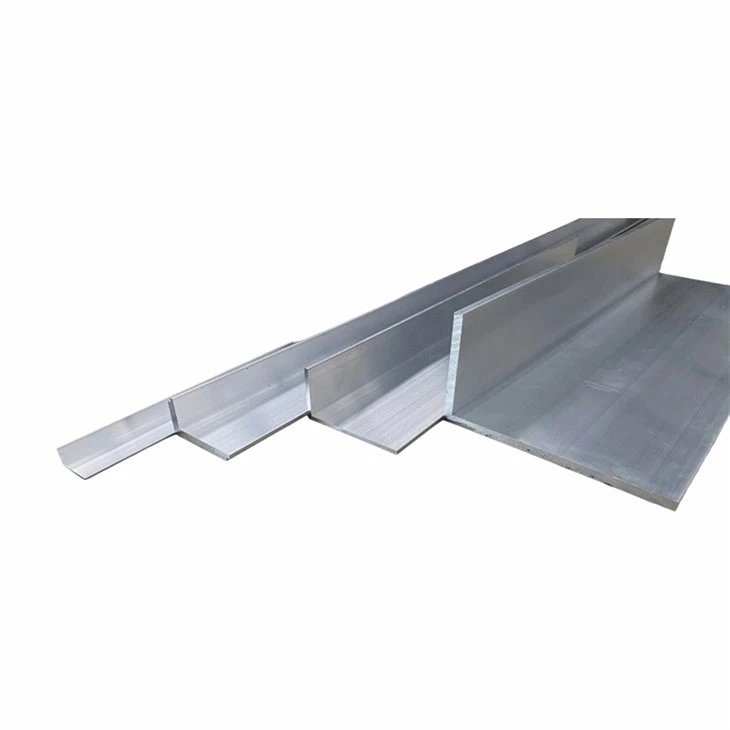
At our company, we offer a wide range of Standard Angle Bar, including Stainless Steel 304 Angle Bar and L Type Angle Bar. Our angle bars are made from high-quality materials and are designed to meet the needs of various industries. Whether you're working on a small DIY project or a large industrial application, we have the right angle bar for you.

Conclusion
In conclusion, the welding current has a significant impact on the penetration of angle bar welds. Finding the optimal current is crucial for achieving a strong and reliable weld. By understanding the factors that affect the optimal current and following the steps outlined in this blog, you can ensure that your angle bar welds are of the highest quality. If you have any questions or need further assistance, please don't hesitate to contact us. We're here to help you with all your welding angle bar needs.
References
- AWS Welding Handbook, Volume 1: Welding Science and Technology
- Welding Metallurgy and Weldability of Stainless Steels by John C. Lippold and David L. Kotecki
- Welding Processes and Applications by Larry Jeffus