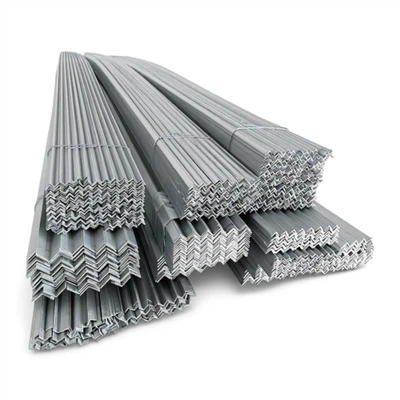
Is stainless steel angle bar magnetic? This is a question that often comes up among our customers, and as a leading stainless steel angle bar supplier, we're here to provide a detailed and scientific answer.
Stainless steel is an alloy primarily composed of iron, chromium, and sometimes other elements like nickel, molybdenum, and manganese. The addition of these elements gives stainless steel its corrosion - resistant properties. But when it comes to magnetism, the situation is a bit more complex.
First, we need to understand the different types of stainless steel. There are three main categories: austenitic, ferritic, and martensitic.
Austenitic stainless steel is the most common type used in angle bars. It has a face - centered cubic (FCC) crystal structure. Austenitic stainless steels, such as the popular Stainless Steel 304 Angle Bar, typically contain high levels of nickel (around 8 - 10.5%) and chromium (about 18 - 20%). In their annealed state, austenitic stainless steels are generally non - magnetic. The presence of nickel disrupts the magnetic domains in the steel, preventing the formation of a strong magnetic field.
However, there are some exceptions. When austenitic stainless steel is cold - worked, such as during the manufacturing process of an angle bar, the crystal structure can partially transform to martensite. Martensite is a magnetic phase, and this transformation can make the stainless steel angle bar slightly magnetic. Cold working can occur through processes like rolling, bending, or drawing. So, if you pick up a cold - worked Stainless Steel 304 Angle Bar, you might notice a weak magnetic attraction.
Ferritic stainless steels, on the other hand, have a body - centered cubic (BCC) crystal structure. They contain chromium (usually 10.5 - 27%) but have little or no nickel. Ferritic stainless steels are magnetic because their crystal structure allows for the alignment of magnetic domains. Steel Solid Angle Bar made from ferritic stainless steel will show a strong magnetic response. These angle bars are often used in applications where magnetic properties are not a concern but corrosion resistance and strength are required.
Martensitic stainless steels also have a body - centered tetragonal (BCT) crystal structure. They are magnetic and are known for their high strength and hardness. Martensitic stainless steels contain chromium (11.5 - 18%) and can be heat - treated to achieve different levels of hardness. Welding Angle Bar made from martensitic stainless steel is magnetic and is suitable for applications where high - strength and good weldability are needed.
To determine whether a particular stainless steel angle bar is magnetic, you can perform a simple test. Take a strong magnet and bring it close to the angle bar. If it is austenitic and in an annealed state, there will be little to no attraction. If it is ferritic or martensitic, or if the austenitic steel has been cold - worked, you will notice a magnetic pull.
The magnetic properties of stainless steel angle bars can have implications for their applications. In some industries, such as electronics and food processing, non - magnetic materials are preferred to avoid interference with sensitive equipment or to prevent the attraction of metal particles. For example, in the food industry, non - magnetic stainless steel angle bars are used to ensure that there is no risk of magnetic contamination of the food products.


In construction and structural applications, the magnetic properties may not be as critical. Here, the focus is more on the strength, corrosion resistance, and weldability of the angle bar. Whether the angle bar is magnetic or not does not significantly affect its performance in load - bearing or structural support functions.
As a stainless steel angle bar supplier, we understand the importance of providing our customers with accurate information about the products we offer. We have a wide range of stainless steel angle bars in different grades and magnetic properties to meet the diverse needs of our customers. Whether you need a non - magnetic Stainless Steel 304 Angle Bar for a sensitive application or a magnetic Steel Solid Angle Bar for a structural project, we can provide the right solution.
If you're still unsure about which type of stainless steel angle bar is suitable for your application, our team of experts is here to help. We can offer technical advice based on your specific requirements, including the magnetic properties, strength, and corrosion resistance needed.
We encourage you to contact us for any procurement needs. Whether you're looking for a small quantity for a prototype or a large - scale order for a major project, we can work with you to ensure that you get the best quality stainless steel angle bars at competitive prices. Our commitment is to provide excellent customer service and reliable products.
In conclusion, the magnetism of stainless steel angle bars depends on the type of stainless steel they are made from and the manufacturing processes they have undergone. Austenitic stainless steel angle bars are usually non - magnetic in their annealed state but can become slightly magnetic after cold working. Ferritic and martensitic stainless steel angle bars are magnetic. Understanding these properties is crucial for choosing the right angle bar for your application.
References
- ASM Handbook, Volume 1: Properties and Selection: Irons, Steels, and High - Performance Alloys
- "Stainless Steel: A Primer" by the Nickel Institute