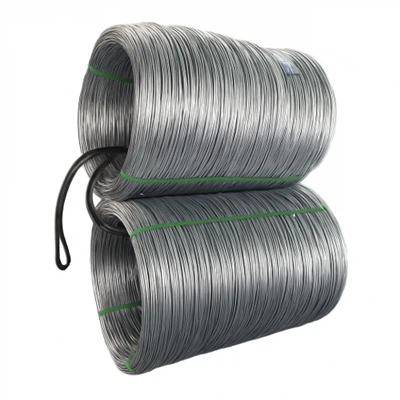
Welding angle bars in a fillet joint is a common and important technique in the field of metalworking. As a leading Welding Angle Bar Welding Angle Bar supplier, I have extensive experience and knowledge about this process. In this blog, I will share with you a comprehensive guide on how to weld angle bars in a fillet joint, covering everything from preparation to the actual welding process.
Understanding the Fillet Joint
A fillet joint is formed when two members are joined at approximately right angles, and the weld is placed in the corner between them. This type of joint is widely used in various applications, such as building frames, machinery, and automotive structures. When welding angle bars in a fillet joint, the goal is to create a strong and durable connection that can withstand the intended loads.
Preparation Before Welding
Selecting the Right Angle Bars
First and foremost, you need to choose the appropriate angle bars for your project. We offer a wide range of angle bars, including Steel Solid Angle Bar and Standard Angle Bar. Consider factors such as the material type (e.g., stainless steel, carbon steel), size, and thickness of the angle bars based on the requirements of your project. For example, if your project requires high corrosion resistance, stainless steel angle bars would be a better choice.
Cleaning the Angle Bars
Before welding, it is crucial to clean the surfaces of the angle bars thoroughly. Any dirt, rust, oil, or paint on the surfaces can affect the quality of the weld. You can use a wire brush, sandpaper, or a chemical cleaner to remove these contaminants. Make sure to clean the areas where the weld will be placed, as well as a few inches around them.
Measuring and Marking
Accurate measurement and marking are essential for a precise fillet joint. Use a measuring tape, square, and scribe to mark the position where the angle bars will be joined. Ensure that the angles are 90 degrees and the dimensions are correct. This will help you align the angle bars properly during the welding process.
Fixturing the Angle Bars
To keep the angle bars in place during welding, you need to use fixtures. Clamps, jigs, or welding tables can be used to hold the angle bars securely. Make sure the fixtures are strong enough to prevent the angle bars from moving or shifting during welding. Proper fixturing will ensure that the fillet joint is straight and the weld is uniform.


Choosing the Welding Process
There are several welding processes that can be used to weld angle bars in a fillet joint, including Shielded Metal Arc Welding (SMAW), Gas Metal Arc Welding (GMAW), and Gas Tungsten Arc Welding (GTAW).
Shielded Metal Arc Welding (SMAW)
SMAW, also known as stick welding, is a popular and versatile welding process. It uses a consumable electrode coated with flux to create the weld. SMAW is suitable for welding thick angle bars and can be used in outdoor and dirty environments. However, it requires some skill to control the arc and produce a high - quality weld.
Gas Metal Arc Welding (GMAW)
GMAW, or MIG welding, uses a continuous wire electrode and a shielding gas to protect the weld from oxidation. It is a fast and efficient welding process, making it ideal for large - scale projects. GMAW is relatively easy to learn and can produce smooth and clean welds.
Gas Tungsten Arc Welding (GTAW)
GTAW, or TIG welding, uses a non - consumable tungsten electrode and a shielding gas. It is a precise and high - quality welding process, suitable for welding thin angle bars and materials that require a clean and aesthetically pleasing weld. However, GTAW is slower and more difficult to master compared to SMAW and GMAW.
The Welding Process
Setting Up the Welding Equipment
Once you have chosen the welding process, set up the welding equipment according to the manufacturer's instructions. This includes adjusting the welding current, voltage, and wire feed speed (for GMAW). Make sure the welding machine is properly grounded to ensure safety.
Starting the Weld
Position the welding electrode or torch at the starting point of the fillet joint. For SMAW, strike the arc by touching the electrode to the workpiece and then quickly pulling it back slightly. For GMAW and GTAW, start the arc using the appropriate starting method.
Welding Technique
When welding the fillet joint, use a proper welding technique. For a fillet joint, the weld bead should be deposited in a triangular shape in the corner between the two angle bars. Move the electrode or torch steadily along the joint at a consistent speed. Maintain the correct angle between the electrode or torch and the workpiece. For most fillet joints, an angle of 45 degrees between the electrode or torch and each of the angle bars is recommended.
Filling the Joint
As you weld, fill the fillet joint with the weld metal. Make sure to fill the joint completely without leaving any gaps or voids. You may need to make multiple passes to achieve the desired weld size and strength. Overlap each pass slightly to ensure a smooth and continuous weld.
Finishing the Weld
Once you have completed the welding, allow the weld to cool naturally. Do not quench the weld with water, as this can cause cracking. After the weld has cooled, use a grinder or a wire brush to clean the weld bead and remove any slag or spatter. Inspect the weld for any defects, such as cracks, porosity, or incomplete fusion.
Post - Welding Inspection and Testing
After welding, it is important to inspect and test the fillet joint to ensure its quality. You can visually inspect the weld for any surface defects. For more critical applications, non - destructive testing methods such as ultrasonic testing, magnetic particle testing, or dye penetrant testing can be used to detect internal defects.
Advantages of Our Welding Angle Bars
Our Welding Angle Bars offer several advantages. They are made from high - quality materials, ensuring excellent strength and durability. The precise manufacturing process guarantees accurate dimensions, making them easy to work with. Whether you are a professional welder or a DIY enthusiast, our angle bars can meet your welding needs.
Conclusion
Welding angle bars in a fillet joint requires careful preparation, the right choice of welding process, and proper welding techniques. By following the steps outlined in this blog, you can achieve a strong and high - quality fillet joint. As a trusted Welding Angle Bar supplier, we are committed to providing you with the best products and technical support. If you are interested in purchasing our angle bars or have any questions about the welding process, please feel free to contact us for further discussion and procurement negotiation.
References
- American Welding Society. (2020). Welding Handbook, Volume 1: Welding Science and Technology.
- AWS D1.1/D1.1M:2020 Structural Welding Code - Steel.