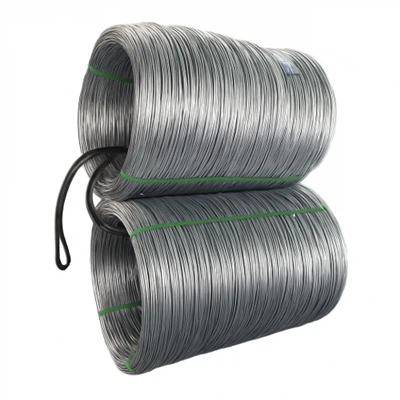
Hey there! As a supplier of 316 stainless steel wire, I've seen firsthand how important it is to ensure the quality of this product. In this blog post, I'll share some practical ways to test the quality of 316 stainless steel wire.


1. Visual Inspection
The first step in testing the quality of 316 stainless steel wire is a simple visual check. You don't need any fancy equipment for this – just your eyes.
Look closely at the surface of the wire. It should be smooth, without any visible cracks, scratches, or pits. Any of these surface imperfections can weaken the wire and make it more prone to failure. Also, check for any discoloration. A uniform silver - gray color is a good sign. If you see areas that are darker or have a different hue, it could indicate improper heat treatment or contamination.
2. Dimensional Measurement
Accurate dimensions are crucial for the performance of 316 stainless steel wire. You'll need a micrometer or a caliper for this test.
Measure the diameter of the wire at multiple points along its length. The diameter should be consistent within the specified tolerance. Even a small deviation in diameter can affect the wire's strength and its ability to fit into applications. For example, if the wire is too thin, it may not be strong enough to handle the required load.
Also, check the length of the wire if it's cut to a specific size. Make sure it matches the ordered length.
3. Chemical Composition Analysis
The chemical composition of 316 stainless steel wire is what gives it its unique properties. There are a few ways to analyze the chemical composition.
One common method is using a handheld X - ray fluorescence (XRF) analyzer. This device can quickly and non - destructively determine the elemental composition of the wire. For 316 stainless steel, you should expect to find around 16 - 18% chromium, 10 - 14% nickel, and 2 - 3% molybdenum. The presence of molybdenum is what gives 316 stainless steel its excellent corrosion resistance, especially in chloride - rich environments.
If you don't have access to an XRF analyzer, you can also send a sample of the wire to a laboratory for a more in - depth analysis. They'll use techniques like inductively coupled plasma mass spectrometry (ICP - MS) to get a very accurate breakdown of the chemical elements.
4. Tensile Testing
Tensile testing is a key test to determine the strength of 316 stainless steel wire. You'll need a tensile testing machine for this.
A sample of the wire is placed in the machine, and then it's gradually pulled until it breaks. The machine records the maximum load the wire can withstand before breaking, which is called the ultimate tensile strength. It also measures the amount of elongation the wire undergoes before breaking.
For 316 stainless steel wire, the ultimate tensile strength should typically be in the range of 550 - 750 MPa, depending on factors like the wire's diameter and the manufacturing process. A higher tensile strength means the wire can handle more stress without breaking.
5. Bend Test
The bend test is a simple way to check the ductility of 316 stainless steel wire. Ductility refers to the wire's ability to be bent or deformed without cracking.
Take a sample of the wire and bend it around a mandrel of a specified diameter. The mandrel's diameter depends on the wire's diameter and the industry standards. For example, for a relatively thin wire, you might use a mandrel with a diameter that's 3 - 5 times the wire's diameter.
If the wire can be bent without showing any signs of cracking or splitting, it has good ductility. This is important in applications where the wire needs to be formed or bent during installation.
6. Corrosion Resistance Test
Since 316 stainless steel is known for its corrosion resistance, it's essential to test this property.
One common test is the salt spray test. In this test, the wire sample is placed in a chamber where it's exposed to a fine mist of saltwater. The chamber is maintained at a specific temperature and humidity for a set period, usually several hours or days.
After the test, you check the wire for any signs of corrosion, such as rust spots or pitting. If the wire shows minimal or no corrosion, it has good corrosion resistance.
Another test is the immersion test, where the wire is immersed in a corrosive solution, like a chloride - containing solution, for a certain time. Similar to the salt spray test, you then examine the wire for corrosion.
Comparison with Other Stainless Steel Wires
It's also helpful to compare 316 stainless steel wire with other types of stainless steel wires, like 304LN Stainless Steel Wire, 316L Stainless Steel Wire, and 304 Stainless Steel Wire.
304 stainless steel wire is a common alternative to 316. However, 304 doesn't contain molybdenum, so it has lower corrosion resistance, especially in chloride - rich environments. 316L stainless steel wire is a low - carbon version of 316, which makes it even more resistant to sensitization and intergranular corrosion in welded applications. 304LN stainless steel wire has a low carbon content and nitrogen addition, which gives it good strength and corrosion resistance.
When choosing between these wires, consider the specific requirements of your application. If you're working in a marine environment or an application with high chloride exposure, 316 or 316L would be a better choice.
Conclusion
Testing the quality of 316 stainless steel wire is crucial to ensure it meets the requirements of your application. By using a combination of visual inspection, dimensional measurement, chemical composition analysis, tensile testing, bend testing, and corrosion resistance testing, you can get a comprehensive understanding of the wire's quality.
If you're in the market for high - quality 316 stainless steel wire, don't hesitate to reach out for more information and to start a procurement discussion. We're here to help you find the right wire for your needs.
References
- ASM Handbook Volume 13A: Corrosion: Fundamentals, Testing, and Protection
- ASTM International standards for stainless steel wire
- Various technical papers on stainless steel manufacturing and testing